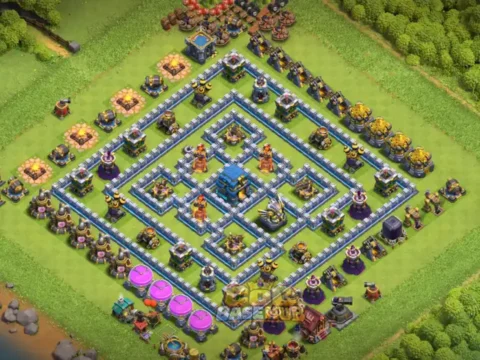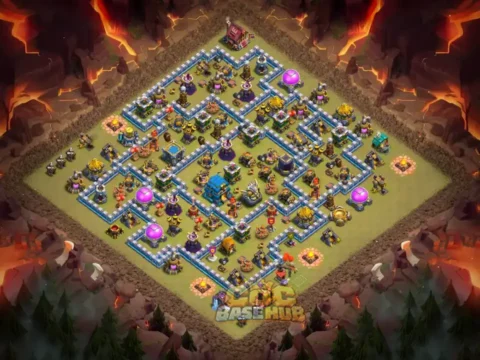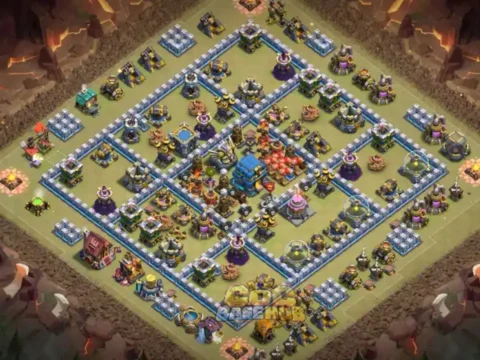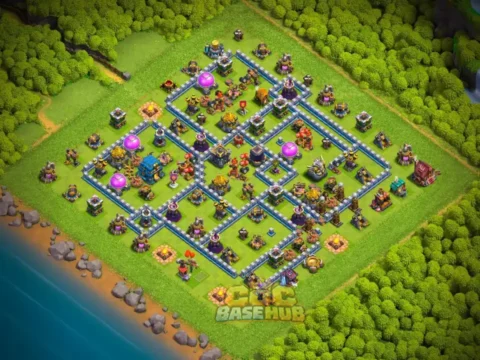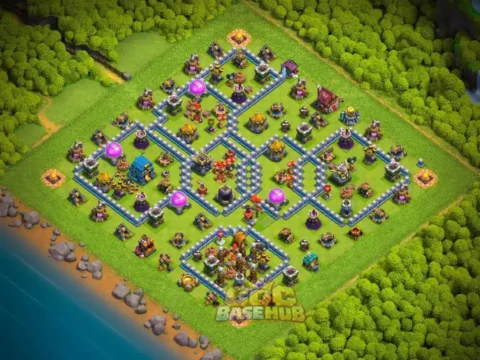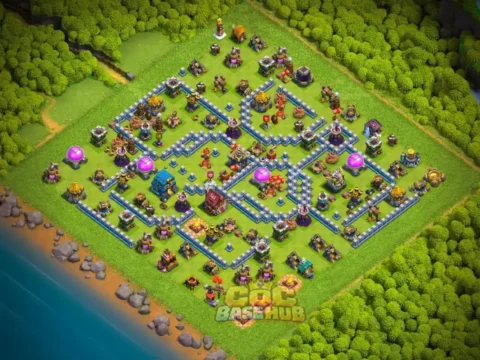
TH12 War Base Anti 3 Star #32
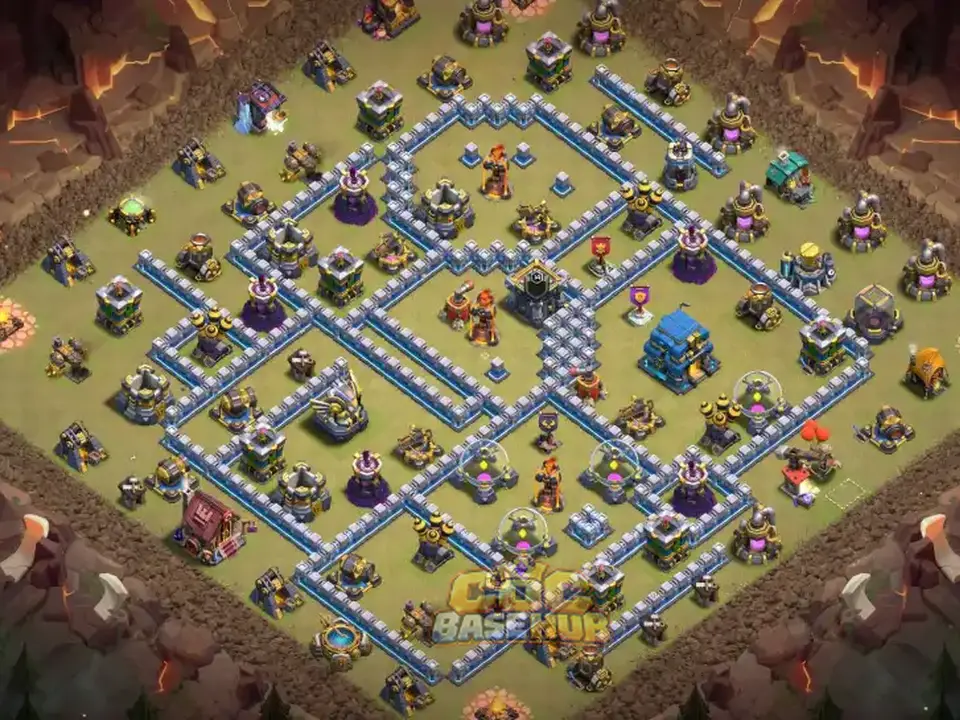
TH12 War Base Anti 3 Star #32 – Layout Guide and Copy Link
This TH12 War Base Anti 3 Star #32 is a Clash of Clans Town Hall 12 layout listed for Clan War and CWL defense. Use the copy base link associated with this page to open the layout in the game. The practical value of a base depends on building levels, trap settings, defensive Clan Castle troops, and the attacks it faces. The following guide explains how to evaluate and adapt this layout; it does not claim that every defensive placement has been visually verified.
How to evaluate this TH12 base
Town Hall placement for TH12 War Bases
Town Hall placement and hero support. In a Town Hall 12 layout, protecting the Town Hall without making the rest of the village disposable is a planning objective rather than a guaranteed outcome. For Clan War and CWL defense, begin by identifying the most attractive attack entry and then test how town hall placement affects hero support. An attacker may prioritize quick percentage, Town Hall access, or a full clear, and those priorities change which defensive tradeoffs matter. Compare the likely route of a ground army with the likely route of an air army; neither route should be assumed from the base label alone. Look at where support troops would stand, how long the army remains under fire, and whether a spell could remove several important defenses at once. For this layout, the published tags are anti-3-star; treat these as intended use cases to test, not as proof of performance. If the attack begins from a different edge, revisit the same question with spell timing as the main variable. After a friendly challenge, record which buildings fell first, which troops survived, and whether the result came from the design or the attacker’s execution. A useful adjustment changes one factor at a time so that a second test reveals whether the modification actually improved the defensive outcome. This method helps players use a copied layout as a starting point while adapting it to their own defensive levels, Clan Castle troops, and opponent habits.
Eagle Artillery coverage for TH12 War Bases
Eagle Artillery coverage and late-stage cleanup. In a Town Hall 12 layout, forcing attackers to respect long-range damage during their opening is a planning objective rather than a guaranteed outcome. For Clan War and CWL defense, begin by identifying the most attractive attack entry and then review how eagle artillery coverage affects late-stage cleanup. An attacker may prioritize quick percentage, Town Hall access, or a full clear, and those priorities change which defensive tradeoffs matter. Compare the likely route of a ground army with the likely route of an air army; neither route should be assumed from the base label alone. Look at where support troops would stand, how long the army remains under fire, and whether a spell could remove several important defenses at once. For this layout, the published tags are anti-3-star; treat these as intended use cases to test, not as proof of performance. If the attack begins from a different edge, revisit the same question with hero support as the main variable. After a friendly challenge, record which buildings fell first, which troops survived, and whether the result came from the design or the attacker’s execution. A useful adjustment changes one factor at a time so that a second test reveals whether the modification actually improved the defensive outcome. This method helps players use a copied layout as a starting point while adapting it to their own defensive levels, Clan Castle troops, and opponent habits.
Inferno Tower modes for TH12 War Bases
Inferno Tower modes and air-versus-ground balance. In a Town Hall 12 layout, choosing between single-target pressure and multi-target control is a planning objective rather than a guaranteed outcome. For Clan War and CWL defense, begin by identifying the most attractive attack entry and then evaluate how inferno tower modes affects air-versus-ground balance. An attacker may prioritize quick percentage, Town Hall access, or a full clear, and those priorities change which defensive tradeoffs matter. Compare the likely route of a ground army with the likely route of an air army; neither route should be assumed from the base label alone. Look at where support troops would stand, how long the army remains under fire, and whether a spell could remove several important defenses at once. For this layout, the published tags are anti-3-star; treat these as intended use cases to test, not as proof of performance. If the attack begins from a different edge, revisit the same question with compartment shape as the main variable. After a friendly challenge, record which buildings fell first, which troops survived, and whether the result came from the design or the attacker’s execution. A useful adjustment changes one factor at a time so that a second test reveals whether the modification actually improved the defensive outcome. This method helps players use a copied layout as a starting point while adapting it to their own defensive levels, Clan Castle troops, and opponent habits.
X-Bow coverage for TH12 War Bases
X-Bow coverage and entry route. In a Town Hall 12 layout, balancing ground and air threat across likely entry angles is a planning objective rather than a guaranteed outcome. For Clan War and CWL defense, begin by identifying the most attractive attack entry and then compare how x-bow coverage affects entry route. An attacker may prioritize quick percentage, Town Hall access, or a full clear, and those priorities change which defensive tradeoffs matter. Compare the likely route of a ground army with the likely route of an air army; neither route should be assumed from the base label alone. Look at where support troops would stand, how long the army remains under fire, and whether a spell could remove several important defenses at once. For this layout, the published tags are anti-3-star; treat these as intended use cases to test, not as proof of performance. If the attack begins from a different edge, revisit the same question with compartment shape as the main variable. After a friendly challenge, record which buildings fell first, which troops survived, and whether the result came from the design or the attacker’s execution. A useful adjustment changes one factor at a time so that a second test reveals whether the modification actually improved the defensive outcome. This method helps players use a copied layout as a starting point while adapting it to their own defensive levels, Clan Castle troops, and opponent habits.
Air Defense spacing for TH12 War Bases
Air Defense spacing and hero support. In a Town Hall 12 layout, preventing one spell or push from neutralizing too many air defenses is a planning objective rather than a guaranteed outcome. For Clan War and CWL defense, begin by identifying the most attractive attack entry and then compare how air defense spacing affects hero support. An attacker may prioritize quick percentage, Town Hall access, or a full clear, and those priorities change which defensive tradeoffs matter. Compare the likely route of a ground army with the likely route of an air army; neither route should be assumed from the base label alone. Look at where support troops would stand, how long the army remains under fire, and whether a spell could remove several important defenses at once. For this layout, the published tags are anti-3-star; treat these as intended use cases to test, not as proof of performance. If the attack begins from a different edge, revisit the same question with resource exposure as the main variable. After a friendly challenge, record which buildings fell first, which troops survived, and whether the result came from the design or the attacker’s execution. A useful adjustment changes one factor at a time so that a second test reveals whether the modification actually improved the defensive outcome. This method helps players use a copied layout as a starting point while adapting it to their own defensive levels, Clan Castle troops, and opponent habits.
Air Sweeper direction for TH12 War Bases
Air Sweeper direction and late-stage cleanup. In a Town Hall 12 layout, making air armies spend time under defensive fire is a planning objective rather than a guaranteed outcome. For Clan War and CWL defense, begin by identifying the most attractive attack entry and then evaluate how air sweeper direction affects late-stage cleanup. An attacker may prioritize quick percentage, Town Hall access, or a full clear, and those priorities change which defensive tradeoffs matter. Compare the likely route of a ground army with the likely route of an air army; neither route should be assumed from the base label alone. Look at where support troops would stand, how long the army remains under fire, and whether a spell could remove several important defenses at once. For this layout, the published tags are anti-3-star; treat these as intended use cases to test, not as proof of performance. If the attack begins from a different edge, revisit the same question with time efficiency as the main variable. After a friendly challenge, record which buildings fell first, which troops survived, and whether the result came from the design or the attacker’s execution. A useful adjustment changes one factor at a time so that a second test reveals whether the modification actually improved the defensive outcome. This method helps players use a copied layout as a starting point while adapting it to their own defensive levels, Clan Castle troops, and opponent habits.
Wizard Tower placement for TH12 War Bases
Wizard Tower placement and air-versus-ground balance. In a Town Hall 12 layout, limiting value from swarms and grouped support troops is a planning objective rather than a guaranteed outcome. For Clan War and CWL defense, begin by identifying the most attractive attack entry and then review how wizard tower placement affects air-versus-ground balance. An attacker may prioritize quick percentage, Town Hall access, or a full clear, and those priorities change which defensive tradeoffs matter. Compare the likely route of a ground army with the likely route of an air army; neither route should be assumed from the base label alone. Look at where support troops would stand, how long the army remains under fire, and whether a spell could remove several important defenses at once. For this layout, the published tags are anti-3-star; treat these as intended use cases to test, not as proof of performance. If the attack begins from a different edge, revisit the same question with resource exposure as the main variable. After a friendly challenge, record which buildings fell first, which troops survived, and whether the result came from the design or the attacker’s execution. A useful adjustment changes one factor at a time so that a second test reveals whether the modification actually improved the defensive outcome. This method helps players use a copied layout as a starting point while adapting it to their own defensive levels, Clan Castle troops, and opponent habits.
Bomb Tower pressure for TH12 War Bases
Bomb Tower pressure and entry route. In a Town Hall 12 layout, punishing tightly packed ground troops and cleanup units is a planning objective rather than a guaranteed outcome. For Clan War and CWL defense, begin by identifying the most attractive attack entry and then reconsider how bomb tower pressure affects entry route. An attacker may prioritize quick percentage, Town Hall access, or a full clear, and those priorities change which defensive tradeoffs matter. Compare the likely route of a ground army with the likely route of an air army; neither route should be assumed from the base label alone. Look at where support troops would stand, how long the army remains under fire, and whether a spell could remove several important defenses at once. For this layout, the published tags are anti-3-star; treat these as intended use cases to test, not as proof of performance. If the attack begins from a different edge, revisit the same question with resource exposure as the main variable. After a friendly challenge, record which buildings fell first, which troops survived, and whether the result came from the design or the attacker’s execution. A useful adjustment changes one factor at a time so that a second test reveals whether the modification actually improved the defensive outcome. This method helps players use a copied layout as a starting point while adapting it to their own defensive levels, Clan Castle troops, and opponent habits.
Archer Tower coverage for TH12 War Bases
Archer Tower coverage and hero support. In a Town Hall 12 layout, maintaining useful coverage near edges and side compartments is a planning objective rather than a guaranteed outcome. For Clan War and CWL defense, begin by identifying the most attractive attack entry and then compare how archer tower coverage affects hero support. An attacker may prioritize quick percentage, Town Hall access, or a full clear, and those priorities change which defensive tradeoffs matter. Compare the likely route of a ground army with the likely route of an air army; neither route should be assumed from the base label alone. Look at where support troops would stand, how long the army remains under fire, and whether a spell could remove several important defenses at once. For this layout, the published tags are anti-3-star; treat these as intended use cases to test, not as proof of performance. If the attack begins from a different edge, revisit the same question with attacker decision-making as the main variable. After a friendly challenge, record which buildings fell first, which troops survived, and whether the result came from the design or the attacker’s execution. A useful adjustment changes one factor at a time so that a second test reveals whether the modification actually improved the defensive outcome. This method helps players use a copied layout as a starting point while adapting it to their own defensive levels, Clan Castle troops, and opponent habits.
Cannon positioning for TH12 War Bases
Cannon positioning and late-stage cleanup. In a Town Hall 12 layout, supporting ground defense without leaving obvious blind spots is a planning objective rather than a guaranteed outcome. For Clan War and CWL defense, begin by identifying the most attractive attack entry and then test how cannon positioning affects late-stage cleanup. An attacker may prioritize quick percentage, Town Hall access, or a full clear, and those priorities change which defensive tradeoffs matter. Compare the likely route of a ground army with the likely route of an air army; neither route should be assumed from the base label alone. Look at where support troops would stand, how long the army remains under fire, and whether a spell could remove several important defenses at once. For this layout, the published tags are anti-3-star; treat these as intended use cases to test, not as proof of performance. If the attack begins from a different edge, revisit the same question with hero support as the main variable. After a friendly challenge, record which buildings fell first, which troops survived, and whether the result came from the design or the attacker’s execution. A useful adjustment changes one factor at a time so that a second test reveals whether the modification actually improved the defensive outcome. This method helps players use a copied layout as a starting point while adapting it to their own defensive levels, Clan Castle troops, and opponent habits.
Mortar utility for TH12 War Bases
Mortar utility and air-versus-ground balance. In a Town Hall 12 layout, controlling light troops and delaying easy cleanup is a planning objective rather than a guaranteed outcome. For Clan War and CWL defense, begin by identifying the most attractive attack entry and then measure how mortar utility affects air-versus-ground balance. An attacker may prioritize quick percentage, Town Hall access, or a full clear, and those priorities change which defensive tradeoffs matter. Compare the likely route of a ground army with the likely route of an air army; neither route should be assumed from the base label alone. Look at where support troops would stand, how long the army remains under fire, and whether a spell could remove several important defenses at once. For this layout, the published tags are anti-3-star; treat these as intended use cases to test, not as proof of performance. If the attack begins from a different edge, revisit the same question with late-stage cleanup as the main variable. After a friendly challenge, record which buildings fell first, which troops survived, and whether the result came from the design or the attacker’s execution. A useful adjustment changes one factor at a time so that a second test reveals whether the modification actually improved the defensive outcome. This method helps players use a copied layout as a starting point while adapting it to their own defensive levels, Clan Castle troops, and opponent habits.
Hidden Tesla uncertainty for TH12 War Bases
Hidden Tesla uncertainty and entry route. In a Town Hall 12 layout, creating uncertainty for funneling and cleanup is a planning objective rather than a guaranteed outcome. For Clan War and CWL defense, begin by identifying the most attractive attack entry and then compare how hidden tesla uncertainty affects entry route. An attacker may prioritize quick percentage, Town Hall access, or a full clear, and those priorities change which defensive tradeoffs matter. Compare the likely route of a ground army with the likely route of an air army; neither route should be assumed from the base label alone. Look at where support troops would stand, how long the army remains under fire, and whether a spell could remove several important defenses at once. For this layout, the published tags are anti-3-star; treat these as intended use cases to test, not as proof of performance. If the attack begins from a different edge, revisit the same question with funneling pressure as the main variable. After a friendly challenge, record which buildings fell first, which troops survived, and whether the result came from the design or the attacker’s execution. A useful adjustment changes one factor at a time so that a second test reveals whether the modification actually improved the defensive outcome. This method helps players use a copied layout as a starting point while adapting it to their own defensive levels, Clan Castle troops, and opponent habits.
Seeking Air Mines for TH12 War Bases
Seeking Air Mines and hero support. In a Town Hall 12 layout, targeting high-value flying units and support is a planning objective rather than a guaranteed outcome. For Clan War and CWL defense, begin by identifying the most attractive attack entry and then measure how seeking air mines affects hero support. An attacker may prioritize quick percentage, Town Hall access, or a full clear, and those priorities change which defensive tradeoffs matter. Compare the likely route of a ground army with the likely route of an air army; neither route should be assumed from the base label alone. Look at where support troops would stand, how long the army remains under fire, and whether a spell could remove several important defenses at once. For this layout, the published tags are anti-3-star; treat these as intended use cases to test, not as proof of performance. If the attack begins from a different edge, revisit the same question with compartment shape as the main variable. After a friendly challenge, record which buildings fell first, which troops survived, and whether the result came from the design or the attacker’s execution. A useful adjustment changes one factor at a time so that a second test reveals whether the modification actually improved the defensive outcome. This method helps players use a copied layout as a starting point while adapting it to their own defensive levels, Clan Castle troops, and opponent habits.
Red Air Bombs for TH12 War Bases
Red Air Bombs and late-stage cleanup. In a Town Hall 12 layout, adding splash pressure to groups of air troops is a planning objective rather than a guaranteed outcome. For Clan War and CWL defense, begin by identifying the most attractive attack entry and then observe how red air bombs affects late-stage cleanup. An attacker may prioritize quick percentage, Town Hall access, or a full clear, and those priorities change which defensive tradeoffs matter. Compare the likely route of a ground army with the likely route of an air army; neither route should be assumed from the base label alone. Look at where support troops would stand, how long the army remains under fire, and whether a spell could remove several important defenses at once. For this layout, the published tags are anti-3-star; treat these as intended use cases to test, not as proof of performance. If the attack begins from a different edge, revisit the same question with entry route as the main variable. After a friendly challenge, record which buildings fell first, which troops survived, and whether the result came from the design or the attacker’s execution. A useful adjustment changes one factor at a time so that a second test reveals whether the modification actually improved the defensive outcome. This method helps players use a copied layout as a starting point while adapting it to their own defensive levels, Clan Castle troops, and opponent habits.
Giant Bomb combinations for TH12 War Bases
Giant Bomb combinations and air-versus-ground balance. In a Town Hall 12 layout, discouraging concentrated ground troop movement is a planning objective rather than a guaranteed outcome. For Clan War and CWL defense, begin by identifying the most attractive attack entry and then observe how giant bomb combinations affects air-versus-ground balance. An attacker may prioritize quick percentage, Town Hall access, or a full clear, and those priorities change which defensive tradeoffs matter. Compare the likely route of a ground army with the likely route of an air army; neither route should be assumed from the base label alone. Look at where support troops would stand, how long the army remains under fire, and whether a spell could remove several important defenses at once. For this layout, the published tags are anti-3-star; treat these as intended use cases to test, not as proof of performance. If the attack begins from a different edge, revisit the same question with late-stage cleanup as the main variable. After a friendly challenge, record which buildings fell first, which troops survived, and whether the result came from the design or the attacker’s execution. A useful adjustment changes one factor at a time so that a second test reveals whether the modification actually improved the defensive outcome. This method helps players use a copied layout as a starting point while adapting it to their own defensive levels, Clan Castle troops, and opponent habits.
Spring Trap paths for TH12 War Bases
Spring Trap paths and entry route. In a Town Hall 12 layout, exploiting predictable ground troop movement is a planning objective rather than a guaranteed outcome. For Clan War and CWL defense, begin by identifying the most attractive attack entry and then map how spring trap paths affects entry route. An attacker may prioritize quick percentage, Town Hall access, or a full clear, and those priorities change which defensive tradeoffs matter. Compare the likely route of a ground army with the likely route of an air army; neither route should be assumed from the base label alone. Look at where support troops would stand, how long the army remains under fire, and whether a spell could remove several important defenses at once. For this layout, the published tags are anti-3-star; treat these as intended use cases to test, not as proof of performance. If the attack begins from a different edge, revisit the same question with late-stage cleanup as the main variable. After a friendly challenge, record which buildings fell first, which troops survived, and whether the result came from the design or the attacker’s execution. A useful adjustment changes one factor at a time so that a second test reveals whether the modification actually improved the defensive outcome. This method helps players use a copied layout as a starting point while adapting it to their own defensive levels, Clan Castle troops, and opponent habits.
Skeleton Trap settings for TH12 War Bases
Skeleton Trap settings and hero support. In a Town Hall 12 layout, interrupting heroes or distracting air forces is a planning objective rather than a guaranteed outcome. For Clan War and CWL defense, begin by identifying the most attractive attack entry and then reconsider how skeleton trap settings affects hero support. An attacker may prioritize quick percentage, Town Hall access, or a full clear, and those priorities change which defensive tradeoffs matter. Compare the likely route of a ground army with the likely route of an air army; neither route should be assumed from the base label alone. Look at where support troops would stand, how long the army remains under fire, and whether a spell could remove several important defenses at once. For this layout, the published tags are anti-3-star; treat these as intended use cases to test, not as proof of performance. If the attack begins from a different edge, revisit the same question with funneling pressure as the main variable. After a friendly challenge, record which buildings fell first, which troops survived, and whether the result came from the design or the attacker’s execution. A useful adjustment changes one factor at a time so that a second test reveals whether the modification actually improved the defensive outcome. This method helps players use a copied layout as a starting point while adapting it to their own defensive levels, Clan Castle troops, and opponent habits.
Wall compartments for TH12 War Bases
Wall compartments and late-stage cleanup. In a Town Hall 12 layout, making movement and pathing less predictable is a planning objective rather than a guaranteed outcome. For Clan War and CWL defense, begin by identifying the most attractive attack entry and then test how wall compartments affects late-stage cleanup. An attacker may prioritize quick percentage, Town Hall access, or a full clear, and those priorities change which defensive tradeoffs matter. Compare the likely route of a ground army with the likely route of an air army; neither route should be assumed from the base label alone. Look at where support troops would stand, how long the army remains under fire, and whether a spell could remove several important defenses at once. For this layout, the published tags are anti-3-star; treat these as intended use cases to test, not as proof of performance. If the attack begins from a different edge, revisit the same question with hero support as the main variable. After a friendly challenge, record which buildings fell first, which troops survived, and whether the result came from the design or the attacker’s execution. A useful adjustment changes one factor at a time so that a second test reveals whether the modification actually improved the defensive outcome. This method helps players use a copied layout as a starting point while adapting it to their own defensive levels, Clan Castle troops, and opponent habits.
Building spacing for TH12 War Bases
Building spacing and air-versus-ground balance. In a Town Hall 12 layout, reducing chain value and easy spell efficiency is a planning objective rather than a guaranteed outcome. For Clan War and CWL defense, begin by identifying the most attractive attack entry and then reconsider how building spacing affects air-versus-ground balance. An attacker may prioritize quick percentage, Town Hall access, or a full clear, and those priorities change which defensive tradeoffs matter. Compare the likely route of a ground army with the likely route of an air army; neither route should be assumed from the base label alone. Look at where support troops would stand, how long the army remains under fire, and whether a spell could remove several important defenses at once. For this layout, the published tags are anti-3-star; treat these as intended use cases to test, not as proof of performance. If the attack begins from a different edge, revisit the same question with entry route as the main variable. After a friendly challenge, record which buildings fell first, which troops survived, and whether the result came from the design or the attacker’s execution. A useful adjustment changes one factor at a time so that a second test reveals whether the modification actually improved the defensive outcome. This method helps players use a copied layout as a starting point while adapting it to their own defensive levels, Clan Castle troops, and opponent habits.
Hero placement for TH12 War Bases
Hero placement and entry route. In a Town Hall 12 layout, supporting high-value defensive zones is a planning objective rather than a guaranteed outcome. For Clan War and CWL defense, begin by identifying the most attractive attack entry and then test how hero placement affects entry route. An attacker may prioritize quick percentage, Town Hall access, or a full clear, and those priorities change which defensive tradeoffs matter. Compare the likely route of a ground army with the likely route of an air army; neither route should be assumed from the base label alone. Look at where support troops would stand, how long the army remains under fire, and whether a spell could remove several important defenses at once. For this layout, the published tags are anti-3-star; treat these as intended use cases to test, not as proof of performance. If the attack begins from a different edge, revisit the same question with time efficiency as the main variable. After a friendly challenge, record which buildings fell first, which troops survived, and whether the result came from the design or the attacker’s execution. A useful adjustment changes one factor at a time so that a second test reveals whether the modification actually improved the defensive outcome. This method helps players use a copied layout as a starting point while adapting it to their own defensive levels, Clan Castle troops, and opponent habits.
Clan Castle defense for TH12 War Bases
Clan Castle defense and hero support. In a Town Hall 12 layout, using donated troops to complicate a planned attack is a planning objective rather than a guaranteed outcome. For Clan War and CWL defense, begin by identifying the most attractive attack entry and then observe how clan castle defense affects hero support. An attacker may prioritize quick percentage, Town Hall access, or a full clear, and those priorities change which defensive tradeoffs matter. Compare the likely route of a ground army with the likely route of an air army; neither route should be assumed from the base label alone. Look at where support troops would stand, how long the army remains under fire, and whether a spell could remove several important defenses at once. For this layout, the published tags are anti-3-star; treat these as intended use cases to test, not as proof of performance. If the attack begins from a different edge, revisit the same question with compartment shape as the main variable. After a friendly challenge, record which buildings fell first, which troops survived, and whether the result came from the design or the attacker’s execution. A useful adjustment changes one factor at a time so that a second test reveals whether the modification actually improved the defensive outcome. This method helps players use a copied layout as a starting point while adapting it to their own defensive levels, Clan Castle troops, and opponent habits.
Resource storage protection for TH12 War Bases
Resource storage protection and late-stage cleanup. In a Town Hall 12 layout, absorbing damage while protecting valuable areas is a planning objective rather than a guaranteed outcome. For Clan War and CWL defense, begin by identifying the most attractive attack entry and then test how resource storage protection affects late-stage cleanup. An attacker may prioritize quick percentage, Town Hall access, or a full clear, and those priorities change which defensive tradeoffs matter. Compare the likely route of a ground army with the likely route of an air army; neither route should be assumed from the base label alone. Look at where support troops would stand, how long the army remains under fire, and whether a spell could remove several important defenses at once. For this layout, the published tags are anti-3-star; treat these as intended use cases to test, not as proof of performance. If the attack begins from a different edge, revisit the same question with spell timing as the main variable. After a friendly challenge, record which buildings fell first, which troops survived, and whether the result came from the design or the attacker’s execution. A useful adjustment changes one factor at a time so that a second test reveals whether the modification actually improved the defensive outcome. This method helps players use a copied layout as a starting point while adapting it to their own defensive levels, Clan Castle troops, and opponent habits.
Collector placement for TH12 War Bases
Collector placement and air-versus-ground balance. In a Town Hall 12 layout, balancing easy percentage against perimeter control is a planning objective rather than a guaranteed outcome. For Clan War and CWL defense, begin by identifying the most attractive attack entry and then reconsider how collector placement affects air-versus-ground balance. An attacker may prioritize quick percentage, Town Hall access, or a full clear, and those priorities change which defensive tradeoffs matter. Compare the likely route of a ground army with the likely route of an air army; neither route should be assumed from the base label alone. Look at where support troops would stand, how long the army remains under fire, and whether a spell could remove several important defenses at once. For this layout, the published tags are anti-3-star; treat these as intended use cases to test, not as proof of performance. If the attack begins from a different edge, revisit the same question with funneling pressure as the main variable. After a friendly challenge, record which buildings fell first, which troops survived, and whether the result came from the design or the attacker’s execution. A useful adjustment changes one factor at a time so that a second test reveals whether the modification actually improved the defensive outcome. This method helps players use a copied layout as a starting point while adapting it to their own defensive levels, Clan Castle troops, and opponent habits.
Anti three-star planning for TH12 War Bases
Anti three-star planning and entry route. In a Town Hall 12 layout, preserving enough defensive strength for the final phase is a planning objective rather than a guaranteed outcome. For Clan War and CWL defense, begin by identifying the most attractive attack entry and then review how anti three-star planning affects entry route. An attacker may prioritize quick percentage, Town Hall access, or a full clear, and those priorities change which defensive tradeoffs matter. Compare the likely route of a ground army with the likely route of an air army; neither route should be assumed from the base label alone. Look at where support troops would stand, how long the army remains under fire, and whether a spell could remove several important defenses at once. For this layout, the published tags are anti-3-star; treat these as intended use cases to test, not as proof of performance. If the attack begins from a different edge, revisit the same question with funneling pressure as the main variable. After a friendly challenge, record which buildings fell first, which troops survived, and whether the result came from the design or the attacker’s execution. A useful adjustment changes one factor at a time so that a second test reveals whether the modification actually improved the defensive outcome. This method helps players use a copied layout as a starting point while adapting it to their own defensive levels, Clan Castle troops, and opponent habits.
Anti two-star planning for TH12 War Bases
Anti two-star planning and hero support. In a Town Hall 12 layout, making Town Hall access and percentage progress costly is a planning objective rather than a guaranteed outcome. For Clan War and CWL defense, begin by identifying the most attractive attack entry and then evaluate how anti two-star planning affects hero support. An attacker may prioritize quick percentage, Town Hall access, or a full clear, and those priorities change which defensive tradeoffs matter. Compare the likely route of a ground army with the likely route of an air army; neither route should be assumed from the base label alone. Look at where support troops would stand, how long the army remains under fire, and whether a spell could remove several important defenses at once. For this layout, the published tags are anti-3-star; treat these as intended use cases to test, not as proof of performance. If the attack begins from a different edge, revisit the same question with funneling pressure as the main variable. After a friendly challenge, record which buildings fell first, which troops survived, and whether the result came from the design or the attacker’s execution. A useful adjustment changes one factor at a time so that a second test reveals whether the modification actually improved the defensive outcome. This method helps players use a copied layout as a starting point while adapting it to their own defensive levels, Clan Castle troops, and opponent habits.
Electro Dragon counterplay for TH12 War Bases
Electro Dragon counterplay and late-stage cleanup. In a Town Hall 12 layout, limiting chain lightning value through spacing is a planning objective rather than a guaranteed outcome. For Clan War and CWL defense, begin by identifying the most attractive attack entry and then review how electro dragon counterplay affects late-stage cleanup. An attacker may prioritize quick percentage, Town Hall access, or a full clear, and those priorities change which defensive tradeoffs matter. Compare the likely route of a ground army with the likely route of an air army; neither route should be assumed from the base label alone. Look at where support troops would stand, how long the army remains under fire, and whether a spell could remove several important defenses at once. For this layout, the published tags are anti-3-star; treat these as intended use cases to test, not as proof of performance. If the attack begins from a different edge, revisit the same question with entry route as the main variable. After a friendly challenge, record which buildings fell first, which troops survived, and whether the result came from the design or the attacker’s execution. A useful adjustment changes one factor at a time so that a second test reveals whether the modification actually improved the defensive outcome. This method helps players use a copied layout as a starting point while adapting it to their own defensive levels, Clan Castle troops, and opponent habits.
LavaLoon counterplay for TH12 War Bases
LavaLoon counterplay and air-versus-ground balance. In a Town Hall 12 layout, making air pathing and support timing less comfortable is a planning objective rather than a guaranteed outcome. For Clan War and CWL defense, begin by identifying the most attractive attack entry and then evaluate how lavaloon counterplay affects air-versus-ground balance. An attacker may prioritize quick percentage, Town Hall access, or a full clear, and those priorities change which defensive tradeoffs matter. Compare the likely route of a ground army with the likely route of an air army; neither route should be assumed from the base label alone. Look at where support troops would stand, how long the army remains under fire, and whether a spell could remove several important defenses at once. For this layout, the published tags are anti-3-star; treat these as intended use cases to test, not as proof of performance. If the attack begins from a different edge, revisit the same question with funneling pressure as the main variable. After a friendly challenge, record which buildings fell first, which troops survived, and whether the result came from the design or the attacker’s execution. A useful adjustment changes one factor at a time so that a second test reveals whether the modification actually improved the defensive outcome. This method helps players use a copied layout as a starting point while adapting it to their own defensive levels, Clan Castle troops, and opponent habits.
Witch and Bowler counterplay for TH12 War Bases
Witch and Bowler counterplay and entry route. In a Town Hall 12 layout, managing summoned units and splash pressure is a planning objective rather than a guaranteed outcome. For Clan War and CWL defense, begin by identifying the most attractive attack entry and then observe how witch and bowler counterplay affects entry route. An attacker may prioritize quick percentage, Town Hall access, or a full clear, and those priorities change which defensive tradeoffs matter. Compare the likely route of a ground army with the likely route of an air army; neither route should be assumed from the base label alone. Look at where support troops would stand, how long the army remains under fire, and whether a spell could remove several important defenses at once. For this layout, the published tags are anti-3-star; treat these as intended use cases to test, not as proof of performance. If the attack begins from a different edge, revisit the same question with air-versus-ground balance as the main variable. After a friendly challenge, record which buildings fell first, which troops survived, and whether the result came from the design or the attacker’s execution. A useful adjustment changes one factor at a time so that a second test reveals whether the modification actually improved the defensive outcome. This method helps players use a copied layout as a starting point while adapting it to their own defensive levels, Clan Castle troops, and opponent habits.
Hog Rider counterplay for TH12 War Bases
Hog Rider counterplay and hero support. In a Town Hall 12 layout, creating awkward defense-to-defense paths is a planning objective rather than a guaranteed outcome. For Clan War and CWL defense, begin by identifying the most attractive attack entry and then measure how hog rider counterplay affects hero support. An attacker may prioritize quick percentage, Town Hall access, or a full clear, and those priorities change which defensive tradeoffs matter. Compare the likely route of a ground army with the likely route of an air army; neither route should be assumed from the base label alone. Look at where support troops would stand, how long the army remains under fire, and whether a spell could remove several important defenses at once. For this layout, the published tags are anti-3-star; treat these as intended use cases to test, not as proof of performance. If the attack begins from a different edge, revisit the same question with attacker decision-making as the main variable. After a friendly challenge, record which buildings fell first, which troops survived, and whether the result came from the design or the attacker’s execution. A useful adjustment changes one factor at a time so that a second test reveals whether the modification actually improved the defensive outcome. This method helps players use a copied layout as a starting point while adapting it to their own defensive levels, Clan Castle troops, and opponent habits.
Miner counterplay for TH12 War Bases
Miner counterplay and late-stage cleanup. In a Town Hall 12 layout, using compartment coverage and traps to disrupt momentum is a planning objective rather than a guaranteed outcome. For Clan War and CWL defense, begin by identifying the most attractive attack entry and then compare how miner counterplay affects late-stage cleanup. An attacker may prioritize quick percentage, Town Hall access, or a full clear, and those priorities change which defensive tradeoffs matter. Compare the likely route of a ground army with the likely route of an air army; neither route should be assumed from the base label alone. Look at where support troops would stand, how long the army remains under fire, and whether a spell could remove several important defenses at once. For this layout, the published tags are anti-3-star; treat these as intended use cases to test, not as proof of performance. If the attack begins from a different edge, revisit the same question with trap uncertainty as the main variable. After a friendly challenge, record which buildings fell first, which troops survived, and whether the result came from the design or the attacker’s execution. A useful adjustment changes one factor at a time so that a second test reveals whether the modification actually improved the defensive outcome. This method helps players use a copied layout as a starting point while adapting it to their own defensive levels, Clan Castle troops, and opponent habits.
Queen Charge counterplay for TH12 War Bases
Queen Charge counterplay and air-versus-ground balance. In a Town Hall 12 layout, preventing a straightforward charge from gaining excessive value is a planning objective rather than a guaranteed outcome. For Clan War and CWL defense, begin by identifying the most attractive attack entry and then compare how queen charge counterplay affects air-versus-ground balance. An attacker may prioritize quick percentage, Town Hall access, or a full clear, and those priorities change which defensive tradeoffs matter. Compare the likely route of a ground army with the likely route of an air army; neither route should be assumed from the base label alone. Look at where support troops would stand, how long the army remains under fire, and whether a spell could remove several important defenses at once. For this layout, the published tags are anti-3-star; treat these as intended use cases to test, not as proof of performance. If the attack begins from a different edge, revisit the same question with hero support as the main variable. After a friendly challenge, record which buildings fell first, which troops survived, and whether the result came from the design or the attacker’s execution. A useful adjustment changes one factor at a time so that a second test reveals whether the modification actually improved the defensive outcome. This method helps players use a copied layout as a starting point while adapting it to their own defensive levels, Clan Castle troops, and opponent habits.
Siege Machine entry for TH12 War Bases
Siege Machine entry and entry route. In a Town Hall 12 layout, anticipating Wall Wrecker and Battle Blimp routes is a planning objective rather than a guaranteed outcome. For Clan War and CWL defense, begin by identifying the most attractive attack entry and then observe how siege machine entry affects entry route. An attacker may prioritize quick percentage, Town Hall access, or a full clear, and those priorities change which defensive tradeoffs matter. Compare the likely route of a ground army with the likely route of an air army; neither route should be assumed from the base label alone. Look at where support troops would stand, how long the army remains under fire, and whether a spell could remove several important defenses at once. For this layout, the published tags are anti-3-star; treat these as intended use cases to test, not as proof of performance. If the attack begins from a different edge, revisit the same question with late-stage cleanup as the main variable. After a friendly challenge, record which buildings fell first, which troops survived, and whether the result came from the design or the attacker’s execution. A useful adjustment changes one factor at a time so that a second test reveals whether the modification actually improved the defensive outcome. This method helps players use a copied layout as a starting point while adapting it to their own defensive levels, Clan Castle troops, and opponent habits.
Funneling and entry angles for TH12 War Bases
Funneling and entry angles and hero support. In a Town Hall 12 layout, making the first troop deployment an actual strategic choice is a planning objective rather than a guaranteed outcome. For Clan War and CWL defense, begin by identifying the most attractive attack entry and then measure how funneling and entry angles affects hero support. An attacker may prioritize quick percentage, Town Hall access, or a full clear, and those priorities change which defensive tradeoffs matter. Compare the likely route of a ground army with the likely route of an air army; neither route should be assumed from the base label alone. Look at where support troops would stand, how long the army remains under fire, and whether a spell could remove several important defenses at once. For this layout, the published tags are anti-3-star; treat these as intended use cases to test, not as proof of performance. If the attack begins from a different edge, revisit the same question with late-stage cleanup as the main variable. After a friendly challenge, record which buildings fell first, which troops survived, and whether the result came from the design or the attacker’s execution. A useful adjustment changes one factor at a time so that a second test reveals whether the modification actually improved the defensive outcome. This method helps players use a copied layout as a starting point while adapting it to their own defensive levels, Clan Castle troops, and opponent habits.
Spell value denial for TH12 War Bases
Spell value denial and late-stage cleanup. In a Town Hall 12 layout, avoiding compact clusters that reward a single spell is a planning objective rather than a guaranteed outcome. For Clan War and CWL defense, begin by identifying the most attractive attack entry and then observe how spell value denial affects late-stage cleanup. An attacker may prioritize quick percentage, Town Hall access, or a full clear, and those priorities change which defensive tradeoffs matter. Compare the likely route of a ground army with the likely route of an air army; neither route should be assumed from the base label alone. Look at where support troops would stand, how long the army remains under fire, and whether a spell could remove several important defenses at once. For this layout, the published tags are anti-3-star; treat these as intended use cases to test, not as proof of performance. If the attack begins from a different edge, revisit the same question with resource exposure as the main variable. After a friendly challenge, record which buildings fell first, which troops survived, and whether the result came from the design or the attacker’s execution. A useful adjustment changes one factor at a time so that a second test reveals whether the modification actually improved the defensive outcome. This method helps players use a copied layout as a starting point while adapting it to their own defensive levels, Clan Castle troops, and opponent habits.
Cleanup and time pressure for TH12 War Bases
Cleanup and time pressure and air-versus-ground balance. In a Town Hall 12 layout, making late buildings require deliberate cleanup is a planning objective rather than a guaranteed outcome. For Clan War and CWL defense, begin by identifying the most attractive attack entry and then map how cleanup and time pressure affects air-versus-ground balance. An attacker may prioritize quick percentage, Town Hall access, or a full clear, and those priorities change which defensive tradeoffs matter. Compare the likely route of a ground army with the likely route of an air army; neither route should be assumed from the base label alone. Look at where support troops would stand, how long the army remains under fire, and whether a spell could remove several important defenses at once. For this layout, the published tags are anti-3-star; treat these as intended use cases to test, not as proof of performance. If the attack begins from a different edge, revisit the same question with late-stage cleanup as the main variable. After a friendly challenge, record which buildings fell first, which troops survived, and whether the result came from the design or the attacker’s execution. A useful adjustment changes one factor at a time so that a second test reveals whether the modification actually improved the defensive outcome. This method helps players use a copied layout as a starting point while adapting it to their own defensive levels, Clan Castle troops, and opponent habits.
Friendly challenge testing for TH12 War Bases
Friendly challenge testing and entry route. In a Town Hall 12 layout, learning from repeated attacks rather than relying on labels is a planning objective rather than a guaranteed outcome. For Clan War and CWL defense, begin by identifying the most attractive attack entry and then evaluate how friendly challenge testing affects entry route. An attacker may prioritize quick percentage, Town Hall access, or a full clear, and those priorities change which defensive tradeoffs matter. Compare the likely route of a ground army with the likely route of an air army; neither route should be assumed from the base label alone. Look at where support troops would stand, how long the army remains under fire, and whether a spell could remove several important defenses at once. For this layout, the published tags are anti-3-star; treat these as intended use cases to test, not as proof of performance. If the attack begins from a different edge, revisit the same question with spell timing as the main variable. After a friendly challenge, record which buildings fell first, which troops survived, and whether the result came from the design or the attacker’s execution. A useful adjustment changes one factor at a time so that a second test reveals whether the modification actually improved the defensive outcome. This method helps players use a copied layout as a starting point while adapting it to their own defensive levels, Clan Castle troops, and opponent habits.
War scouting checklist for TH12 War Bases
War scouting checklist and hero support. In a Town Hall 12 layout, reviewing likely enemy approaches before the battle is a planning objective rather than a guaranteed outcome. For Clan War and CWL defense, begin by identifying the most attractive attack entry and then map how war scouting checklist affects hero support. An attacker may prioritize quick percentage, Town Hall access, or a full clear, and those priorities change which defensive tradeoffs matter. Compare the likely route of a ground army with the likely route of an air army; neither route should be assumed from the base label alone. Look at where support troops would stand, how long the army remains under fire, and whether a spell could remove several important defenses at once. For this layout, the published tags are anti-3-star; treat these as intended use cases to test, not as proof of performance. If the attack begins from a different edge, revisit the same question with time efficiency as the main variable. After a friendly challenge, record which buildings fell first, which troops survived, and whether the result came from the design or the attacker’s execution. A useful adjustment changes one factor at a time so that a second test reveals whether the modification actually improved the defensive outcome. This method helps players use a copied layout as a starting point while adapting it to their own defensive levels, Clan Castle troops, and opponent habits.
Farming efficiency for TH12 War Bases
Farming efficiency and late-stage cleanup. In a Town Hall 12 layout, weighing storage protection against daily resource goals is a planning objective rather than a guaranteed outcome. For Clan War and CWL defense, begin by identifying the most attractive attack entry and then review how farming efficiency affects late-stage cleanup. An attacker may prioritize quick percentage, Town Hall access, or a full clear, and those priorities change which defensive tradeoffs matter. Compare the likely route of a ground army with the likely route of an air army; neither route should be assumed from the base label alone. Look at where support troops would stand, how long the army remains under fire, and whether a spell could remove several important defenses at once. For this layout, the published tags are anti-3-star; treat these as intended use cases to test, not as proof of performance. If the attack begins from a different edge, revisit the same question with spell timing as the main variable. After a friendly challenge, record which buildings fell first, which troops survived, and whether the result came from the design or the attacker’s execution. A useful adjustment changes one factor at a time so that a second test reveals whether the modification actually improved the defensive outcome. This method helps players use a copied layout as a starting point while adapting it to their own defensive levels, Clan Castle troops, and opponent habits.
Trophy defense priorities for TH12 War Bases
Trophy defense priorities and air-versus-ground balance. In a Town Hall 12 layout, balancing star prevention with percentage denial is a planning objective rather than a guaranteed outcome. For Clan War and CWL defense, begin by identifying the most attractive attack entry and then review how trophy defense priorities affects air-versus-ground balance. An attacker may prioritize quick percentage, Town Hall access, or a full clear, and those priorities change which defensive tradeoffs matter. Compare the likely route of a ground army with the likely route of an air army; neither route should be assumed from the base label alone. Look at where support troops would stand, how long the army remains under fire, and whether a spell could remove several important defenses at once. For this layout, the published tags are anti-3-star; treat these as intended use cases to test, not as proof of performance. If the attack begins from a different edge, revisit the same question with attacker decision-making as the main variable. After a friendly challenge, record which buildings fell first, which troops survived, and whether the result came from the design or the attacker’s execution. A useful adjustment changes one factor at a time so that a second test reveals whether the modification actually improved the defensive outcome. This method helps players use a copied layout as a starting point while adapting it to their own defensive levels, Clan Castle troops, and opponent habits.
Upgrade planning for TH12 War Bases
Upgrade planning and entry route. In a Town Hall 12 layout, adapting the layout when defenses are temporarily unavailable is a planning objective rather than a guaranteed outcome. For Clan War and CWL defense, begin by identifying the most attractive attack entry and then test how upgrade planning affects entry route. An attacker may prioritize quick percentage, Town Hall access, or a full clear, and those priorities change which defensive tradeoffs matter. Compare the likely route of a ground army with the likely route of an air army; neither route should be assumed from the base label alone. Look at where support troops would stand, how long the army remains under fire, and whether a spell could remove several important defenses at once. For this layout, the published tags are anti-3-star; treat these as intended use cases to test, not as proof of performance. If the attack begins from a different edge, revisit the same question with air-versus-ground balance as the main variable. After a friendly challenge, record which buildings fell first, which troops survived, and whether the result came from the design or the attacker’s execution. A useful adjustment changes one factor at a time so that a second test reveals whether the modification actually improved the defensive outcome. This method helps players use a copied layout as a starting point while adapting it to their own defensive levels, Clan Castle troops, and opponent habits.
Base rotation for TH12 War Bases
Base rotation and hero support. In a Town Hall 12 layout, changing layouts when opponents learn a predictable pattern is a planning objective rather than a guaranteed outcome. For Clan War and CWL defense, begin by identifying the most attractive attack entry and then observe how base rotation affects hero support. An attacker may prioritize quick percentage, Town Hall access, or a full clear, and those priorities change which defensive tradeoffs matter. Compare the likely route of a ground army with the likely route of an air army; neither route should be assumed from the base label alone. Look at where support troops would stand, how long the army remains under fire, and whether a spell could remove several important defenses at once. For this layout, the published tags are anti-3-star; treat these as intended use cases to test, not as proof of performance. If the attack begins from a different edge, revisit the same question with defensive overlap as the main variable. After a friendly challenge, record which buildings fell first, which troops survived, and whether the result came from the design or the attacker’s execution. A useful adjustment changes one factor at a time so that a second test reveals whether the modification actually improved the defensive outcome. This method helps players use a copied layout as a starting point while adapting it to their own defensive levels, Clan Castle troops, and opponent habits.
Attack replay analysis for TH12 War Bases
Attack replay analysis and late-stage cleanup. In a Town Hall 12 layout, separating luck from repeatable defensive weaknesses is a planning objective rather than a guaranteed outcome. For Clan War and CWL defense, begin by identifying the most attractive attack entry and then compare how attack replay analysis affects late-stage cleanup. An attacker may prioritize quick percentage, Town Hall access, or a full clear, and those priorities change which defensive tradeoffs matter. Compare the likely route of a ground army with the likely route of an air army; neither route should be assumed from the base label alone. Look at where support troops would stand, how long the army remains under fire, and whether a spell could remove several important defenses at once. For this layout, the published tags are anti-3-star; treat these as intended use cases to test, not as proof of performance. If the attack begins from a different edge, revisit the same question with defensive overlap as the main variable. After a friendly challenge, record which buildings fell first, which troops survived, and whether the result came from the design or the attacker’s execution. A useful adjustment changes one factor at a time so that a second test reveals whether the modification actually improved the defensive outcome. This method helps players use a copied layout as a starting point while adapting it to their own defensive levels, Clan Castle troops, and opponent habits.
Practical setup checklist
- Open the copy link on a device with Clash of Clans installed and check the layout before saving.
- Confirm that all buildings and traps are available at your current Town Hall level.
- Review Town Hall access, likely funnel routes, and defensive overlap.
- Use friendly challenges to test common air and ground attacks.
- Review replays and adjust trap settings or building positions when necessary.
Frequently asked questions
Is this base guaranteed to stop three-star attacks?
No. Results vary by opponent skill, army composition, equipment, upgrades, and execution. A layout is best evaluated through repeated defenses.
Can I use this TH12 base in Clan War or CWL?
You can consider it for war defense after checking the layout and testing it against attacks similar to those you expect to face.
How do I copy this base?
Use the base link provided on this page on a compatible device. Review the arrangement in Clash of Clans and confirm the layout before activating it.