TH13 Trophy Base – Defend Your Trophy Count #7
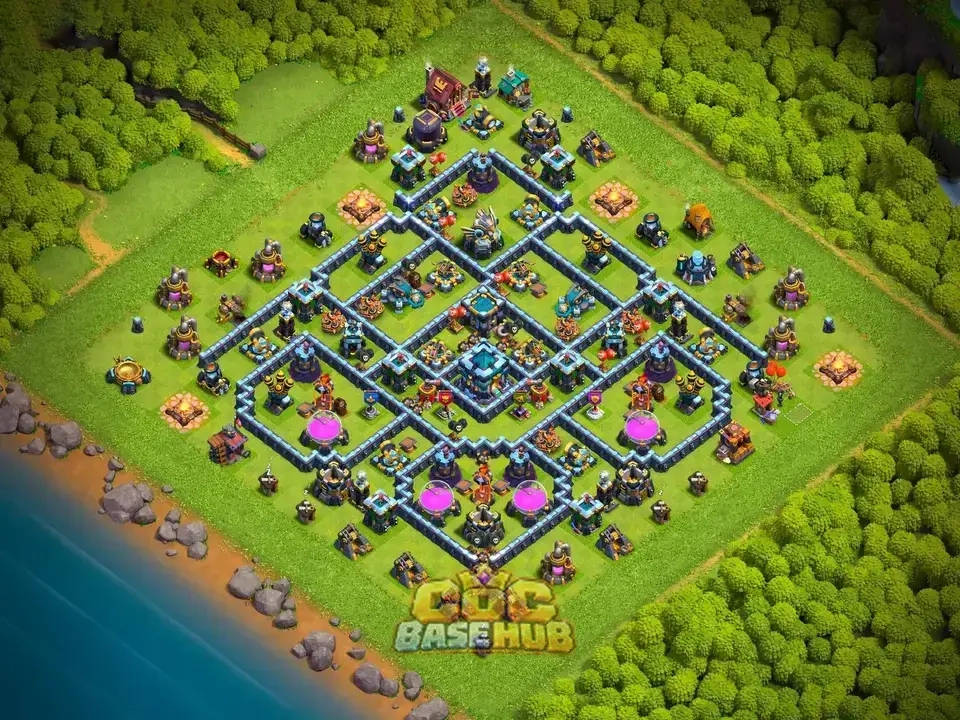
TH13 Trophy Base – Defend Your Trophy Count #7: Town Hall 13 Layout and Copy Link
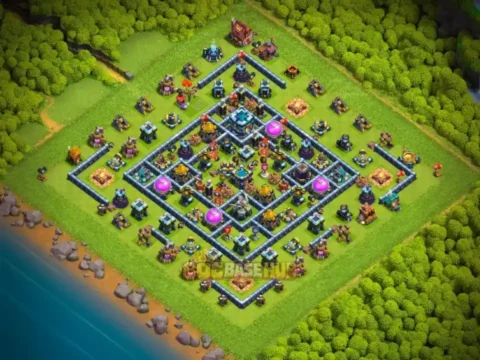
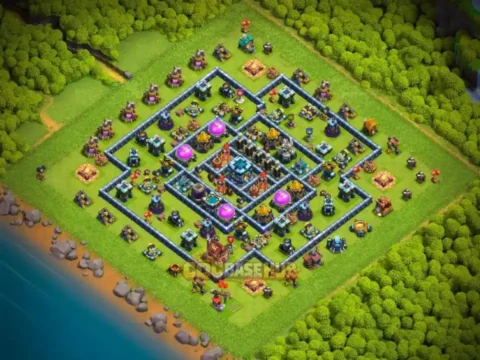
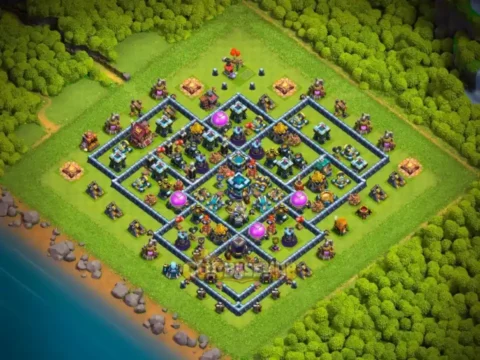
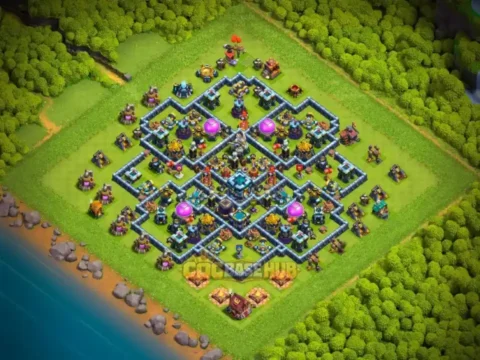
TH13 Trophy Base – Defend Your Trophy Count #7 is a Clash of Clans Town Hall 13 layout shared for players interested in making trophy pushes harder for incoming opponents. Use the copy link to load the base into the game, then evaluate it against the attacks you face. The exact star result depends on opponent skill, upgrades, and the attack plan. This guide discusses TH13 defensive mechanics, sensible testing methods, and ways to decide whether this layout fits your needs; it does not pretend that every building position has been verified from the screenshot.
Town Hall pressure and Giga Inferno for Trophy Base #7
Account for differences in opponent skill and upgrades. At Town Hall 13, the Giga Inferno creates a meaningful timing decision for the attacker. Consider whether troops will reach the Town Hall while abilities are available and whether support units can survive the surrounding damage. Avoid assuming that simply placing the Town Hall in the center always creates the strongest defense. The same arrangement can face very different results in casual multiplayer and coordinated war. For the trophy base role, the right compromise depends on your current league and opponent pool. Because the image has not been individually audited, treat these points as a structured review checklist. Use your own attack history to decide which risks matter.
Think about what happens after the first major defense falls. At Town Hall 13, the Giga Inferno creates a meaningful timing decision for the attacker. Consider whether troops will reach the Town Hall while abilities are available and whether support units can survive the surrounding damage. Avoid assuming that simply placing the Town Hall in the center always creates the strongest defense. A layout may appear resilient until one compartment opens a direct path to the remaining objectives. When evaluating #7, compare this issue with the other defenses instead of treating it as a stand-alone score. Use this criterion to decide what to inspect after placing the base in your village. This question focuses attention on defensive continuity.
Keep adjustments measurable and reversible. At Town Hall 13, the Giga Inferno creates a meaningful timing decision for the attacker. Consider whether troops will reach the Town Hall while abilities are available and whether support units can survive the surrounding damage. Avoid assuming that simply placing the Town Hall in the center always creates the strongest defense. Changing many compartments at once makes it difficult to learn which modification helped. In making trophy pushes harder for incoming opponents, this can influence how you interpret the result. The safest conclusion comes from several representative replays, not one battle. Small experiments produce clearer feedback over time.
Strengths and limitations for Trophy Base #7
Evaluate the same feature from both sides of the battle. Potential strengths come from layered defensive coverage, inconvenient access, and attack-path uncertainty. Potential limitations include vulnerability to well-planned hero dives, air funnels, or spells. These are evaluation criteria, not verified claims about the exact arrangement, which should be checked visually and through replays. What delays one army can sometimes create a convenient funnel for another. For the trophy base role, the right compromise depends on your current league and opponent pool. Attack direction can change the apparent value of the same defensive arrangement. This two-sided check prevents overconfidence in a single defensive trick.
Consider the sequence rather than isolated buildings. Potential strengths come from layered defensive coverage, inconvenient access, and attack-path uncertainty. Potential limitations include vulnerability to well-planned hero dives, air funnels, or spells. These are evaluation criteria, not verified claims about the exact arrangement, which should be checked visually and through replays. The outcome often depends on what the attacker reaches first, second, and third. When evaluating #7, compare this issue with the other defenses instead of treating it as a stand-alone score. Because the image has not been individually audited, treat these points as a structured review checklist. This avoids treating defensive strength as a simple count of structures.
Focus on the cost of the attacker’s choices. Potential strengths come from layered defensive coverage, inconvenient access, and attack-path uncertainty. Potential limitations include vulnerability to well-planned hero dives, air funnels, or spells. These are evaluation criteria, not verified claims about the exact arrangement, which should be checked visually and through replays. Every extra spell, hero ability, or detour spent on one objective reduces options elsewhere. In making trophy pushes harder for incoming opponents, this can influence how you interpret the result. Use this criterion to decide what to inspect after placing the base in your village. A sound layout makes the opponent pay for valuable access.
Clan War and CWL preparation for Trophy Base #7
Start with the attacker’s first decision. War defense depends on the opponent roster, scouting habits, and the attacks used in your league. A base that succeeds in ordinary multiplayer may perform differently in organized wars. Review previous enemy attacks and adjust only after identifying a recurring weakness. A useful test is to imagine an experienced opponent choosing a side without knowing the hidden traps. For the trophy base role, the right compromise depends on your current league and opponent pool. The copy link provides a starting configuration; actual defense results require testing. This perspective helps identify easy value before you commit to a change.
Pay attention to the final cleanup phase. War defense depends on the opponent roster, scouting habits, and the attacks used in your league. A base that succeeds in ordinary multiplayer may perform differently in organized wars. Review previous enemy attacks and adjust only after identifying a recurring weakness. Some attacks survive the core but fail because remaining structures are awkward to reach. When evaluating #7, compare this issue with the other defenses instead of treating it as a stand-alone score. This topic matters most when it influences the attacker’s spell or troop investment. Cleanup routes can be an important part of the overall design.
Compare the intended goal with the actual replay. War defense depends on the opponent roster, scouting habits, and the attacks used in your league. A base that succeeds in ordinary multiplayer may perform differently in organized wars. Review previous enemy attacks and adjust only after identifying a recurring weakness. Write down which objective the attacker achieved and what it cost in troops or spells. In making trophy pushes harder for incoming opponents, this can influence how you interpret the result. Attack direction can change the apparent value of the same defensive arrangement. The comparison can expose a weakness that is not obvious from a static layout.
Replay review method for Trophy Base #7
Look for the simplest low-risk attack plan. Review at least several defenses before making a conclusion. Record entry direction, siege choice, spells, Town Hall timing, and which defenses survive longest. Separate poor attacker execution from genuine base strength, because a weak attack is not proof of an exceptional layout. An opponent may ignore the strongest compartment and approach through a weaker route. When evaluating #7, compare this issue with the other defenses instead of treating it as a stand-alone score. Your upgrade levels and opponents can change how this principle plays out. Testing that route is more useful than praising a difficult-looking core.
Check whether one investment wins several objectives. Review at least several defenses before making a conclusion. Record entry direction, siege choice, spells, Town Hall timing, and which defenses survive longest. Separate poor attacker execution from genuine base strength, because a weak attack is not proof of an exceptional layout. An efficient hero entry or siege deployment may remove multiple key defenses at once. In making trophy pushes harder for incoming opponents, this can influence how you interpret the result. An isolated defensive feature is less useful than its interaction with the surrounding layout. Identifying that combination gives you a concrete testing priority.
Separate reliable behavior from a lucky outcome. Review at least several defenses before making a conclusion. Record entry direction, siege choice, spells, Town Hall timing, and which defenses survive longest. Separate poor attacker execution from genuine base strength, because a weak attack is not proof of an exceptional layout. A single failed attack might reflect missed spells or incorrect troop deployment. For the trophy base role, the right compromise depends on your current league and opponent pool. Treat the idea as a hypothesis to test, not a verified feature of this specific screenshot. Repeated patterns offer stronger evidence for a defensive adjustment.
- Inspect the relevant defensive range in the village editor.
- Review recent attack replays before changing the arrangement.
- Compare results after a single, measurable adjustment.
Copy link and installation for Trophy Base #7
Account for differences in opponent skill and upgrades. Use the supplied Clash of Clans layout link to open the arrangement in the game, provided your device and game version support the link. Verify the Town Hall level, inspect the layout, and save it to an available slot. If the link fails, check the app version and the original source rather than assuming the layout is invalid. The same arrangement can face very different results in casual multiplayer and coordinated war. For the trophy base role, the right compromise depends on your current league and opponent pool. This topic matters most when it influences the attacker’s spell or troop investment. Use your own attack history to decide which risks matter.
Think about what happens after the first major defense falls. Use the supplied Clash of Clans layout link to open the arrangement in the game, provided your device and game version support the link. Verify the Town Hall level, inspect the layout, and save it to an available slot. If the link fails, check the app version and the original source rather than assuming the layout is invalid. A layout may appear resilient until one compartment opens a direct path to the remaining objectives. When evaluating #7, compare this issue with the other defenses instead of treating it as a stand-alone score. Attack direction can change the apparent value of the same defensive arrangement. This question focuses attention on defensive continuity.
Keep adjustments measurable and reversible. Use the supplied Clash of Clans layout link to open the arrangement in the game, provided your device and game version support the link. Verify the Town Hall level, inspect the layout, and save it to an available slot. If the link fails, check the app version and the original source rather than assuming the layout is invalid. Changing many compartments at once makes it difficult to learn which modification helped. In making trophy pushes harder for incoming opponents, this can influence how you interpret the result. Because the image has not been individually audited, treat these points as a structured review checklist. Small experiments produce clearer feedback over time.
Anti two-star considerations for Trophy Base #7
Evaluate the same feature from both sides of the battle. An anti-two-star approach generally tries to make Town Hall access expensive while keeping percentage gains difficult. It is not a promise that every attack will finish below two stars. Examine whether an attacker can obtain safe percentage outside the base before committing to the Town Hall. What delays one army can sometimes create a convenient funnel for another. In making trophy pushes harder for incoming opponents, this can influence how you interpret the result. The copy link provides a starting configuration; actual defense results require testing. This two-sided check prevents overconfidence in a single defensive trick.
Consider the sequence rather than isolated buildings. An anti-two-star approach generally tries to make Town Hall access expensive while keeping percentage gains difficult. It is not a promise that every attack will finish below two stars. Examine whether an attacker can obtain safe percentage outside the base before committing to the Town Hall. The outcome often depends on what the attacker reaches first, second, and third. For the trophy base role, the right compromise depends on your current league and opponent pool. This topic matters most when it influences the attacker’s spell or troop investment. This avoids treating defensive strength as a simple count of structures.
Focus on the cost of the attacker’s choices. An anti-two-star approach generally tries to make Town Hall access expensive while keeping percentage gains difficult. It is not a promise that every attack will finish below two stars. Examine whether an attacker can obtain safe percentage outside the base before committing to the Town Hall. Every extra spell, hero ability, or detour spent on one objective reduces options elsewhere. When evaluating #7, compare this issue with the other defenses instead of treating it as a stand-alone score. Attack direction can change the apparent value of the same defensive arrangement. A sound layout makes the opponent pay for valuable access.
Funneling and troop movement for Trophy Base #7
Look for the simplest low-risk attack plan. Attackers often win or lose through funnel quality. If exterior buildings are easy to remove, the main force may enter exactly where intended. Examine how side structures, defensive ranges, and compartments influence whether troops stay together or split. An opponent may ignore the strongest compartment and approach through a weaker route. For the trophy base role, the right compromise depends on your current league and opponent pool. Treat the idea as a hypothesis to test, not a verified feature of this specific screenshot. Testing that route is more useful than praising a difficult-looking core.
Check whether one investment wins several objectives. Attackers often win or lose through funnel quality. If exterior buildings are easy to remove, the main force may enter exactly where intended. Examine how side structures, defensive ranges, and compartments influence whether troops stay together or split. An efficient hero entry or siege deployment may remove multiple key defenses at once. When evaluating #7, compare this issue with the other defenses instead of treating it as a stand-alone score. The copy link provides a starting configuration; actual defense results require testing. Identifying that combination gives you a concrete testing priority.
Separate reliable behavior from a lucky outcome. Attackers often win or lose through funnel quality. If exterior buildings are easy to remove, the main force may enter exactly where intended. Examine how side structures, defensive ranges, and compartments influence whether troops stay together or split. A single failed attack might reflect missed spells or incorrect troop deployment. In making trophy pushes harder for incoming opponents, this can influence how you interpret the result. This topic matters most when it influences the attacker’s spell or troop investment. Repeated patterns offer stronger evidence for a defensive adjustment.
Eagle Artillery and attack pacing for Trophy Base #7
Look for the simplest low-risk attack plan. The Eagle Artillery can punish an army after enough housing space has been deployed. A good defensive plan considers when the attacker commits the main force and whether they can remove the Eagle without losing critical troops. Review whether its pressure complements other defenses. An opponent may ignore the strongest compartment and approach through a weaker route. In making trophy pushes harder for incoming opponents, this can influence how you interpret the result. Your upgrade levels and opponents can change how this principle plays out. Testing that route is more useful than praising a difficult-looking core.
Check whether one investment wins several objectives. The Eagle Artillery can punish an army after enough housing space has been deployed. A good defensive plan considers when the attacker commits the main force and whether they can remove the Eagle without losing critical troops. Review whether its pressure complements other defenses. An efficient hero entry or siege deployment may remove multiple key defenses at once. For the trophy base role, the right compromise depends on your current league and opponent pool. An isolated defensive feature is less useful than its interaction with the surrounding layout. Identifying that combination gives you a concrete testing priority.
Separate reliable behavior from a lucky outcome. The Eagle Artillery can punish an army after enough housing space has been deployed. A good defensive plan considers when the attacker commits the main force and whether they can remove the Eagle without losing critical troops. Review whether its pressure complements other defenses. A single failed attack might reflect missed spells or incorrect troop deployment. When evaluating #7, compare this issue with the other defenses instead of treating it as a stand-alone score. Treat the idea as a hypothesis to test, not a verified feature of this specific screenshot. Repeated patterns offer stronger evidence for a defensive adjustment.
- Inspect the relevant defensive range in the village editor.
- Review recent attack replays before changing the arrangement.
- Compare results after a single, measurable adjustment.
Anti three-star considerations for Trophy Base #7
Account for differences in opponent skill and upgrades. An anti-three-star approach emphasizes preserving defensive threats and creating awkward cleanup routes. It cannot prevent a skilled attacker from achieving three stars in every situation. Review the sequencing of major defenses, not just their apparent strength in a screenshot. The same arrangement can face very different results in casual multiplayer and coordinated war. For the trophy base role, the right compromise depends on your current league and opponent pool. Your upgrade levels and opponents can change how this principle plays out. Use your own attack history to decide which risks matter.
Think about what happens after the first major defense falls. An anti-three-star approach emphasizes preserving defensive threats and creating awkward cleanup routes. It cannot prevent a skilled attacker from achieving three stars in every situation. Review the sequencing of major defenses, not just their apparent strength in a screenshot. A layout may appear resilient until one compartment opens a direct path to the remaining objectives. When evaluating #7, compare this issue with the other defenses instead of treating it as a stand-alone score. An isolated defensive feature is less useful than its interaction with the surrounding layout. This question focuses attention on defensive continuity.
Keep adjustments measurable and reversible. An anti-three-star approach emphasizes preserving defensive threats and creating awkward cleanup routes. It cannot prevent a skilled attacker from achieving three stars in every situation. Review the sequencing of major defenses, not just their apparent strength in a screenshot. Changing many compartments at once makes it difficult to learn which modification helped. In making trophy pushes harder for incoming opponents, this can influence how you interpret the result. Treat the idea as a hypothesis to test, not a verified feature of this specific screenshot. Small experiments produce clearer feedback over time.
LavaLoon and Balloon routes for Trophy Base #7
Account for differences in opponent skill and upgrades. Lava Hounds and Balloons exploit predictable Air Defense routes. A layout should make attackers think about haste timing, air traps, and cleanup support. Examine whether Balloons can travel through several defenses while remaining protected by the same tanking unit. The same arrangement can face very different results in casual multiplayer and coordinated war. When evaluating #7, compare this issue with the other defenses instead of treating it as a stand-alone score. The safest conclusion comes from several representative replays, not one battle. Use your own attack history to decide which risks matter.
Think about what happens after the first major defense falls. Lava Hounds and Balloons exploit predictable Air Defense routes. A layout should make attackers think about haste timing, air traps, and cleanup support. Examine whether Balloons can travel through several defenses while remaining protected by the same tanking unit. A layout may appear resilient until one compartment opens a direct path to the remaining objectives. In making trophy pushes harder for incoming opponents, this can influence how you interpret the result. For this layout, focus on practical decisions rather than claims of guaranteed protection. This question focuses attention on defensive continuity.
Keep adjustments measurable and reversible. Lava Hounds and Balloons exploit predictable Air Defense routes. A layout should make attackers think about haste timing, air traps, and cleanup support. Examine whether Balloons can travel through several defenses while remaining protected by the same tanking unit. Changing many compartments at once makes it difficult to learn which modification helped. For the trophy base role, the right compromise depends on your current league and opponent pool. Your upgrade levels and opponents can change how this principle plays out. Small experiments produce clearer feedback over time.
How to copy and evaluate TH13 Trophy Base – Defend Your Trophy Count #7
Open the layout link supplied with this entry, confirm that Clash of Clans recognizes the Town Hall 13 layout, and save it in a suitable base slot. Test the design against real opponents and adjust it for your available defenses. Remember that the copy link shares a starting arrangement; the defensive result is never guaranteed.