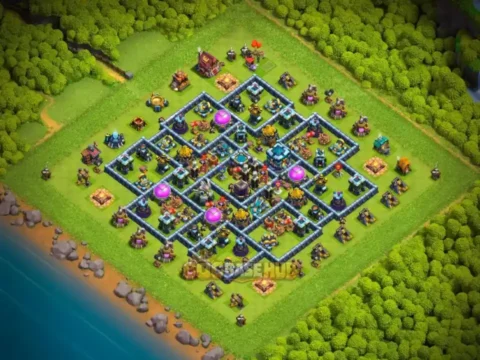
TH13 Trophy Base – Defend Your Trophy Count #8
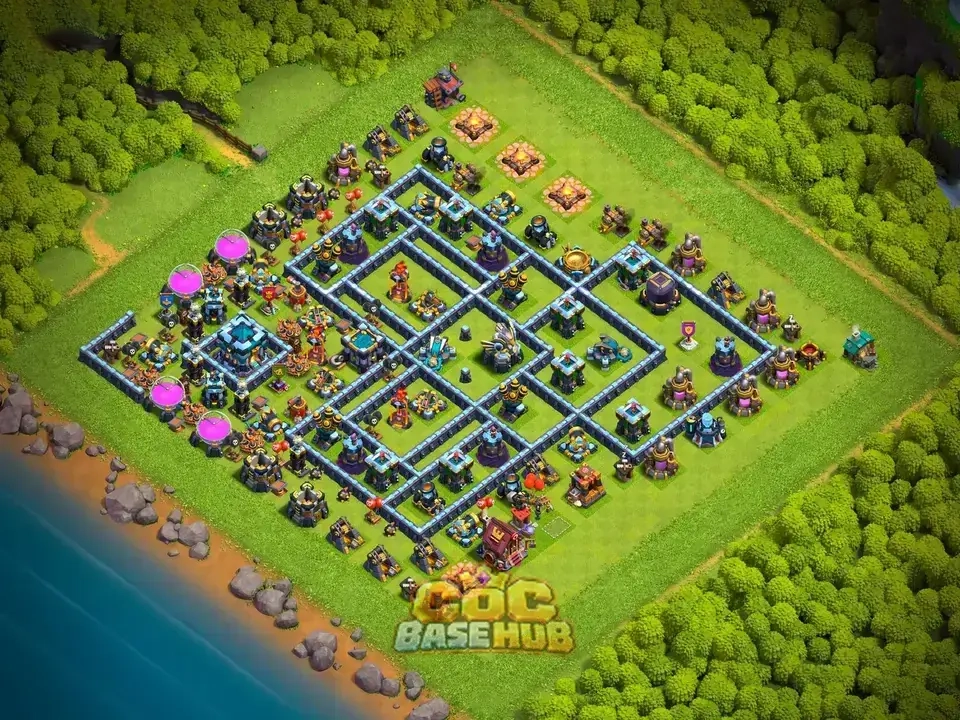
TH13 Trophy Base – Defend Your Trophy Count #8: Town Hall 13 Layout and Copy Link
TH13 Trophy Base – Defend Your Trophy Count #8 is a Clash of Clans Town Hall 13 layout shared for players interested in making trophy pushes harder for incoming opponents. Use the copy link to load the base into the game, then evaluate it against the attacks you face. The exact star result depends on opponent skill, upgrades, and the attack plan. This guide discusses TH13 defensive mechanics, sensible testing methods, and ways to decide whether this layout fits your needs; it does not pretend that every building position has been verified from the screenshot.
Trophy defense tradeoffs for Trophy Base #8
Keep adjustments measurable and reversible. Trophy-oriented defense rewards difficult attack paths and inefficient percentage collection. An attacker may still secure a star or choose a favorable angle. Assess whether your base forces meaningful choices between the Town Hall and accessible exterior buildings. Changing many compartments at once makes it difficult to learn which modification helped. When evaluating #8, compare this issue with the other defenses instead of treating it as a stand-alone score. Your upgrade levels and opponents can change how this principle plays out. Small experiments produce clearer feedback over time.
Evaluate the same feature from both sides of the battle. Trophy-oriented defense rewards difficult attack paths and inefficient percentage collection. An attacker may still secure a star or choose a favorable angle. Assess whether your base forces meaningful choices between the Town Hall and accessible exterior buildings. What delays one army can sometimes create a convenient funnel for another. In making trophy pushes harder for incoming opponents, this can influence how you interpret the result. An isolated defensive feature is less useful than its interaction with the surrounding layout. This two-sided check prevents overconfidence in a single defensive trick.
Consider the sequence rather than isolated buildings. Trophy-oriented defense rewards difficult attack paths and inefficient percentage collection. An attacker may still secure a star or choose a favorable angle. Assess whether your base forces meaningful choices between the Town Hall and accessible exterior buildings. The outcome often depends on what the attacker reaches first, second, and third. For the trophy base role, the right compromise depends on your current league and opponent pool. Treat the idea as a hypothesis to test, not a verified feature of this specific screenshot. This avoids treating defensive strength as a simple count of structures.
Wall compartments and access for Trophy Base #8
Focus on the cost of the attacker’s choices. Walls should create meaningful decisions rather than merely divide the village into decorative shapes. Look for places where a Wall Breaker, Jump Spell, Siege Machine, or hero ability can bypass multiple sections. Effective compartment design can delay an attack even when the attacker has ample damage. Every extra spell, hero ability, or detour spent on one objective reduces options elsewhere. For the trophy base role, the right compromise depends on your current league and opponent pool. For this layout, focus on practical decisions rather than claims of guaranteed protection. A sound layout makes the opponent pay for valuable access.
Look for the simplest low-risk attack plan. Walls should create meaningful decisions rather than merely divide the village into decorative shapes. Look for places where a Wall Breaker, Jump Spell, Siege Machine, or hero ability can bypass multiple sections. Effective compartment design can delay an attack even when the attacker has ample damage. An opponent may ignore the strongest compartment and approach through a weaker route. When evaluating #8, compare this issue with the other defenses instead of treating it as a stand-alone score. Your upgrade levels and opponents can change how this principle plays out. Testing that route is more useful than praising a difficult-looking core.
Check whether one investment wins several objectives. Walls should create meaningful decisions rather than merely divide the village into decorative shapes. Look for places where a Wall Breaker, Jump Spell, Siege Machine, or hero ability can bypass multiple sections. Effective compartment design can delay an attack even when the attacker has ample damage. An efficient hero entry or siege deployment may remove multiple key defenses at once. In making trophy pushes harder for incoming opponents, this can influence how you interpret the result. An isolated defensive feature is less useful than its interaction with the surrounding layout. Identifying that combination gives you a concrete testing priority.
Siege Machine entry options for Trophy Base #8
Compare the intended goal with the actual replay. Wall Wreckers, Battle Blimps, Stone Slammers, and other available siege choices can bypass expected paths. Evaluate which entry gives the highest defensive value to the attacker and whether the base offers a clear, low-risk siege route. Write down which objective the attacker achieved and what it cost in troops or spells. When evaluating #8, compare this issue with the other defenses instead of treating it as a stand-alone score. For this layout, focus on practical decisions rather than claims of guaranteed protection. The comparison can expose a weakness that is not obvious from a static layout.
Account for differences in opponent skill and upgrades. Wall Wreckers, Battle Blimps, Stone Slammers, and other available siege choices can bypass expected paths. Evaluate which entry gives the highest defensive value to the attacker and whether the base offers a clear, low-risk siege route. The same arrangement can face very different results in casual multiplayer and coordinated war. In making trophy pushes harder for incoming opponents, this can influence how you interpret the result. Your upgrade levels and opponents can change how this principle plays out. Use your own attack history to decide which risks matter.
Think about what happens after the first major defense falls. Wall Wreckers, Battle Blimps, Stone Slammers, and other available siege choices can bypass expected paths. Evaluate which entry gives the highest defensive value to the attacker and whether the base offers a clear, low-risk siege route. A layout may appear resilient until one compartment opens a direct path to the remaining objectives. For the trophy base role, the right compromise depends on your current league and opponent pool. An isolated defensive feature is less useful than its interaction with the surrounding layout. This question focuses attention on defensive continuity.
X-Bow and core support for Trophy Base #8
Keep adjustments measurable and reversible. X-Bows provide sustained damage that becomes more valuable when attackers spend time navigating compartments. Their settings and coverage should be considered alongside heroes, traps, and other defenses. A long path through X-Bow fire can be more costly than a short path through a seemingly stronger area. Changing many compartments at once makes it difficult to learn which modification helped. For the trophy base role, the right compromise depends on your current league and opponent pool. The safest conclusion comes from several representative replays, not one battle. Small experiments produce clearer feedback over time.
Evaluate the same feature from both sides of the battle. X-Bows provide sustained damage that becomes more valuable when attackers spend time navigating compartments. Their settings and coverage should be considered alongside heroes, traps, and other defenses. A long path through X-Bow fire can be more costly than a short path through a seemingly stronger area. What delays one army can sometimes create a convenient funnel for another. When evaluating #8, compare this issue with the other defenses instead of treating it as a stand-alone score. For this layout, focus on practical decisions rather than claims of guaranteed protection. This two-sided check prevents overconfidence in a single defensive trick.
Consider the sequence rather than isolated buildings. X-Bows provide sustained damage that becomes more valuable when attackers spend time navigating compartments. Their settings and coverage should be considered alongside heroes, traps, and other defenses. A long path through X-Bow fire can be more costly than a short path through a seemingly stronger area. The outcome often depends on what the attacker reaches first, second, and third. In making trophy pushes harder for incoming opponents, this can influence how you interpret the result. Your upgrade levels and opponents can change how this principle plays out. This avoids treating defensive strength as a simple count of structures.
- Inspect the relevant defensive range in the village editor.
- Review recent attack replays before changing the arrangement.
- Compare results after a single, measurable adjustment.
Scattershot coverage for Trophy Base #8
Compare the intended goal with the actual replay. Scattershots are particularly important against clustered troops. Their value depends on target access, nearby compartments, and whether the attacker can eliminate them with an early spell or hero dive. Think about overlapping fire and the consequences of losing one major defense too early. Write down which objective the attacker achieved and what it cost in troops or spells. For the trophy base role, the right compromise depends on your current league and opponent pool. Use this criterion to decide what to inspect after placing the base in your village. The comparison can expose a weakness that is not obvious from a static layout.
Account for differences in opponent skill and upgrades. Scattershots are particularly important against clustered troops. Their value depends on target access, nearby compartments, and whether the attacker can eliminate them with an early spell or hero dive. Think about overlapping fire and the consequences of losing one major defense too early. The same arrangement can face very different results in casual multiplayer and coordinated war. When evaluating #8, compare this issue with the other defenses instead of treating it as a stand-alone score. The safest conclusion comes from several representative replays, not one battle. Use your own attack history to decide which risks matter.
Think about what happens after the first major defense falls. Scattershots are particularly important against clustered troops. Their value depends on target access, nearby compartments, and whether the attacker can eliminate them with an early spell or hero dive. Think about overlapping fire and the consequences of losing one major defense too early. A layout may appear resilient until one compartment opens a direct path to the remaining objectives. In making trophy pushes harder for incoming opponents, this can influence how you interpret the result. For this layout, focus on practical decisions rather than claims of guaranteed protection. This question focuses attention on defensive continuity.
Strengths and limitations for Trophy Base #8
Focus on the cost of the attacker’s choices. Potential strengths come from layered defensive coverage, inconvenient access, and attack-path uncertainty. Potential limitations include vulnerability to well-planned hero dives, air funnels, or spells. These are evaluation criteria, not verified claims about the exact arrangement, which should be checked visually and through replays. Every extra spell, hero ability, or detour spent on one objective reduces options elsewhere. In making trophy pushes harder for incoming opponents, this can influence how you interpret the result. For this layout, focus on practical decisions rather than claims of guaranteed protection. A sound layout makes the opponent pay for valuable access.
Look for the simplest low-risk attack plan. Potential strengths come from layered defensive coverage, inconvenient access, and attack-path uncertainty. Potential limitations include vulnerability to well-planned hero dives, air funnels, or spells. These are evaluation criteria, not verified claims about the exact arrangement, which should be checked visually and through replays. An opponent may ignore the strongest compartment and approach through a weaker route. For the trophy base role, the right compromise depends on your current league and opponent pool. Your upgrade levels and opponents can change how this principle plays out. Testing that route is more useful than praising a difficult-looking core.
Check whether one investment wins several objectives. Potential strengths come from layered defensive coverage, inconvenient access, and attack-path uncertainty. Potential limitations include vulnerability to well-planned hero dives, air funnels, or spells. These are evaluation criteria, not verified claims about the exact arrangement, which should be checked visually and through replays. An efficient hero entry or siege deployment may remove multiple key defenses at once. When evaluating #8, compare this issue with the other defenses instead of treating it as a stand-alone score. An isolated defensive feature is less useful than its interaction with the surrounding layout. Identifying that combination gives you a concrete testing priority.
Frequently asked questions for Trophy Base #8
Keep adjustments measurable and reversible. Players often ask whether a layout guarantees a star result, works without maxed defenses, or protects every resource. The answer depends on upgrades, opponents, troop levels, and execution. Use the copy link as a starting point and adapt the design to your actual defensive needs. Changing many compartments at once makes it difficult to learn which modification helped. For the trophy base role, the right compromise depends on your current league and opponent pool. Because the image has not been individually audited, treat these points as a structured review checklist. Small experiments produce clearer feedback over time.
Evaluate the same feature from both sides of the battle. Players often ask whether a layout guarantees a star result, works without maxed defenses, or protects every resource. The answer depends on upgrades, opponents, troop levels, and execution. Use the copy link as a starting point and adapt the design to your actual defensive needs. What delays one army can sometimes create a convenient funnel for another. When evaluating #8, compare this issue with the other defenses instead of treating it as a stand-alone score. Use this criterion to decide what to inspect after placing the base in your village. This two-sided check prevents overconfidence in a single defensive trick.
Consider the sequence rather than isolated buildings. Players often ask whether a layout guarantees a star result, works without maxed defenses, or protects every resource. The answer depends on upgrades, opponents, troop levels, and execution. Use the copy link as a starting point and adapt the design to your actual defensive needs. The outcome often depends on what the attacker reaches first, second, and third. In making trophy pushes harder for incoming opponents, this can influence how you interpret the result. The safest conclusion comes from several representative replays, not one battle. This avoids treating defensive strength as a simple count of structures.
LavaLoon and Balloon routes for Trophy Base #8
Keep adjustments measurable and reversible. Lava Hounds and Balloons exploit predictable Air Defense routes. A layout should make attackers think about haste timing, air traps, and cleanup support. Examine whether Balloons can travel through several defenses while remaining protected by the same tanking unit. Changing many compartments at once makes it difficult to learn which modification helped. For the trophy base role, the right compromise depends on your current league and opponent pool. Treat the idea as a hypothesis to test, not a verified feature of this specific screenshot. Small experiments produce clearer feedback over time.
Evaluate the same feature from both sides of the battle. Lava Hounds and Balloons exploit predictable Air Defense routes. A layout should make attackers think about haste timing, air traps, and cleanup support. Examine whether Balloons can travel through several defenses while remaining protected by the same tanking unit. What delays one army can sometimes create a convenient funnel for another. When evaluating #8, compare this issue with the other defenses instead of treating it as a stand-alone score. The copy link provides a starting configuration; actual defense results require testing. This two-sided check prevents overconfidence in a single defensive trick.
Consider the sequence rather than isolated buildings. Lava Hounds and Balloons exploit predictable Air Defense routes. A layout should make attackers think about haste timing, air traps, and cleanup support. Examine whether Balloons can travel through several defenses while remaining protected by the same tanking unit. The outcome often depends on what the attacker reaches first, second, and third. In making trophy pushes harder for incoming opponents, this can influence how you interpret the result. This topic matters most when it influences the attacker’s spell or troop investment. This avoids treating defensive strength as a simple count of structures.
- Inspect the relevant defensive range in the village editor.
- Review recent attack replays before changing the arrangement.
- Compare results after a single, measurable adjustment.
Layout purpose and defensive identity for Trophy Base #8
Focus on the cost of the attacker’s choices. Decide which outcome matters before making changes: defending a war attack, keeping resources safe, holding trophies, or combining several priorities. A Town Hall 13 layout should be judged by its intended role rather than a single replay. Identify the most valuable defensive exchanges and consider how the first thirty seconds influence the remaining attack. Every extra spell, hero ability, or detour spent on one objective reduces options elsewhere. When evaluating #8, compare this issue with the other defenses instead of treating it as a stand-alone score. The copy link provides a starting configuration; actual defense results require testing. A sound layout makes the opponent pay for valuable access.
Look for the simplest low-risk attack plan. Decide which outcome matters before making changes: defending a war attack, keeping resources safe, holding trophies, or combining several priorities. A Town Hall 13 layout should be judged by its intended role rather than a single replay. Identify the most valuable defensive exchanges and consider how the first thirty seconds influence the remaining attack. An opponent may ignore the strongest compartment and approach through a weaker route. In making trophy pushes harder for incoming opponents, this can influence how you interpret the result. This topic matters most when it influences the attacker’s spell or troop investment. Testing that route is more useful than praising a difficult-looking core.
Check whether one investment wins several objectives. Decide which outcome matters before making changes: defending a war attack, keeping resources safe, holding trophies, or combining several priorities. A Town Hall 13 layout should be judged by its intended role rather than a single replay. Identify the most valuable defensive exchanges and consider how the first thirty seconds influence the remaining attack. An efficient hero entry or siege deployment may remove multiple key defenses at once. For the trophy base role, the right compromise depends on your current league and opponent pool. Attack direction can change the apparent value of the same defensive arrangement. Identifying that combination gives you a concrete testing priority.
Defensive Clan Castle for Trophy Base #8
Keep adjustments measurable and reversible. Clan Castle troops can influence an attack by disrupting funneling, delaying heroes, or drawing spell investment. Their impact depends on lure range and timing. Choose defensive reinforcements according to the attack styles you face, and consider whether the attacker can neutralize them before the main push. Changing many compartments at once makes it difficult to learn which modification helped. When evaluating #8, compare this issue with the other defenses instead of treating it as a stand-alone score. Because the image has not been individually audited, treat these points as a structured review checklist. Small experiments produce clearer feedback over time.
Evaluate the same feature from both sides of the battle. Clan Castle troops can influence an attack by disrupting funneling, delaying heroes, or drawing spell investment. Their impact depends on lure range and timing. Choose defensive reinforcements according to the attack styles you face, and consider whether the attacker can neutralize them before the main push. What delays one army can sometimes create a convenient funnel for another. In making trophy pushes harder for incoming opponents, this can influence how you interpret the result. Use this criterion to decide what to inspect after placing the base in your village. This two-sided check prevents overconfidence in a single defensive trick.
Consider the sequence rather than isolated buildings. Clan Castle troops can influence an attack by disrupting funneling, delaying heroes, or drawing spell investment. Their impact depends on lure range and timing. Choose defensive reinforcements according to the attack styles you face, and consider whether the attacker can neutralize them before the main push. The outcome often depends on what the attacker reaches first, second, and third. For the trophy base role, the right compromise depends on your current league and opponent pool. The safest conclusion comes from several representative replays, not one battle. This avoids treating defensive strength as a simple count of structures.
How to copy and evaluate TH13 Trophy Base – Defend Your Trophy Count #8
Open the layout link supplied with this entry, confirm that Clash of Clans recognizes the Town Hall 13 layout, and save it in a suitable base slot. Test the design against real opponents and adjust it for your available defenses. Remember that the copy link shares a starting arrangement; the defensive result is never guaranteed.