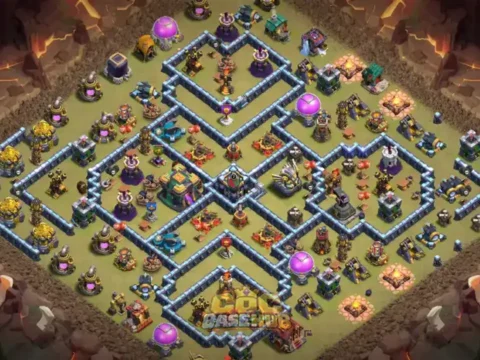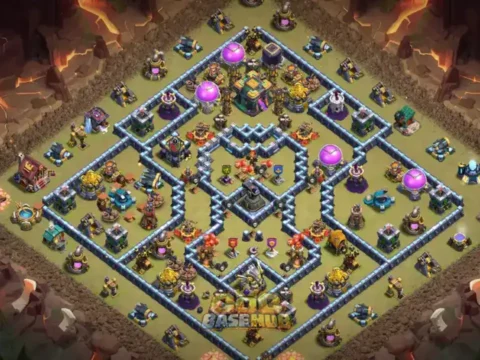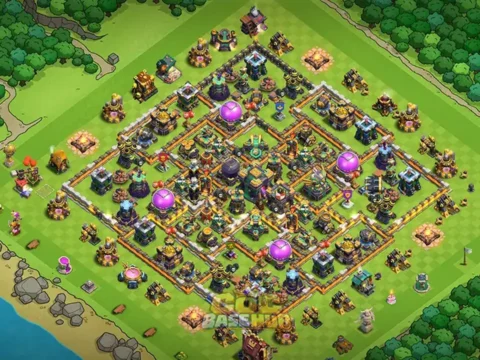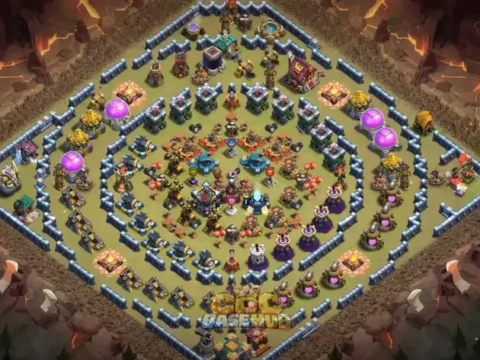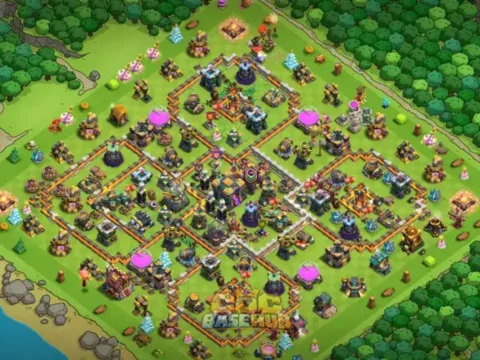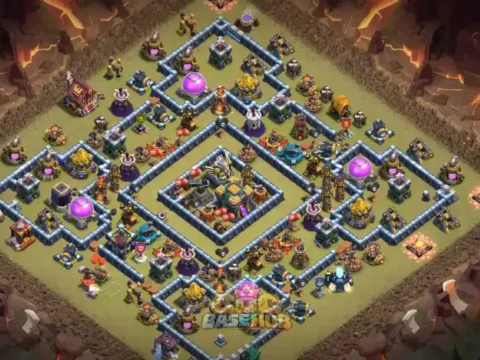
TH14 Hybrid Base Anti 3 Star – Versatile Layout #5New
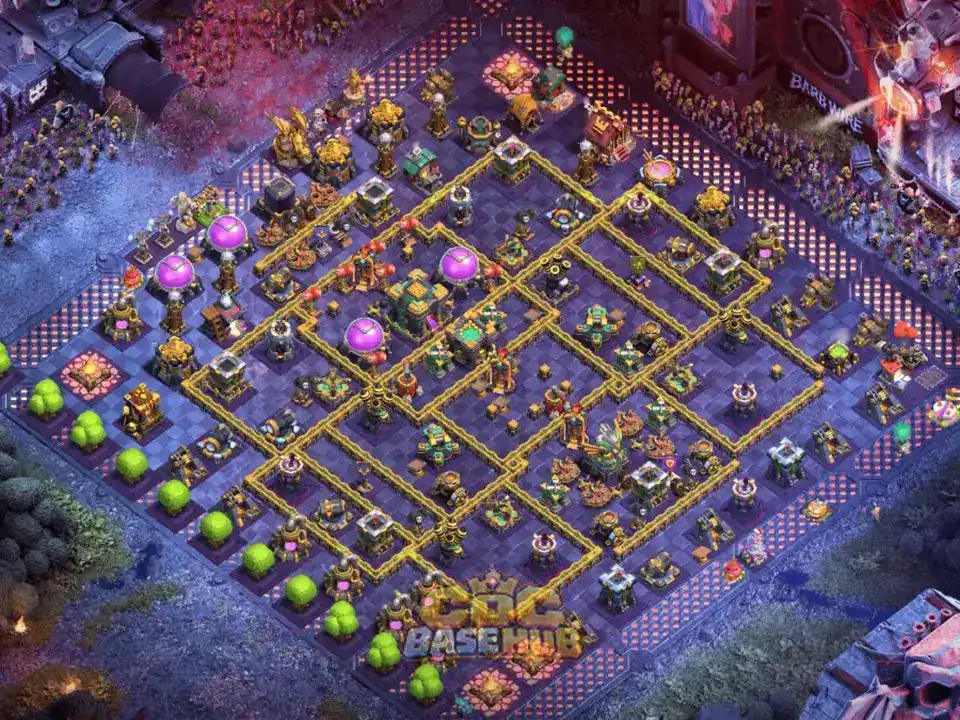
TH14 Hybrid Base Anti 3 Star – Versatile Layout #5 – Complete Strategy and Copy Guide
Explore this Clash of Clans TH14 hybrid base with a practical focus on Anti 3 Star, Anti Air, Anti Electro Dragon. This guide explains how to evaluate the layout, use the copy link, test defensive performance, and adapt your strategy over time. The feature labels describe the intended defensive emphasis; they are not a promise of specific results or verified building positions.
Who Should Use This TH14 Layout?
This hybrid base is primarily intended for players who want to test a layout oriented toward Anti 3 Star, Anti Air, Anti Electro Dragon. Whether you play regular clan wars, Clan War League, Legend League, or routine multiplayer battles, choose a design that matches your actual objective. If your priority is different, compare alternative bases before committing to this one.
1. Understanding the layout objective
The purpose of this part of the review is to define the defensive objective, compare it with the available attack styles, and explain what a successful defense would mean. For a TH14 hybrid base emphasizing Anti 3 Star, Anti Air, Anti Electro Dragon, the relevant question is whether this choice supports the intended defensive objective under realistic attack conditions. Check whether the attacker gains several objectives from a single spell or hero ability, and whether those objectives can be separated. Consider the attacker’s funnel before the main push: a clear path can make even a heavily defended position easier to approach. Keep your notes focused on reproducible observations: entry direction, army, spells, stars, percentage, and time remaining. Compare the first minute of the attack with the last thirty seconds; some weaknesses only become obvious during cleanup. Avoid assuming that the screenshot proves a particular trap location; confirm hidden details in game or through repeated testing. Review pathing after each meaningful change so that fixing one lane does not accidentally create an easier second lane. For Clan War League, consider the likely strength of opponents and the possibility that the enemy has scouted similar designs. Prioritize the adjustments that address repeatable failure patterns, especially when multiple attacks exploit the same opening. As you review understanding the layout objective, document the actual result rather than assuming the design works in every matchup. A repeatable observation is more useful than a confident label, and small improvements should be tested before being accepted as permanent changes.
- Check the objective against the most common attacks you face.
- Record defensive replays and identify repeatable weaknesses.
- Test adjustments in friendly challenges before relying on them.
2. Choosing the right defensive priorities
An effective way to assess the design is to rank Town Hall protection, percentage denial, resource protection, and time pressure according to the intended mode. For a TH14 hybrid base emphasizing Anti 3 Star, Anti Air, Anti Electro Dragon, the relevant question is whether this choice supports the intended defensive objective under realistic attack conditions. Consider the attacker’s funnel before the main push: a clear path can make even a heavily defended position easier to approach. Begin by observing a replay from more than one entry angle; a result from a single attack can reflect player decisions as much as the quality of the layout. Avoid assuming that the screenshot proves a particular trap location; confirm hidden details in game or through repeated testing. Pay attention to which defenses remain active after the main army reaches the central area, because early damage alone does not guarantee a strong finish. In a war setting, stars conceded matter most; in farming, the value of protected resources may change the decision. The strongest improvement is often a small adjustment informed by evidence rather than a complete rebuild after every defense. A copy link is useful for rapid deployment, but the real measure of value comes from your own defensive history. If the same route succeeds repeatedly, note the first high-value building lost and investigate what made that route attractive. As you review choosing the right defensive priorities, document the actual result rather than assuming the design works in every matchup. A repeatable observation is more useful than a confident label, and small improvements should be tested before being accepted as permanent changes.
3. Town Hall placement and access
Before committing this TH14 layout to regular use, take time to evaluate routes toward the Town Hall, how entry choices influence troop commitment, and why reaching the target is not the same as finishing the attack. For a TH14 hybrid base emphasizing Anti 3 Star, Anti Air, Anti Electro Dragon, the relevant question is whether this choice supports the intended defensive objective under realistic attack conditions. Treat anti-star labels as strategic intentions rather than guaranteed outcomes, since skill and army composition remain decisive. Consider the attacker’s funnel before the main push: a clear path can make even a heavily defended position easier to approach. If the same route succeeds repeatedly, note the first high-value building lost and investigate what made that route attractive. For Clan War League, consider the likely strength of opponents and the possibility that the enemy has scouted similar designs. Begin by observing a replay from more than one entry angle; a result from a single attack can reflect player decisions as much as the quality of the layout. The objective is not to promise an unbeatable base but to create decisions that force the attacker to spend troops, spells, or time. Keep your notes focused on reproducible observations: entry direction, army, spells, stars, percentage, and time remaining. Avoid assuming that the screenshot proves a particular trap location; confirm hidden details in game or through repeated testing. As you review town hall placement and access, document the actual result rather than assuming the design works in every matchup. A repeatable observation is more useful than a confident label, and small improvements should be tested before being accepted as permanent changes.
4. Core compartment planning
For this TH14 hybrid base, the practical starting point is to examine the core as a sequence of choices rather than assuming a particular structure occupies a particular tile. For a TH14 hybrid base emphasizing Anti 3 Star, Anti Air, Anti Electro Dragon, the relevant question is whether this choice supports the intended defensive objective under realistic attack conditions. Keep your notes focused on reproducible observations: entry direction, army, spells, stars, percentage, and time remaining. If you cannot verify a feature from the available information, describe it as something to inspect rather than a confirmed attribute. Check whether the attacker gains several objectives from a single spell or hero ability, and whether those objectives can be separated. A copy link is useful for rapid deployment, but the real measure of value comes from your own defensive history. In a war setting, stars conceded matter most; in farming, the value of protected resources may change the decision. Pay attention to which defenses remain active after the main army reaches the central area, because early damage alone does not guarantee a strong finish. The strongest improvement is often a small adjustment informed by evidence rather than a complete rebuild after every defense. Prioritize the adjustments that address repeatable failure patterns, especially when multiple attacks exploit the same opening. As you review core compartment planning, document the actual result rather than assuming the design works in every matchup. A repeatable observation is more useful than a confident label, and small improvements should be tested before being accepted as permanent changes.
5. Outer building distribution
When evaluating base #5, it helps to review outside buildings for funnel opportunities, free percentage, and the tradeoff between delay and easy cleanup. For a TH14 hybrid base emphasizing Anti 3 Star, Anti Air, Anti Electro Dragon, the relevant question is whether this choice supports the intended defensive objective under realistic attack conditions. Begin by observing a replay from more than one entry angle; a result from a single attack can reflect player decisions as much as the quality of the layout. Prioritize the adjustments that address repeatable failure patterns, especially when multiple attacks exploit the same opening. The strongest improvement is often a small adjustment informed by evidence rather than a complete rebuild after every defense. Pay attention to which defenses remain active after the main army reaches the central area, because early damage alone does not guarantee a strong finish. Test with different armies rather than treating one failed attack as proof that the base is universally effective. Compare the first minute of the attack with the last thirty seconds; some weaknesses only become obvious during cleanup. For Clan War League, consider the likely strength of opponents and the possibility that the enemy has scouted similar designs. A copy link is useful for rapid deployment, but the real measure of value comes from your own defensive history. As you review outer building distribution, document the actual result rather than assuming the design works in every matchup. A repeatable observation is more useful than a confident label, and small improvements should be tested before being accepted as permanent changes.
6. Wall compartments and entry angles
The purpose of this part of the review is to study wall segmentation, access points, pathing, and the risk of predictable wall-breaker approaches. For a TH14 hybrid base emphasizing Anti 3 Star, Anti Air, Anti Electro Dragon, the relevant question is whether this choice supports the intended defensive objective under realistic attack conditions. Compare the first minute of the attack with the last thirty seconds; some weaknesses only become obvious during cleanup. Test with different armies rather than treating one failed attack as proof that the base is universally effective. Prioritize the adjustments that address repeatable failure patterns, especially when multiple attacks exploit the same opening. Avoid assuming that the screenshot proves a particular trap location; confirm hidden details in game or through repeated testing. Consider the attacker’s funnel before the main push: a clear path can make even a heavily defended position easier to approach. Check whether the attacker gains several objectives from a single spell or hero ability, and whether those objectives can be separated. A copy link is useful for rapid deployment, but the real measure of value comes from your own defensive history. In a war setting, stars conceded matter most; in farming, the value of protected resources may change the decision. As you review wall compartments and entry angles, document the actual result rather than assuming the design works in every matchup. A repeatable observation is more useful than a confident label, and small improvements should be tested before being accepted as permanent changes.
7. Defensive coverage overlap
An effective way to assess the design is to assess whether important lanes receive overlapping fire without leaving other angles completely unprotected. For a TH14 hybrid base emphasizing Anti 3 Star, Anti Air, Anti Electro Dragon, the relevant question is whether this choice supports the intended defensive objective under realistic attack conditions. A copy link is useful for rapid deployment, but the real measure of value comes from your own defensive history. Treat anti-star labels as strategic intentions rather than guaranteed outcomes, since skill and army composition remain decisive. In a war setting, stars conceded matter most; in farming, the value of protected resources may change the decision. Begin by observing a replay from more than one entry angle; a result from a single attack can reflect player decisions as much as the quality of the layout. The strongest improvement is often a small adjustment informed by evidence rather than a complete rebuild after every defense. Keep the tradeoff between concentrated defensive fire and vulnerability to splash or spell value in mind. If the same route succeeds repeatedly, note the first high-value building lost and investigate what made that route attractive. Avoid assuming that the screenshot proves a particular trap location; confirm hidden details in game or through repeated testing. As you review defensive coverage overlap, document the actual result rather than assuming the design works in every matchup. A repeatable observation is more useful than a confident label, and small improvements should be tested before being accepted as permanent changes.
- Check the objective against the most common attacks you face.
- Record defensive replays and identify repeatable weaknesses.
- Test adjustments in friendly challenges before relying on them.
8. Eagle Artillery considerations
Before committing this TH14 layout to regular use, take time to consider Eagle Artillery pressure where the Town Hall level and current game rules make it relevant. For a TH14 hybrid base emphasizing Anti 3 Star, Anti Air, Anti Electro Dragon, the relevant question is whether this choice supports the intended defensive objective under realistic attack conditions. Begin by observing a replay from more than one entry angle; a result from a single attack can reflect player decisions as much as the quality of the layout. The strongest improvement is often a small adjustment informed by evidence rather than a complete rebuild after every defense. Test with different armies rather than treating one failed attack as proof that the base is universally effective. Check whether the attacker gains several objectives from a single spell or hero ability, and whether those objectives can be separated. Avoid assuming that the screenshot proves a particular trap location; confirm hidden details in game or through repeated testing. In a war setting, stars conceded matter most; in farming, the value of protected resources may change the decision. Use the layout as a starting framework and adapt it to your building levels, unlocked defenses, and current balance environment. Review pathing after each meaningful change so that fixing one lane does not accidentally create an easier second lane. As you review eagle artillery considerations, document the actual result rather than assuming the design works in every matchup. A repeatable observation is more useful than a confident label, and small improvements should be tested before being accepted as permanent changes.
9. Inferno Tower configuration
For this TH14 hybrid base, the practical starting point is to compare single-target and multi-target pressure against different troop mixes and explain why mode choice matters. For a TH14 hybrid base emphasizing Anti 3 Star, Anti Air, Anti Electro Dragon, the relevant question is whether this choice supports the intended defensive objective under realistic attack conditions. Check whether the attacker gains several objectives from a single spell or hero ability, and whether those objectives can be separated. If the same route succeeds repeatedly, note the first high-value building lost and investigate what made that route attractive. In a war setting, stars conceded matter most; in farming, the value of protected resources may change the decision. The strongest improvement is often a small adjustment informed by evidence rather than a complete rebuild after every defense. For Clan War League, consider the likely strength of opponents and the possibility that the enemy has scouted similar designs. If you cannot verify a feature from the available information, describe it as something to inspect rather than a confirmed attribute. Compare the first minute of the attack with the last thirty seconds; some weaknesses only become obvious during cleanup. Test with different armies rather than treating one failed attack as proof that the base is universally effective. As you review inferno tower configuration, document the actual result rather than assuming the design works in every matchup. A repeatable observation is more useful than a confident label, and small improvements should be tested before being accepted as permanent changes.
10. Scattershot pressure and spacing
When evaluating base #5, it helps to analyze area damage coverage and how attackers might avoid or neutralize clustered threats. For a TH14 hybrid base emphasizing Anti 3 Star, Anti Air, Anti Electro Dragon, the relevant question is whether this choice supports the intended defensive objective under realistic attack conditions. If the same route succeeds repeatedly, note the first high-value building lost and investigate what made that route attractive. The strongest improvement is often a small adjustment informed by evidence rather than a complete rebuild after every defense. Test with different armies rather than treating one failed attack as proof that the base is universally effective. Review pathing after each meaningful change so that fixing one lane does not accidentally create an easier second lane. Use the layout as a starting framework and adapt it to your building levels, unlocked defenses, and current balance environment. Pay attention to which defenses remain active after the main army reaches the central area, because early damage alone does not guarantee a strong finish. In a war setting, stars conceded matter most; in farming, the value of protected resources may change the decision. Treat anti-star labels as strategic intentions rather than guaranteed outcomes, since skill and army composition remain decisive. As you review scattershot pressure and spacing, document the actual result rather than assuming the design works in every matchup. A repeatable observation is more useful than a confident label, and small improvements should be tested before being accepted as permanent changes.
11. Air Defense distribution
The purpose of this part of the review is to review how air-targeting coverage shapes Dragon, Balloon, and other flying troop approaches. For a TH14 hybrid base emphasizing Anti 3 Star, Anti Air, Anti Electro Dragon, the relevant question is whether this choice supports the intended defensive objective under realistic attack conditions. For Clan War League, consider the likely strength of opponents and the possibility that the enemy has scouted similar designs. Treat anti-star labels as strategic intentions rather than guaranteed outcomes, since skill and army composition remain decisive. Check whether the attacker gains several objectives from a single spell or hero ability, and whether those objectives can be separated. The strongest improvement is often a small adjustment informed by evidence rather than a complete rebuild after every defense. Keep the tradeoff between concentrated defensive fire and vulnerability to splash or spell value in mind. Use the layout as a starting framework and adapt it to your building levels, unlocked defenses, and current balance environment. Keep your notes focused on reproducible observations: entry direction, army, spells, stars, percentage, and time remaining. Compare the first minute of the attack with the last thirty seconds; some weaknesses only become obvious during cleanup. As you review air defense distribution, document the actual result rather than assuming the design works in every matchup. A repeatable observation is more useful than a confident label, and small improvements should be tested before being accepted as permanent changes.
12. Air Sweeper directions
An effective way to assess the design is to evaluate whether sweeper orientation can disrupt expected air entries without exposing a simpler alternative. For a TH14 hybrid base emphasizing Anti 3 Star, Anti Air, Anti Electro Dragon, the relevant question is whether this choice supports the intended defensive objective under realistic attack conditions. In a war setting, stars conceded matter most; in farming, the value of protected resources may change the decision. Pay attention to which defenses remain active after the main army reaches the central area, because early damage alone does not guarantee a strong finish. The strongest improvement is often a small adjustment informed by evidence rather than a complete rebuild after every defense. Check whether the attacker gains several objectives from a single spell or hero ability, and whether those objectives can be separated. Test with different armies rather than treating one failed attack as proof that the base is universally effective. For Clan War League, consider the likely strength of opponents and the possibility that the enemy has scouted similar designs. If you cannot verify a feature from the available information, describe it as something to inspect rather than a confirmed attribute. The objective is not to promise an unbeatable base but to create decisions that force the attacker to spend troops, spells, or time. As you review air sweeper directions, document the actual result rather than assuming the design works in every matchup. A repeatable observation is more useful than a confident label, and small improvements should be tested before being accepted as permanent changes.
13. X-Bow coverage choices
Before committing this TH14 layout to regular use, take time to compare ground-focused and air-capable coverage as part of the overall defensive plan. For a TH14 hybrid base emphasizing Anti 3 Star, Anti Air, Anti Electro Dragon, the relevant question is whether this choice supports the intended defensive objective under realistic attack conditions. In a war setting, stars conceded matter most; in farming, the value of protected resources may change the decision. If you cannot verify a feature from the available information, describe it as something to inspect rather than a confirmed attribute. Pay attention to which defenses remain active after the main army reaches the central area, because early damage alone does not guarantee a strong finish. Compare the first minute of the attack with the last thirty seconds; some weaknesses only become obvious during cleanup. Keep the tradeoff between concentrated defensive fire and vulnerability to splash or spell value in mind. Check whether the attacker gains several objectives from a single spell or hero ability, and whether those objectives can be separated. Prioritize the adjustments that address repeatable failure patterns, especially when multiple attacks exploit the same opening. A copy link is useful for rapid deployment, but the real measure of value comes from your own defensive history. As you review x-bow coverage choices, document the actual result rather than assuming the design works in every matchup. A repeatable observation is more useful than a confident label, and small improvements should be tested before being accepted as permanent changes.
- Check the objective against the most common attacks you face.
- Record defensive replays and identify repeatable weaknesses.
- Test adjustments in friendly challenges before relying on them.
14. Wizard Tower and splash damage
For this TH14 hybrid base, the practical starting point is to discuss how splash damage discourages swarm attacks and supports nearby defenses. For a TH14 hybrid base emphasizing Anti 3 Star, Anti Air, Anti Electro Dragon, the relevant question is whether this choice supports the intended defensive objective under realistic attack conditions. Use the layout as a starting framework and adapt it to your building levels, unlocked defenses, and current balance environment. Keep the tradeoff between concentrated defensive fire and vulnerability to splash or spell value in mind. If the same route succeeds repeatedly, note the first high-value building lost and investigate what made that route attractive. In a war setting, stars conceded matter most; in farming, the value of protected resources may change the decision. Begin by observing a replay from more than one entry angle; a result from a single attack can reflect player decisions as much as the quality of the layout. Check whether the attacker gains several objectives from a single spell or hero ability, and whether those objectives can be separated. Prioritize the adjustments that address repeatable failure patterns, especially when multiple attacks exploit the same opening. Avoid assuming that the screenshot proves a particular trap location; confirm hidden details in game or through repeated testing. As you review wizard tower and splash damage, document the actual result rather than assuming the design works in every matchup. A repeatable observation is more useful than a confident label, and small improvements should be tested before being accepted as permanent changes.
15. Bomb Tower and ground swarms
When evaluating base #5, it helps to consider splash zones and where mass ground troops might be forced to group. For a TH14 hybrid base emphasizing Anti 3 Star, Anti Air, Anti Electro Dragon, the relevant question is whether this choice supports the intended defensive objective under realistic attack conditions. Begin by observing a replay from more than one entry angle; a result from a single attack can reflect player decisions as much as the quality of the layout. Check whether the attacker gains several objectives from a single spell or hero ability, and whether those objectives can be separated. The strongest improvement is often a small adjustment informed by evidence rather than a complete rebuild after every defense. Pay attention to which defenses remain active after the main army reaches the central area, because early damage alone does not guarantee a strong finish. Consider the attacker’s funnel before the main push: a clear path can make even a heavily defended position easier to approach. Avoid assuming that the screenshot proves a particular trap location; confirm hidden details in game or through repeated testing. Compare the first minute of the attack with the last thirty seconds; some weaknesses only become obvious during cleanup. A copy link is useful for rapid deployment, but the real measure of value comes from your own defensive history. As you review bomb tower and ground swarms, document the actual result rather than assuming the design works in every matchup. A repeatable observation is more useful than a confident label, and small improvements should be tested before being accepted as permanent changes.
16. Hidden Tesla and surprise value
The purpose of this part of the review is to review the advantages and drawbacks of concealed damage in likely entry and cleanup paths. For a TH14 hybrid base emphasizing Anti 3 Star, Anti Air, Anti Electro Dragon, the relevant question is whether this choice supports the intended defensive objective under realistic attack conditions. Begin by observing a replay from more than one entry angle; a result from a single attack can reflect player decisions as much as the quality of the layout. Review pathing after each meaningful change so that fixing one lane does not accidentally create an easier second lane. Keep your notes focused on reproducible observations: entry direction, army, spells, stars, percentage, and time remaining. Avoid assuming that the screenshot proves a particular trap location; confirm hidden details in game or through repeated testing. Keep the tradeoff between concentrated defensive fire and vulnerability to splash or spell value in mind. For Clan War League, consider the likely strength of opponents and the possibility that the enemy has scouted similar designs. The strongest improvement is often a small adjustment informed by evidence rather than a complete rebuild after every defense. Compare the first minute of the attack with the last thirty seconds; some weaknesses only become obvious during cleanup. As you review hidden tesla and surprise value, document the actual result rather than assuming the design works in every matchup. A repeatable observation is more useful than a confident label, and small improvements should be tested before being accepted as permanent changes.
17. Seeking Air Mines and air traps
An effective way to assess the design is to consider likely air paths and the distinction between punishing a hero, a tank, or a damage dealer. For a TH14 hybrid base emphasizing Anti 3 Star, Anti Air, Anti Electro Dragon, the relevant question is whether this choice supports the intended defensive objective under realistic attack conditions. In a war setting, stars conceded matter most; in farming, the value of protected resources may change the decision. Check whether the attacker gains several objectives from a single spell or hero ability, and whether those objectives can be separated. Keep your notes focused on reproducible observations: entry direction, army, spells, stars, percentage, and time remaining. If the same route succeeds repeatedly, note the first high-value building lost and investigate what made that route attractive. Avoid assuming that the screenshot proves a particular trap location; confirm hidden details in game or through repeated testing. Consider the attacker’s funnel before the main push: a clear path can make even a heavily defended position easier to approach. Prioritize the adjustments that address repeatable failure patterns, especially when multiple attacks exploit the same opening. Keep the tradeoff between concentrated defensive fire and vulnerability to splash or spell value in mind. As you review seeking air mines and air traps, document the actual result rather than assuming the design works in every matchup. A repeatable observation is more useful than a confident label, and small improvements should be tested before being accepted as permanent changes.
18. Giant Bomb and Spring Trap planning
Before committing this TH14 layout to regular use, take time to evaluate troop density, pathing, and the risk of predictable ground routes. For a TH14 hybrid base emphasizing Anti 3 Star, Anti Air, Anti Electro Dragon, the relevant question is whether this choice supports the intended defensive objective under realistic attack conditions. Review pathing after each meaningful change so that fixing one lane does not accidentally create an easier second lane. A copy link is useful for rapid deployment, but the real measure of value comes from your own defensive history. If the same route succeeds repeatedly, note the first high-value building lost and investigate what made that route attractive. For Clan War League, consider the likely strength of opponents and the possibility that the enemy has scouted similar designs. Compare the first minute of the attack with the last thirty seconds; some weaknesses only become obvious during cleanup. Prioritize the adjustments that address repeatable failure patterns, especially when multiple attacks exploit the same opening. Pay attention to which defenses remain active after the main army reaches the central area, because early damage alone does not guarantee a strong finish. Use the layout as a starting framework and adapt it to your building levels, unlocked defenses, and current balance environment. As you review giant bomb and spring trap planning, document the actual result rather than assuming the design works in every matchup. A repeatable observation is more useful than a confident label, and small improvements should be tested before being accepted as permanent changes.
19. Skeleton Trap settings
For this TH14 hybrid base, the practical starting point is to discuss air-versus-ground targeting and how distractions can consume attacker time. For a TH14 hybrid base emphasizing Anti 3 Star, Anti Air, Anti Electro Dragon, the relevant question is whether this choice supports the intended defensive objective under realistic attack conditions. In a war setting, stars conceded matter most; in farming, the value of protected resources may change the decision. The strongest improvement is often a small adjustment informed by evidence rather than a complete rebuild after every defense. Use the layout as a starting framework and adapt it to your building levels, unlocked defenses, and current balance environment. Consider the attacker’s funnel before the main push: a clear path can make even a heavily defended position easier to approach. Pay attention to which defenses remain active after the main army reaches the central area, because early damage alone does not guarantee a strong finish. Keep the tradeoff between concentrated defensive fire and vulnerability to splash or spell value in mind. Test with different armies rather than treating one failed attack as proof that the base is universally effective. Treat anti-star labels as strategic intentions rather than guaranteed outcomes, since skill and army composition remain decisive. As you review skeleton trap settings, document the actual result rather than assuming the design works in every matchup. A repeatable observation is more useful than a confident label, and small improvements should be tested before being accepted as permanent changes.
- Check the objective against the most common attacks you face.
- Record defensive replays and identify repeatable weaknesses.
- Test adjustments in friendly challenges before relying on them.
20. Clan Castle defense strategy
When evaluating base #5, it helps to consider defensive troop selection, lure difficulty, and how reinforcements complement existing coverage. For a TH14 hybrid base emphasizing Anti 3 Star, Anti Air, Anti Electro Dragon, the relevant question is whether this choice supports the intended defensive objective under realistic attack conditions. Check whether the attacker gains several objectives from a single spell or hero ability, and whether those objectives can be separated. Keep your notes focused on reproducible observations: entry direction, army, spells, stars, percentage, and time remaining. If the same route succeeds repeatedly, note the first high-value building lost and investigate what made that route attractive. Use the layout as a starting framework and adapt it to your building levels, unlocked defenses, and current balance environment. Prioritize the adjustments that address repeatable failure patterns, especially when multiple attacks exploit the same opening. The strongest improvement is often a small adjustment informed by evidence rather than a complete rebuild after every defense. Avoid assuming that the screenshot proves a particular trap location; confirm hidden details in game or through repeated testing. For Clan War League, consider the likely strength of opponents and the possibility that the enemy has scouted similar designs. As you review clan castle defense strategy, document the actual result rather than assuming the design works in every matchup. A repeatable observation is more useful than a confident label, and small improvements should be tested before being accepted as permanent changes.
21. Defending against Electro Dragons
The purpose of this part of the review is to review chain-lightning spacing, air coverage, and ways an attacker could build a clean funnel. For a TH14 hybrid base emphasizing Anti 3 Star, Anti Air, Anti Electro Dragon, the relevant question is whether this choice supports the intended defensive objective under realistic attack conditions. Review pathing after each meaningful change so that fixing one lane does not accidentally create an easier second lane. Keep your notes focused on reproducible observations: entry direction, army, spells, stars, percentage, and time remaining. Keep the tradeoff between concentrated defensive fire and vulnerability to splash or spell value in mind. Test with different armies rather than treating one failed attack as proof that the base is universally effective. Check whether the attacker gains several objectives from a single spell or hero ability, and whether those objectives can be separated. Prioritize the adjustments that address repeatable failure patterns, especially when multiple attacks exploit the same opening. Use the layout as a starting framework and adapt it to your building levels, unlocked defenses, and current balance environment. If you cannot verify a feature from the available information, describe it as something to inspect rather than a confirmed attribute. As you review defending against electro dragons, document the actual result rather than assuming the design works in every matchup. A repeatable observation is more useful than a confident label, and small improvements should be tested before being accepted as permanent changes.
22. Defending against Dragons and Balloons
An effective way to assess the design is to analyze air entries, support spells, and the value of keeping air defenses relevant throughout the attack. For a TH14 hybrid base emphasizing Anti 3 Star, Anti Air, Anti Electro Dragon, the relevant question is whether this choice supports the intended defensive objective under realistic attack conditions. Treat anti-star labels as strategic intentions rather than guaranteed outcomes, since skill and army composition remain decisive. Review pathing after each meaningful change so that fixing one lane does not accidentally create an easier second lane. Compare the first minute of the attack with the last thirty seconds; some weaknesses only become obvious during cleanup. For Clan War League, consider the likely strength of opponents and the possibility that the enemy has scouted similar designs. Keep the tradeoff between concentrated defensive fire and vulnerability to splash or spell value in mind. Pay attention to which defenses remain active after the main army reaches the central area, because early damage alone does not guarantee a strong finish. Avoid assuming that the screenshot proves a particular trap location; confirm hidden details in game or through repeated testing. Begin by observing a replay from more than one entry angle; a result from a single attack can reflect player decisions as much as the quality of the layout. As you review defending against dragons and balloons, document the actual result rather than assuming the design works in every matchup. A repeatable observation is more useful than a confident label, and small improvements should be tested before being accepted as permanent changes.
23. Defending against LavaLoon
Before committing this TH14 layout to regular use, take time to consider how tanking, balloon pathing, and cleanup units interact with a defensive plan. For a TH14 hybrid base emphasizing Anti 3 Star, Anti Air, Anti Electro Dragon, the relevant question is whether this choice supports the intended defensive objective under realistic attack conditions. If the same route succeeds repeatedly, note the first high-value building lost and investigate what made that route attractive. The objective is not to promise an unbeatable base but to create decisions that force the attacker to spend troops, spells, or time. Begin by observing a replay from more than one entry angle; a result from a single attack can reflect player decisions as much as the quality of the layout. Compare the first minute of the attack with the last thirty seconds; some weaknesses only become obvious during cleanup. In a war setting, stars conceded matter most; in farming, the value of protected resources may change the decision. The strongest improvement is often a small adjustment informed by evidence rather than a complete rebuild after every defense. Consider the attacker’s funnel before the main push: a clear path can make even a heavily defended position easier to approach. Treat anti-star labels as strategic intentions rather than guaranteed outcomes, since skill and army composition remain decisive. As you review defending against lavaloon, document the actual result rather than assuming the design works in every matchup. A repeatable observation is more useful than a confident label, and small improvements should be tested before being accepted as permanent changes.
24. Defending against Hybrid armies
For this TH14 hybrid base, the practical starting point is to examine Miner and Hog Rider movement, healing windows, and concentrated defensive damage. For a TH14 hybrid base emphasizing Anti 3 Star, Anti Air, Anti Electro Dragon, the relevant question is whether this choice supports the intended defensive objective under realistic attack conditions. Test with different armies rather than treating one failed attack as proof that the base is universally effective. Compare the first minute of the attack with the last thirty seconds; some weaknesses only become obvious during cleanup. Keep your notes focused on reproducible observations: entry direction, army, spells, stars, percentage, and time remaining. For Clan War League, consider the likely strength of opponents and the possibility that the enemy has scouted similar designs. Pay attention to which defenses remain active after the main army reaches the central area, because early damage alone does not guarantee a strong finish. Check whether the attacker gains several objectives from a single spell or hero ability, and whether those objectives can be separated. Prioritize the adjustments that address repeatable failure patterns, especially when multiple attacks exploit the same opening. If you cannot verify a feature from the available information, describe it as something to inspect rather than a confirmed attribute. As you review defending against hybrid armies, document the actual result rather than assuming the design works in every matchup. A repeatable observation is more useful than a confident label, and small improvements should be tested before being accepted as permanent changes.
25. Defending against Queen Charge
When evaluating base #5, it helps to evaluate whether a queen can obtain disproportionate value before the main army begins. For a TH14 hybrid base emphasizing Anti 3 Star, Anti Air, Anti Electro Dragon, the relevant question is whether this choice supports the intended defensive objective under realistic attack conditions. Use the layout as a starting framework and adapt it to your building levels, unlocked defenses, and current balance environment. A copy link is useful for rapid deployment, but the real measure of value comes from your own defensive history. Prioritize the adjustments that address repeatable failure patterns, especially when multiple attacks exploit the same opening. Review pathing after each meaningful change so that fixing one lane does not accidentally create an easier second lane. Test with different armies rather than treating one failed attack as proof that the base is universally effective. Treat anti-star labels as strategic intentions rather than guaranteed outcomes, since skill and army composition remain decisive. For Clan War League, consider the likely strength of opponents and the possibility that the enemy has scouted similar designs. Consider the attacker’s funnel before the main push: a clear path can make even a heavily defended position easier to approach. As you review defending against queen charge, document the actual result rather than assuming the design works in every matchup. A repeatable observation is more useful than a confident label, and small improvements should be tested before being accepted as permanent changes.
- Check the objective against the most common attacks you face.
- Record defensive replays and identify repeatable weaknesses.
- Test adjustments in friendly challenges before relying on them.
26. Defending against smash attacks
The purpose of this part of the review is to consider high-hitpoint pushes, healer support, and where spell investment may be required. For a TH14 hybrid base emphasizing Anti 3 Star, Anti Air, Anti Electro Dragon, the relevant question is whether this choice supports the intended defensive objective under realistic attack conditions. If you cannot verify a feature from the available information, describe it as something to inspect rather than a confirmed attribute. Keep your notes focused on reproducible observations: entry direction, army, spells, stars, percentage, and time remaining. Keep the tradeoff between concentrated defensive fire and vulnerability to splash or spell value in mind. Use the layout as a starting framework and adapt it to your building levels, unlocked defenses, and current balance environment. In a war setting, stars conceded matter most; in farming, the value of protected resources may change the decision. For Clan War League, consider the likely strength of opponents and the possibility that the enemy has scouted similar designs. Consider the attacker’s funnel before the main push: a clear path can make even a heavily defended position easier to approach. Review pathing after each meaningful change so that fixing one lane does not accidentally create an easier second lane. As you review defending against smash attacks, document the actual result rather than assuming the design works in every matchup. A repeatable observation is more useful than a confident label, and small improvements should be tested before being accepted as permanent changes.
27. Defending against Root Rider variants
An effective way to assess the design is to discuss pathing, support troops, and the need to validate relevance against the current game version. For a TH14 hybrid base emphasizing Anti 3 Star, Anti Air, Anti Electro Dragon, the relevant question is whether this choice supports the intended defensive objective under realistic attack conditions. Test with different armies rather than treating one failed attack as proof that the base is universally effective. Avoid assuming that the screenshot proves a particular trap location; confirm hidden details in game or through repeated testing. A copy link is useful for rapid deployment, but the real measure of value comes from your own defensive history. If the same route succeeds repeatedly, note the first high-value building lost and investigate what made that route attractive. Check whether the attacker gains several objectives from a single spell or hero ability, and whether those objectives can be separated. Treat anti-star labels as strategic intentions rather than guaranteed outcomes, since skill and army composition remain decisive. In a war setting, stars conceded matter most; in farming, the value of protected resources may change the decision. Keep your notes focused on reproducible observations: entry direction, army, spells, stars, percentage, and time remaining. As you review defending against root rider variants, document the actual result rather than assuming the design works in every matchup. A repeatable observation is more useful than a confident label, and small improvements should be tested before being accepted as permanent changes.
28. Defending against hero dives
Before committing this TH14 layout to regular use, take time to review hero entry points and how much key defensive value a short commitment can gain. For a TH14 hybrid base emphasizing Anti 3 Star, Anti Air, Anti Electro Dragon, the relevant question is whether this choice supports the intended defensive objective under realistic attack conditions. Prioritize the adjustments that address repeatable failure patterns, especially when multiple attacks exploit the same opening. Pay attention to which defenses remain active after the main army reaches the central area, because early damage alone does not guarantee a strong finish. In a war setting, stars conceded matter most; in farming, the value of protected resources may change the decision. Treat anti-star labels as strategic intentions rather than guaranteed outcomes, since skill and army composition remain decisive. The objective is not to promise an unbeatable base but to create decisions that force the attacker to spend troops, spells, or time. Check whether the attacker gains several objectives from a single spell or hero ability, and whether those objectives can be separated. A copy link is useful for rapid deployment, but the real measure of value comes from your own defensive history. Keep your notes focused on reproducible observations: entry direction, army, spells, stars, percentage, and time remaining. As you review defending against hero dives, document the actual result rather than assuming the design works in every matchup. A repeatable observation is more useful than a confident label, and small improvements should be tested before being accepted as permanent changes.
29. Handling siege machines
For this TH14 hybrid base, the practical starting point is to consider Wall Wrecker, Battle Blimp, Log Launcher, and other siege routes as applicable. For a TH14 hybrid base emphasizing Anti 3 Star, Anti Air, Anti Electro Dragon, the relevant question is whether this choice supports the intended defensive objective under realistic attack conditions. If the same route succeeds repeatedly, note the first high-value building lost and investigate what made that route attractive. Prioritize the adjustments that address repeatable failure patterns, especially when multiple attacks exploit the same opening. Use the layout as a starting framework and adapt it to your building levels, unlocked defenses, and current balance environment. If you cannot verify a feature from the available information, describe it as something to inspect rather than a confirmed attribute. Review pathing after each meaningful change so that fixing one lane does not accidentally create an easier second lane. The objective is not to promise an unbeatable base but to create decisions that force the attacker to spend troops, spells, or time. The strongest improvement is often a small adjustment informed by evidence rather than a complete rebuild after every defense. Check whether the attacker gains several objectives from a single spell or hero ability, and whether those objectives can be separated. As you review handling siege machines, document the actual result rather than assuming the design works in every matchup. A repeatable observation is more useful than a confident label, and small improvements should be tested before being accepted as permanent changes.
30. Protecting against Battle Blimp entries
When evaluating base #5, it helps to evaluate likely delivery lines and how traps or concentrated damage may affect the payload. For a TH14 hybrid base emphasizing Anti 3 Star, Anti Air, Anti Electro Dragon, the relevant question is whether this choice supports the intended defensive objective under realistic attack conditions. For Clan War League, consider the likely strength of opponents and the possibility that the enemy has scouted similar designs. Prioritize the adjustments that address repeatable failure patterns, especially when multiple attacks exploit the same opening. Check whether the attacker gains several objectives from a single spell or hero ability, and whether those objectives can be separated. Compare the first minute of the attack with the last thirty seconds; some weaknesses only become obvious during cleanup. The strongest improvement is often a small adjustment informed by evidence rather than a complete rebuild after every defense. Keep the tradeoff between concentrated defensive fire and vulnerability to splash or spell value in mind. Consider the attacker’s funnel before the main push: a clear path can make even a heavily defended position easier to approach. Treat anti-star labels as strategic intentions rather than guaranteed outcomes, since skill and army composition remain decisive. As you review protecting against battle blimp entries, document the actual result rather than assuming the design works in every matchup. A repeatable observation is more useful than a confident label, and small improvements should be tested before being accepted as permanent changes.
31. Managing invisibility and spell value
The purpose of this part of the review is to discuss where attacker spells might neutralize multiple defenses at once. For a TH14 hybrid base emphasizing Anti 3 Star, Anti Air, Anti Electro Dragon, the relevant question is whether this choice supports the intended defensive objective under realistic attack conditions. Test with different armies rather than treating one failed attack as proof that the base is universally effective. Review pathing after each meaningful change so that fixing one lane does not accidentally create an easier second lane. Pay attention to which defenses remain active after the main army reaches the central area, because early damage alone does not guarantee a strong finish. Treat anti-star labels as strategic intentions rather than guaranteed outcomes, since skill and army composition remain decisive. Consider the attacker’s funnel before the main push: a clear path can make even a heavily defended position easier to approach. For Clan War League, consider the likely strength of opponents and the possibility that the enemy has scouted similar designs. Check whether the attacker gains several objectives from a single spell or hero ability, and whether those objectives can be separated. Prioritize the adjustments that address repeatable failure patterns, especially when multiple attacks exploit the same opening. As you review managing invisibility and spell value, document the actual result rather than assuming the design works in every matchup. A repeatable observation is more useful than a confident label, and small improvements should be tested before being accepted as permanent changes.
- Check the objective against the most common attacks you face.
- Record defensive replays and identify repeatable weaknesses.
- Test adjustments in friendly challenges before relying on them.
32. Managing Freeze and Rage spells
An effective way to assess the design is to assess which defensive clusters are vulnerable to one well-timed spell. For a TH14 hybrid base emphasizing Anti 3 Star, Anti Air, Anti Electro Dragon, the relevant question is whether this choice supports the intended defensive objective under realistic attack conditions. The objective is not to promise an unbeatable base but to create decisions that force the attacker to spend troops, spells, or time. Keep your notes focused on reproducible observations: entry direction, army, spells, stars, percentage, and time remaining. Keep the tradeoff between concentrated defensive fire and vulnerability to splash or spell value in mind. Use the layout as a starting framework and adapt it to your building levels, unlocked defenses, and current balance environment. In a war setting, stars conceded matter most; in farming, the value of protected resources may change the decision. Begin by observing a replay from more than one entry angle; a result from a single attack can reflect player decisions as much as the quality of the layout. The strongest improvement is often a small adjustment informed by evidence rather than a complete rebuild after every defense. Prioritize the adjustments that address repeatable failure patterns, especially when multiple attacks exploit the same opening. As you review managing freeze and rage spells, document the actual result rather than assuming the design works in every matchup. A repeatable observation is more useful than a confident label, and small improvements should be tested before being accepted as permanent changes.
33. Reducing funnel efficiency
Before committing this TH14 layout to regular use, take time to identify why easy side clearing makes a powerful central push more predictable. For a TH14 hybrid base emphasizing Anti 3 Star, Anti Air, Anti Electro Dragon, the relevant question is whether this choice supports the intended defensive objective under realistic attack conditions. In a war setting, stars conceded matter most; in farming, the value of protected resources may change the decision. Test with different armies rather than treating one failed attack as proof that the base is universally effective. Prioritize the adjustments that address repeatable failure patterns, especially when multiple attacks exploit the same opening. Pay attention to which defenses remain active after the main army reaches the central area, because early damage alone does not guarantee a strong finish. Consider the attacker’s funnel before the main push: a clear path can make even a heavily defended position easier to approach. Check whether the attacker gains several objectives from a single spell or hero ability, and whether those objectives can be separated. Avoid assuming that the screenshot proves a particular trap location; confirm hidden details in game or through repeated testing. A copy link is useful for rapid deployment, but the real measure of value comes from your own defensive history. As you review reducing funnel efficiency, document the actual result rather than assuming the design works in every matchup. A repeatable observation is more useful than a confident label, and small improvements should be tested before being accepted as permanent changes.
34. Creating time pressure
For this TH14 hybrid base, the practical starting point is to explain how building distribution and pathing can increase cleanup difficulty without giving away free value. For a TH14 hybrid base emphasizing Anti 3 Star, Anti Air, Anti Electro Dragon, the relevant question is whether this choice supports the intended defensive objective under realistic attack conditions. Review pathing after each meaningful change so that fixing one lane does not accidentally create an easier second lane. If the same route succeeds repeatedly, note the first high-value building lost and investigate what made that route attractive. Keep the tradeoff between concentrated defensive fire and vulnerability to splash or spell value in mind. The objective is not to promise an unbeatable base but to create decisions that force the attacker to spend troops, spells, or time. Consider the attacker’s funnel before the main push: a clear path can make even a heavily defended position easier to approach. Test with different armies rather than treating one failed attack as proof that the base is universally effective. Use the layout as a starting framework and adapt it to your building levels, unlocked defenses, and current balance environment. The strongest improvement is often a small adjustment informed by evidence rather than a complete rebuild after every defense. As you review creating time pressure, document the actual result rather than assuming the design works in every matchup. A repeatable observation is more useful than a confident label, and small improvements should be tested before being accepted as permanent changes.
35. Protecting against two-star attacks
When evaluating base #5, it helps to describe when Town Hall denial or percentage control is the more realistic goal. For a TH14 hybrid base emphasizing Anti 3 Star, Anti Air, Anti Electro Dragon, the relevant question is whether this choice supports the intended defensive objective under realistic attack conditions. If the same route succeeds repeatedly, note the first high-value building lost and investigate what made that route attractive. Check whether the attacker gains several objectives from a single spell or hero ability, and whether those objectives can be separated. Keep your notes focused on reproducible observations: entry direction, army, spells, stars, percentage, and time remaining. Pay attention to which defenses remain active after the main army reaches the central area, because early damage alone does not guarantee a strong finish. Consider the attacker’s funnel before the main push: a clear path can make even a heavily defended position easier to approach. If you cannot verify a feature from the available information, describe it as something to inspect rather than a confirmed attribute. Treat anti-star labels as strategic intentions rather than guaranteed outcomes, since skill and army composition remain decisive. For Clan War League, consider the likely strength of opponents and the possibility that the enemy has scouted similar designs. As you review protecting against two-star attacks, document the actual result rather than assuming the design works in every matchup. A repeatable observation is more useful than a confident label, and small improvements should be tested before being accepted as permanent changes.
36. Protecting against three-star attacks
The purpose of this part of the review is to describe why preserving enough late-stage damage can matter more than preventing the first breakthrough. For a TH14 hybrid base emphasizing Anti 3 Star, Anti Air, Anti Electro Dragon, the relevant question is whether this choice supports the intended defensive objective under realistic attack conditions. Compare the first minute of the attack with the last thirty seconds; some weaknesses only become obvious during cleanup. Check whether the attacker gains several objectives from a single spell or hero ability, and whether those objectives can be separated. Use the layout as a starting framework and adapt it to your building levels, unlocked defenses, and current balance environment. In a war setting, stars conceded matter most; in farming, the value of protected resources may change the decision. Keep the tradeoff between concentrated defensive fire and vulnerability to splash or spell value in mind. Review pathing after each meaningful change so that fixing one lane does not accidentally create an easier second lane. If the same route succeeds repeatedly, note the first high-value building lost and investigate what made that route attractive. Prioritize the adjustments that address repeatable failure patterns, especially when multiple attacks exploit the same opening. As you review protecting against three-star attacks, document the actual result rather than assuming the design works in every matchup. A repeatable observation is more useful than a confident label, and small improvements should be tested before being accepted as permanent changes.
37. Reading attack replays
An effective way to assess the design is to explain what to record after a defense and how to distinguish bad luck from a repeatable weakness. For a TH14 hybrid base emphasizing Anti 3 Star, Anti Air, Anti Electro Dragon, the relevant question is whether this choice supports the intended defensive objective under realistic attack conditions. Review pathing after each meaningful change so that fixing one lane does not accidentally create an easier second lane. Pay attention to which defenses remain active after the main army reaches the central area, because early damage alone does not guarantee a strong finish. In a war setting, stars conceded matter most; in farming, the value of protected resources may change the decision. Avoid assuming that the screenshot proves a particular trap location; confirm hidden details in game or through repeated testing. Compare the first minute of the attack with the last thirty seconds; some weaknesses only become obvious during cleanup. Keep your notes focused on reproducible observations: entry direction, army, spells, stars, percentage, and time remaining. Keep the tradeoff between concentrated defensive fire and vulnerability to splash or spell value in mind. If the same route succeeds repeatedly, note the first high-value building lost and investigate what made that route attractive. As you review reading attack replays, document the actual result rather than assuming the design works in every matchup. A repeatable observation is more useful than a confident label, and small improvements should be tested before being accepted as permanent changes.
- Check the objective against the most common attacks you face.
- Record defensive replays and identify repeatable weaknesses.
- Test adjustments in friendly challenges before relying on them.
38. Testing from multiple directions
Before committing this TH14 layout to regular use, take time to recommend testing at different clock positions and documenting the opening and finishing phases. For a TH14 hybrid base emphasizing Anti 3 Star, Anti Air, Anti Electro Dragon, the relevant question is whether this choice supports the intended defensive objective under realistic attack conditions. Pay attention to which defenses remain active after the main army reaches the central area, because early damage alone does not guarantee a strong finish. The strongest improvement is often a small adjustment informed by evidence rather than a complete rebuild after every defense. For Clan War League, consider the likely strength of opponents and the possibility that the enemy has scouted similar designs. Consider the attacker’s funnel before the main push: a clear path can make even a heavily defended position easier to approach. A copy link is useful for rapid deployment, but the real measure of value comes from your own defensive history. Prioritize the adjustments that address repeatable failure patterns, especially when multiple attacks exploit the same opening. Begin by observing a replay from more than one entry angle; a result from a single attack can reflect player decisions as much as the quality of the layout. The objective is not to promise an unbeatable base but to create decisions that force the attacker to spend troops, spells, or time. As you review testing from multiple directions, document the actual result rather than assuming the design works in every matchup. A repeatable observation is more useful than a confident label, and small improvements should be tested before being accepted as permanent changes.
39. Separating layout issues from upgrade gaps
For this TH14 hybrid base, the practical starting point is to distinguish structural flaws from underleveled defenses, heroes, or traps. For a TH14 hybrid base emphasizing Anti 3 Star, Anti Air, Anti Electro Dragon, the relevant question is whether this choice supports the intended defensive objective under realistic attack conditions. Treat anti-star labels as strategic intentions rather than guaranteed outcomes, since skill and army composition remain decisive. The strongest improvement is often a small adjustment informed by evidence rather than a complete rebuild after every defense. Consider the attacker’s funnel before the main push: a clear path can make even a heavily defended position easier to approach. If the same route succeeds repeatedly, note the first high-value building lost and investigate what made that route attractive. Compare the first minute of the attack with the last thirty seconds; some weaknesses only become obvious during cleanup. If you cannot verify a feature from the available information, describe it as something to inspect rather than a confirmed attribute. A copy link is useful for rapid deployment, but the real measure of value comes from your own defensive history. Keep your notes focused on reproducible observations: entry direction, army, spells, stars, percentage, and time remaining. As you review separating layout issues from upgrade gaps, document the actual result rather than assuming the design works in every matchup. A repeatable observation is more useful than a confident label, and small improvements should be tested before being accepted as permanent changes.
40. Evaluating attacker skill and matchups
When evaluating base #5, it helps to explain why a single replay cannot prove a layout is universally strong or weak. For a TH14 hybrid base emphasizing Anti 3 Star, Anti Air, Anti Electro Dragon, the relevant question is whether this choice supports the intended defensive objective under realistic attack conditions. Review pathing after each meaningful change so that fixing one lane does not accidentally create an easier second lane. Pay attention to which defenses remain active after the main army reaches the central area, because early damage alone does not guarantee a strong finish. The strongest improvement is often a small adjustment informed by evidence rather than a complete rebuild after every defense. A copy link is useful for rapid deployment, but the real measure of value comes from your own defensive history. If the same route succeeds repeatedly, note the first high-value building lost and investigate what made that route attractive. Avoid assuming that the screenshot proves a particular trap location; confirm hidden details in game or through repeated testing. Begin by observing a replay from more than one entry angle; a result from a single attack can reflect player decisions as much as the quality of the layout. Compare the first minute of the attack with the last thirty seconds; some weaknesses only become obvious during cleanup. As you review evaluating attacker skill and matchups, document the actual result rather than assuming the design works in every matchup. A repeatable observation is more useful than a confident label, and small improvements should be tested before being accepted as permanent changes.
41. War-day deployment checklist
The purpose of this part of the review is to describe practical steps before assigning a base to a war or Clan War League roster. For a TH14 hybrid base emphasizing Anti 3 Star, Anti Air, Anti Electro Dragon, the relevant question is whether this choice supports the intended defensive objective under realistic attack conditions. Use the layout as a starting framework and adapt it to your building levels, unlocked defenses, and current balance environment. Review pathing after each meaningful change so that fixing one lane does not accidentally create an easier second lane. Consider the attacker’s funnel before the main push: a clear path can make even a heavily defended position easier to approach. Begin by observing a replay from more than one entry angle; a result from a single attack can reflect player decisions as much as the quality of the layout. Treat anti-star labels as strategic intentions rather than guaranteed outcomes, since skill and army composition remain decisive. For Clan War League, consider the likely strength of opponents and the possibility that the enemy has scouted similar designs. The strongest improvement is often a small adjustment informed by evidence rather than a complete rebuild after every defense. If you cannot verify a feature from the available information, describe it as something to inspect rather than a confirmed attribute. As you review war-day deployment checklist, document the actual result rather than assuming the design works in every matchup. A repeatable observation is more useful than a confident label, and small improvements should be tested before being accepted as permanent changes.
42. Legend League adaptation
An effective way to assess the design is to consider repeated defenses, common meta armies, and why rotation matters in high-volume attacking. For a TH14 hybrid base emphasizing Anti 3 Star, Anti Air, Anti Electro Dragon, the relevant question is whether this choice supports the intended defensive objective under realistic attack conditions. Check whether the attacker gains several objectives from a single spell or hero ability, and whether those objectives can be separated. Consider the attacker’s funnel before the main push: a clear path can make even a heavily defended position easier to approach. Pay attention to which defenses remain active after the main army reaches the central area, because early damage alone does not guarantee a strong finish. The strongest improvement is often a small adjustment informed by evidence rather than a complete rebuild after every defense. If the same route succeeds repeatedly, note the first high-value building lost and investigate what made that route attractive. Treat anti-star labels as strategic intentions rather than guaranteed outcomes, since skill and army composition remain decisive. Test with different armies rather than treating one failed attack as proof that the base is universally effective. Prioritize the adjustments that address repeatable failure patterns, especially when multiple attacks exploit the same opening. As you review legend league adaptation, document the actual result rather than assuming the design works in every matchup. A repeatable observation is more useful than a confident label, and small improvements should be tested before being accepted as permanent changes.
43. Farming and loot protection
Before committing this TH14 layout to regular use, take time to compare storage safety, collector exposure, and the cost of protecting every resource equally. For a TH14 hybrid base emphasizing Anti 3 Star, Anti Air, Anti Electro Dragon, the relevant question is whether this choice supports the intended defensive objective under realistic attack conditions. If the same route succeeds repeatedly, note the first high-value building lost and investigate what made that route attractive. The strongest improvement is often a small adjustment informed by evidence rather than a complete rebuild after every defense. If you cannot verify a feature from the available information, describe it as something to inspect rather than a confirmed attribute. In a war setting, stars conceded matter most; in farming, the value of protected resources may change the decision. Pay attention to which defenses remain active after the main army reaches the central area, because early damage alone does not guarantee a strong finish. Compare the first minute of the attack with the last thirty seconds; some weaknesses only become obvious during cleanup. Use the layout as a starting framework and adapt it to your building levels, unlocked defenses, and current balance environment. Keep your notes focused on reproducible observations: entry direction, army, spells, stars, percentage, and time remaining. As you review farming and loot protection, document the actual result rather than assuming the design works in every matchup. A repeatable observation is more useful than a confident label, and small improvements should be tested before being accepted as permanent changes.
- Check the objective against the most common attacks you face.
- Record defensive replays and identify repeatable weaknesses.
- Test adjustments in friendly challenges before relying on them.
44. Hybrid trophy and resource balance
For this TH14 hybrid base, the practical starting point is to consider how a balanced objective differs from a dedicated war or farming layout. For a TH14 hybrid base emphasizing Anti 3 Star, Anti Air, Anti Electro Dragon, the relevant question is whether this choice supports the intended defensive objective under realistic attack conditions. Keep your notes focused on reproducible observations: entry direction, army, spells, stars, percentage, and time remaining. Compare the first minute of the attack with the last thirty seconds; some weaknesses only become obvious during cleanup. Pay attention to which defenses remain active after the main army reaches the central area, because early damage alone does not guarantee a strong finish. Treat anti-star labels as strategic intentions rather than guaranteed outcomes, since skill and army composition remain decisive. The strongest improvement is often a small adjustment informed by evidence rather than a complete rebuild after every defense. If you cannot verify a feature from the available information, describe it as something to inspect rather than a confirmed attribute. Review pathing after each meaningful change so that fixing one lane does not accidentally create an easier second lane. A copy link is useful for rapid deployment, but the real measure of value comes from your own defensive history. As you review hybrid trophy and resource balance, document the actual result rather than assuming the design works in every matchup. A repeatable observation is more useful than a confident label, and small improvements should be tested before being accepted as permanent changes.
45. Upgrade order and defensive investment
When evaluating base #5, it helps to prioritize upgrades by observed defensive weakness rather than assuming one fixed order. For a TH14 hybrid base emphasizing Anti 3 Star, Anti Air, Anti Electro Dragon, the relevant question is whether this choice supports the intended defensive objective under realistic attack conditions. The objective is not to promise an unbeatable base but to create decisions that force the attacker to spend troops, spells, or time. If the same route succeeds repeatedly, note the first high-value building lost and investigate what made that route attractive. Review pathing after each meaningful change so that fixing one lane does not accidentally create an easier second lane. Test with different armies rather than treating one failed attack as proof that the base is universally effective. Keep your notes focused on reproducible observations: entry direction, army, spells, stars, percentage, and time remaining. Avoid assuming that the screenshot proves a particular trap location; confirm hidden details in game or through repeated testing. In a war setting, stars conceded matter most; in farming, the value of protected resources may change the decision. Consider the attacker’s funnel before the main push: a clear path can make even a heavily defended position easier to approach. As you review upgrade order and defensive investment, document the actual result rather than assuming the design works in every matchup. A repeatable observation is more useful than a confident label, and small improvements should be tested before being accepted as permanent changes.
46. Adapting to balance changes
The purpose of this part of the review is to explain why troop buffs, defense nerfs, and new equipment can change results. For a TH14 hybrid base emphasizing Anti 3 Star, Anti Air, Anti Electro Dragon, the relevant question is whether this choice supports the intended defensive objective under realistic attack conditions. Compare the first minute of the attack with the last thirty seconds; some weaknesses only become obvious during cleanup. For Clan War League, consider the likely strength of opponents and the possibility that the enemy has scouted similar designs. If you cannot verify a feature from the available information, describe it as something to inspect rather than a confirmed attribute. Check whether the attacker gains several objectives from a single spell or hero ability, and whether those objectives can be separated. Test with different armies rather than treating one failed attack as proof that the base is universally effective. Use the layout as a starting framework and adapt it to your building levels, unlocked defenses, and current balance environment. Prioritize the adjustments that address repeatable failure patterns, especially when multiple attacks exploit the same opening. The objective is not to promise an unbeatable base but to create decisions that force the attacker to spend troops, spells, or time. As you review adapting to balance changes, document the actual result rather than assuming the design works in every matchup. A repeatable observation is more useful than a confident label, and small improvements should be tested before being accepted as permanent changes.
47. Avoiding predictable trap placements
An effective way to assess the design is to discuss how experienced attackers infer common trap locations and how replay evidence can guide revisions. For a TH14 hybrid base emphasizing Anti 3 Star, Anti Air, Anti Electro Dragon, the relevant question is whether this choice supports the intended defensive objective under realistic attack conditions. Begin by observing a replay from more than one entry angle; a result from a single attack can reflect player decisions as much as the quality of the layout. The objective is not to promise an unbeatable base but to create decisions that force the attacker to spend troops, spells, or time. Compare the first minute of the attack with the last thirty seconds; some weaknesses only become obvious during cleanup. Check whether the attacker gains several objectives from a single spell or hero ability, and whether those objectives can be separated. Treat anti-star labels as strategic intentions rather than guaranteed outcomes, since skill and army composition remain decisive. Test with different armies rather than treating one failed attack as proof that the base is universally effective. Consider the attacker’s funnel before the main push: a clear path can make even a heavily defended position easier to approach. Keep your notes focused on reproducible observations: entry direction, army, spells, stars, percentage, and time remaining. As you review avoiding predictable trap placements, document the actual result rather than assuming the design works in every matchup. A repeatable observation is more useful than a confident label, and small improvements should be tested before being accepted as permanent changes.
48. Managing defense clusters
Before committing this TH14 layout to regular use, take time to evaluate the tradeoff between concentrated fire and vulnerability to spell value. For a TH14 hybrid base emphasizing Anti 3 Star, Anti Air, Anti Electro Dragon, the relevant question is whether this choice supports the intended defensive objective under realistic attack conditions. Compare the first minute of the attack with the last thirty seconds; some weaknesses only become obvious during cleanup. Keep the tradeoff between concentrated defensive fire and vulnerability to splash or spell value in mind. A copy link is useful for rapid deployment, but the real measure of value comes from your own defensive history. In a war setting, stars conceded matter most; in farming, the value of protected resources may change the decision. Check whether the attacker gains several objectives from a single spell or hero ability, and whether those objectives can be separated. Pay attention to which defenses remain active after the main army reaches the central area, because early damage alone does not guarantee a strong finish. Keep your notes focused on reproducible observations: entry direction, army, spells, stars, percentage, and time remaining. If you cannot verify a feature from the available information, describe it as something to inspect rather than a confirmed attribute. As you review managing defense clusters, document the actual result rather than assuming the design works in every matchup. A repeatable observation is more useful than a confident label, and small improvements should be tested before being accepted as permanent changes.
49. Maintaining late-attack damage
For this TH14 hybrid base, the practical starting point is to review why a layout needs surviving defenses after the first major army engagement. For a TH14 hybrid base emphasizing Anti 3 Star, Anti Air, Anti Electro Dragon, the relevant question is whether this choice supports the intended defensive objective under realistic attack conditions. Treat anti-star labels as strategic intentions rather than guaranteed outcomes, since skill and army composition remain decisive. In a war setting, stars conceded matter most; in farming, the value of protected resources may change the decision. For Clan War League, consider the likely strength of opponents and the possibility that the enemy has scouted similar designs. Avoid assuming that the screenshot proves a particular trap location; confirm hidden details in game or through repeated testing. Prioritize the adjustments that address repeatable failure patterns, especially when multiple attacks exploit the same opening. Check whether the attacker gains several objectives from a single spell or hero ability, and whether those objectives can be separated. The strongest improvement is often a small adjustment informed by evidence rather than a complete rebuild after every defense. A copy link is useful for rapid deployment, but the real measure of value comes from your own defensive history. As you review maintaining late-attack damage, document the actual result rather than assuming the design works in every matchup. A repeatable observation is more useful than a confident label, and small improvements should be tested before being accepted as permanent changes.
- Check the objective against the most common attacks you face.
- Record defensive replays and identify repeatable weaknesses.
- Test adjustments in friendly challenges before relying on them.
50. Handling cleanup troops
When evaluating base #5, it helps to consider small units, surviving heroes, and the final seconds of an attack. For a TH14 hybrid base emphasizing Anti 3 Star, Anti Air, Anti Electro Dragon, the relevant question is whether this choice supports the intended defensive objective under realistic attack conditions. Keep the tradeoff between concentrated defensive fire and vulnerability to splash or spell value in mind. In a war setting, stars conceded matter most; in farming, the value of protected resources may change the decision. For Clan War League, consider the likely strength of opponents and the possibility that the enemy has scouted similar designs. Use the layout as a starting framework and adapt it to your building levels, unlocked defenses, and current balance environment. Keep your notes focused on reproducible observations: entry direction, army, spells, stars, percentage, and time remaining. Consider the attacker’s funnel before the main push: a clear path can make even a heavily defended position easier to approach. Test with different armies rather than treating one failed attack as proof that the base is universally effective. Compare the first minute of the attack with the last thirty seconds; some weaknesses only become obvious during cleanup. As you review handling cleanup troops, document the actual result rather than assuming the design works in every matchup. A repeatable observation is more useful than a confident label, and small improvements should be tested before being accepted as permanent changes.
51. Copying and activating the layout
The purpose of this part of the review is to provide a practical workflow for opening the base link and checking that the correct layout is selected. For a TH14 hybrid base emphasizing Anti 3 Star, Anti Air, Anti Electro Dragon, the relevant question is whether this choice supports the intended defensive objective under realistic attack conditions. Consider the attacker’s funnel before the main push: a clear path can make even a heavily defended position easier to approach. Keep the tradeoff between concentrated defensive fire and vulnerability to splash or spell value in mind. The objective is not to promise an unbeatable base but to create decisions that force the attacker to spend troops, spells, or time. Pay attention to which defenses remain active after the main army reaches the central area, because early damage alone does not guarantee a strong finish. If you cannot verify a feature from the available information, describe it as something to inspect rather than a confirmed attribute. Treat anti-star labels as strategic intentions rather than guaranteed outcomes, since skill and army composition remain decisive. Compare the first minute of the attack with the last thirty seconds; some weaknesses only become obvious during cleanup. The strongest improvement is often a small adjustment informed by evidence rather than a complete rebuild after every defense. As you review copying and activating the layout, document the actual result rather than assuming the design works in every matchup. A repeatable observation is more useful than a confident label, and small improvements should be tested before being accepted as permanent changes.
52. Checking the copied layout
An effective way to assess the design is to recommend confirming buildings, walls, traps, and any unavailable items after copying. For a TH14 hybrid base emphasizing Anti 3 Star, Anti Air, Anti Electro Dragon, the relevant question is whether this choice supports the intended defensive objective under realistic attack conditions. A copy link is useful for rapid deployment, but the real measure of value comes from your own defensive history. Check whether the attacker gains several objectives from a single spell or hero ability, and whether those objectives can be separated. Keep your notes focused on reproducible observations: entry direction, army, spells, stars, percentage, and time remaining. Compare the first minute of the attack with the last thirty seconds; some weaknesses only become obvious during cleanup. Begin by observing a replay from more than one entry angle; a result from a single attack can reflect player decisions as much as the quality of the layout. If the same route succeeds repeatedly, note the first high-value building lost and investigate what made that route attractive. If you cannot verify a feature from the available information, describe it as something to inspect rather than a confirmed attribute. Consider the attacker’s funnel before the main push: a clear path can make even a heavily defended position easier to approach. As you review checking the copied layout, document the actual result rather than assuming the design works in every matchup. A repeatable observation is more useful than a confident label, and small improvements should be tested before being accepted as permanent changes.
53. Using this base in friendly challenges
Before committing this TH14 layout to regular use, take time to explain how to set repeatable tests and avoid drawing conclusions from one attack. For a TH14 hybrid base emphasizing Anti 3 Star, Anti Air, Anti Electro Dragon, the relevant question is whether this choice supports the intended defensive objective under realistic attack conditions. Use the layout as a starting framework and adapt it to your building levels, unlocked defenses, and current balance environment. Avoid assuming that the screenshot proves a particular trap location; confirm hidden details in game or through repeated testing. Keep your notes focused on reproducible observations: entry direction, army, spells, stars, percentage, and time remaining. Review pathing after each meaningful change so that fixing one lane does not accidentally create an easier second lane. Begin by observing a replay from more than one entry angle; a result from a single attack can reflect player decisions as much as the quality of the layout. Treat anti-star labels as strategic intentions rather than guaranteed outcomes, since skill and army composition remain decisive. The objective is not to promise an unbeatable base but to create decisions that force the attacker to spend troops, spells, or time. Test with different armies rather than treating one failed attack as proof that the base is universally effective. As you review using this base in friendly challenges, document the actual result rather than assuming the design works in every matchup. A repeatable observation is more useful than a confident label, and small improvements should be tested before being accepted as permanent changes.
54. Comparing alternative layouts
For this TH14 hybrid base, the practical starting point is to describe criteria for choosing between two designs at the same Town Hall level. For a TH14 hybrid base emphasizing Anti 3 Star, Anti Air, Anti Electro Dragon, the relevant question is whether this choice supports the intended defensive objective under realistic attack conditions. The objective is not to promise an unbeatable base but to create decisions that force the attacker to spend troops, spells, or time. Avoid assuming that the screenshot proves a particular trap location; confirm hidden details in game or through repeated testing. Prioritize the adjustments that address repeatable failure patterns, especially when multiple attacks exploit the same opening. Review pathing after each meaningful change so that fixing one lane does not accidentally create an easier second lane. If the same route succeeds repeatedly, note the first high-value building lost and investigate what made that route attractive. Check whether the attacker gains several objectives from a single spell or hero ability, and whether those objectives can be separated. Pay attention to which defenses remain active after the main army reaches the central area, because early damage alone does not guarantee a strong finish. Compare the first minute of the attack with the last thirty seconds; some weaknesses only become obvious during cleanup. As you review comparing alternative layouts, document the actual result rather than assuming the design works in every matchup. A repeatable observation is more useful than a confident label, and small improvements should be tested before being accepted as permanent changes.
55. Documenting your results
When evaluating base #5, it helps to suggest a simple record of stars, percentage, army composition, entry angle, and defensive changes. For a TH14 hybrid base emphasizing Anti 3 Star, Anti Air, Anti Electro Dragon, the relevant question is whether this choice supports the intended defensive objective under realistic attack conditions. Review pathing after each meaningful change so that fixing one lane does not accidentally create an easier second lane. Begin by observing a replay from more than one entry angle; a result from a single attack can reflect player decisions as much as the quality of the layout. Consider the attacker’s funnel before the main push: a clear path can make even a heavily defended position easier to approach. Use the layout as a starting framework and adapt it to your building levels, unlocked defenses, and current balance environment. The objective is not to promise an unbeatable base but to create decisions that force the attacker to spend troops, spells, or time. Keep the tradeoff between concentrated defensive fire and vulnerability to splash or spell value in mind. Compare the first minute of the attack with the last thirty seconds; some weaknesses only become obvious during cleanup. Check whether the attacker gains several objectives from a single spell or hero ability, and whether those objectives can be separated. As you review documenting your results, document the actual result rather than assuming the design works in every matchup. A repeatable observation is more useful than a confident label, and small improvements should be tested before being accepted as permanent changes.
- Check the objective against the most common attacks you face.
- Record defensive replays and identify repeatable weaknesses.
- Test adjustments in friendly challenges before relying on them.
56. When to rotate to a different base
The purpose of this part of the review is to identify repeated patterns that justify replacing or editing the design. For a TH14 hybrid base emphasizing Anti 3 Star, Anti Air, Anti Electro Dragon, the relevant question is whether this choice supports the intended defensive objective under realistic attack conditions. Begin by observing a replay from more than one entry angle; a result from a single attack can reflect player decisions as much as the quality of the layout. If the same route succeeds repeatedly, note the first high-value building lost and investigate what made that route attractive. Compare the first minute of the attack with the last thirty seconds; some weaknesses only become obvious during cleanup. If you cannot verify a feature from the available information, describe it as something to inspect rather than a confirmed attribute. Prioritize the adjustments that address repeatable failure patterns, especially when multiple attacks exploit the same opening. Pay attention to which defenses remain active after the main army reaches the central area, because early damage alone does not guarantee a strong finish. In a war setting, stars conceded matter most; in farming, the value of protected resources may change the decision. Keep the tradeoff between concentrated defensive fire and vulnerability to splash or spell value in mind. As you review when to rotate to a different base, document the actual result rather than assuming the design works in every matchup. A repeatable observation is more useful than a confident label, and small improvements should be tested before being accepted as permanent changes.
57. Common attacker mistakes to watch for
An effective way to assess the design is to discuss poor funnels, wasted spells, rushed siege deployment, and incomplete cleanup. For a TH14 hybrid base emphasizing Anti 3 Star, Anti Air, Anti Electro Dragon, the relevant question is whether this choice supports the intended defensive objective under realistic attack conditions. If the same route succeeds repeatedly, note the first high-value building lost and investigate what made that route attractive. Use the layout as a starting framework and adapt it to your building levels, unlocked defenses, and current balance environment. The objective is not to promise an unbeatable base but to create decisions that force the attacker to spend troops, spells, or time. Prioritize the adjustments that address repeatable failure patterns, especially when multiple attacks exploit the same opening. In a war setting, stars conceded matter most; in farming, the value of protected resources may change the decision. The strongest improvement is often a small adjustment informed by evidence rather than a complete rebuild after every defense. If you cannot verify a feature from the available information, describe it as something to inspect rather than a confirmed attribute. Test with different armies rather than treating one failed attack as proof that the base is universally effective. As you review common attacker mistakes to watch for, document the actual result rather than assuming the design works in every matchup. A repeatable observation is more useful than a confident label, and small improvements should be tested before being accepted as permanent changes.
58. Common defender mistakes to avoid
Before committing this TH14 layout to regular use, take time to discuss overreacting to one replay, overlooking upgrades, and misreading attack difficulty. For a TH14 hybrid base emphasizing Anti 3 Star, Anti Air, Anti Electro Dragon, the relevant question is whether this choice supports the intended defensive objective under realistic attack conditions. If the same route succeeds repeatedly, note the first high-value building lost and investigate what made that route attractive. If you cannot verify a feature from the available information, describe it as something to inspect rather than a confirmed attribute. Compare the first minute of the attack with the last thirty seconds; some weaknesses only become obvious during cleanup. Keep your notes focused on reproducible observations: entry direction, army, spells, stars, percentage, and time remaining. Check whether the attacker gains several objectives from a single spell or hero ability, and whether those objectives can be separated. For Clan War League, consider the likely strength of opponents and the possibility that the enemy has scouted similar designs. Treat anti-star labels as strategic intentions rather than guaranteed outcomes, since skill and army composition remain decisive. Use the layout as a starting framework and adapt it to your building levels, unlocked defenses, and current balance environment. As you review common defender mistakes to avoid, document the actual result rather than assuming the design works in every matchup. A repeatable observation is more useful than a confident label, and small improvements should be tested before being accepted as permanent changes.
59. Practical strengths and limitations
For this TH14 hybrid base, the practical starting point is to summarize what the intended design emphasizes and what must be verified in live tests. For a TH14 hybrid base emphasizing Anti 3 Star, Anti Air, Anti Electro Dragon, the relevant question is whether this choice supports the intended defensive objective under realistic attack conditions. Review pathing after each meaningful change so that fixing one lane does not accidentally create an easier second lane. Prioritize the adjustments that address repeatable failure patterns, especially when multiple attacks exploit the same opening. For Clan War League, consider the likely strength of opponents and the possibility that the enemy has scouted similar designs. The objective is not to promise an unbeatable base but to create decisions that force the attacker to spend troops, spells, or time. Treat anti-star labels as strategic intentions rather than guaranteed outcomes, since skill and army composition remain decisive. Use the layout as a starting framework and adapt it to your building levels, unlocked defenses, and current balance environment. Pay attention to which defenses remain active after the main army reaches the central area, because early damage alone does not guarantee a strong finish. If the same route succeeds repeatedly, note the first high-value building lost and investigate what made that route attractive. As you review practical strengths and limitations, document the actual result rather than assuming the design works in every matchup. A repeatable observation is more useful than a confident label, and small improvements should be tested before being accepted as permanent changes.
60. Final deployment recommendations
When evaluating base #5, it helps to give a measured decision framework for copying, testing, and adjusting the base. For a TH14 hybrid base emphasizing Anti 3 Star, Anti Air, Anti Electro Dragon, the relevant question is whether this choice supports the intended defensive objective under realistic attack conditions. Consider the attacker’s funnel before the main push: a clear path can make even a heavily defended position easier to approach. Use the layout as a starting framework and adapt it to your building levels, unlocked defenses, and current balance environment. Compare the first minute of the attack with the last thirty seconds; some weaknesses only become obvious during cleanup. Prioritize the adjustments that address repeatable failure patterns, especially when multiple attacks exploit the same opening. Review pathing after each meaningful change so that fixing one lane does not accidentally create an easier second lane. Pay attention to which defenses remain active after the main army reaches the central area, because early damage alone does not guarantee a strong finish. If the same route succeeds repeatedly, note the first high-value building lost and investigate what made that route attractive. In a war setting, stars conceded matter most; in farming, the value of protected resources may change the decision. As you review final deployment recommendations, document the actual result rather than assuming the design works in every matchup. A repeatable observation is more useful than a confident label, and small improvements should be tested before being accepted as permanent changes.
Frequently Asked Questions
Is this base guaranteed to stop a three-star attack?
No. Results depend on attacker skill, troop levels, hero equipment, balance changes, and how well the layout matches the attacking army. For base #5, prioritize testing against the armies you actually encounter and update your plan when the results change.
Can I copy the layout directly?
Use the copy link in this listing, open it with Clash of Clans installed, and confirm the selected village layout before activating it. For base #5, prioritize testing against the armies you actually encounter and update your plan when the results change.
Should I use the same base for every war?
Rotation is sensible when opponents may recognize the design or replays reveal a repeatable entry route. For base #5, prioritize testing against the armies you actually encounter and update your plan when the results change.
How can I tell whether the base works?
Review several defenses, noting stars, destruction percentage, army composition, and where the main push first gained momentum. For base #5, prioritize testing against the armies you actually encounter and update your plan when the results change.
What if some defenses are not unlocked?
Check the layout after copying and adjust for your own building levels and current Town Hall progression. For base #5, prioritize testing against the armies you actually encounter and update your plan when the results change.
Does anti-two-star mean anti-three-star too?
Not necessarily. Denying Town Hall access and surviving the entire attack are related but distinct defensive objectives. For base #5, prioritize testing against the armies you actually encounter and update your plan when the results change.
How often should I test the base?
Test after important upgrades, balance changes, or whenever repeated attacks exploit the same path. For base #5, prioritize testing against the armies you actually encounter and update your plan when the results change.
Can this layout help in Clan War League?
It may be suitable if the design objective matches your roster and opponent strength; verify it through friendly challenges first. For base #5, prioritize testing against the armies you actually encounter and update your plan when the results change.
Do traps matter as much as major defenses?
Traps can swing an engagement, but their value depends on pathing and whether the attacker triggers them with relevant troops. For base #5, prioritize testing against the armies you actually encounter and update your plan when the results change.
What is the most useful improvement?
The most useful change is the one that addresses a weakness confirmed by multiple replays without opening a worse route elsewhere. For base #5, prioritize testing against the armies you actually encounter and update your plan when the results change.
Copy This TH14 Base Layout
Use the Copy Base Link provided on COC Base Hub to open the layout in Clash of Clans. Verify that the copied base matches your intended hybrid base slot and check the current in-game rules. No layout is guaranteed to prevent two-star or three-star results in every attack.