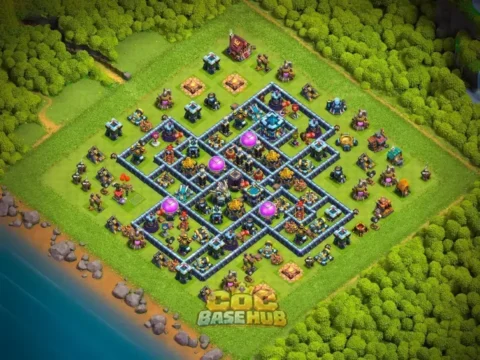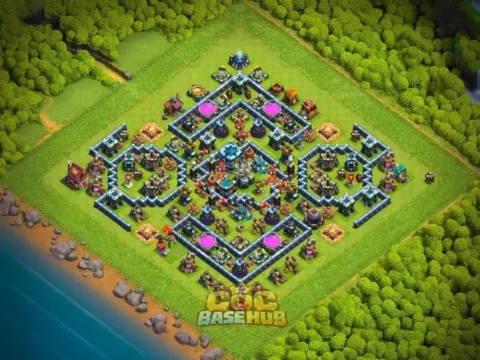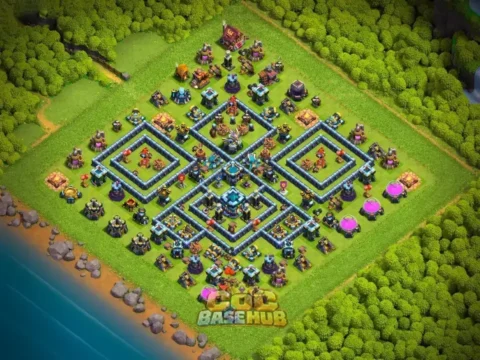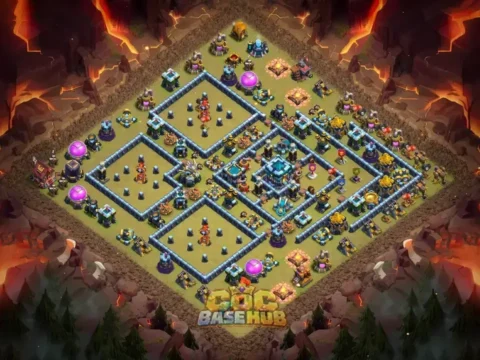
TH13 Hybrid Base – Balanced War and Farming #28New
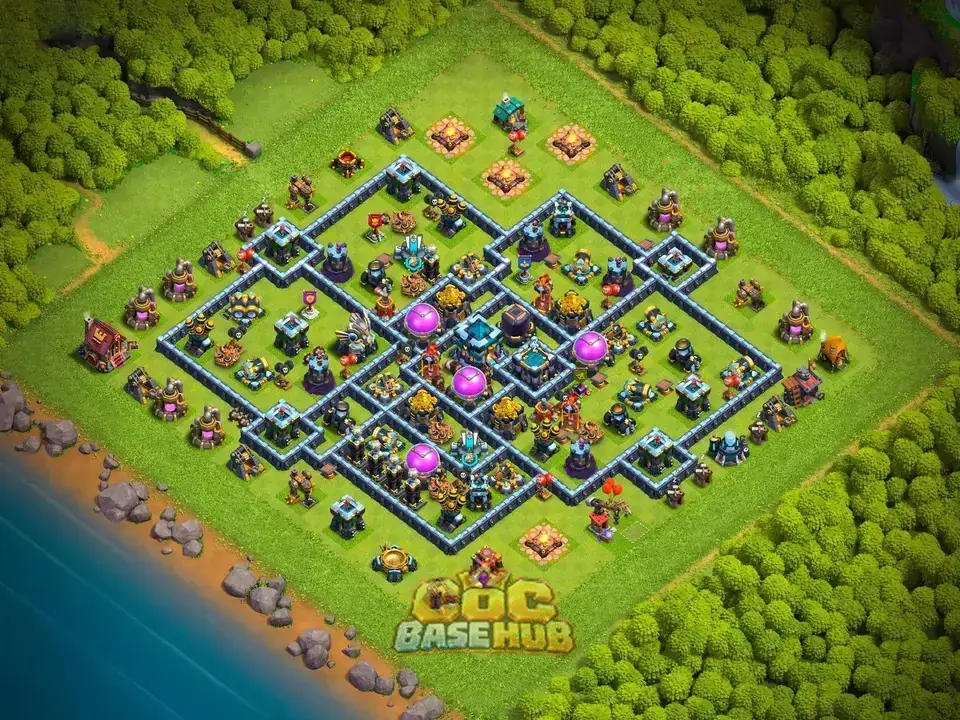
TH13 Hybrid Base – Balanced War and Farming #28: Town Hall 13 Layout and Copy Link
TH13 Hybrid Base – Balanced War and Farming #28 is a Clash of Clans Town Hall 13 layout shared for players interested in balancing resource safety with dependable defensive pressure. Use the copy link to load the base into the game, then evaluate it against the attacks you face. The exact star result depends on opponent skill, upgrades, and the attack plan. This guide discusses TH13 defensive mechanics, sensible testing methods, and ways to decide whether this layout fits your needs; it does not pretend that every building position has been verified from the screenshot.
Anti two-star considerations for Hybrid Base #28
Start with the attacker’s first decision. An anti-two-star approach generally tries to make Town Hall access expensive while keeping percentage gains difficult. It is not a promise that every attack will finish below two stars. Examine whether an attacker can obtain safe percentage outside the base before committing to the Town Hall. A useful test is to imagine an experienced opponent choosing a side without knowing the hidden traps. In balancing resource safety with dependable defensive pressure, this can influence how you interpret the result. Use this criterion to decide what to inspect after placing the base in your village. This perspective helps identify easy value before you commit to a change.
Pay attention to the final cleanup phase. An anti-two-star approach generally tries to make Town Hall access expensive while keeping percentage gains difficult. It is not a promise that every attack will finish below two stars. Examine whether an attacker can obtain safe percentage outside the base before committing to the Town Hall. Some attacks survive the core but fail because remaining structures are awkward to reach. For the hybrid base role, the right compromise depends on your current league and opponent pool. The safest conclusion comes from several representative replays, not one battle. Cleanup routes can be an important part of the overall design.
Compare the intended goal with the actual replay. An anti-two-star approach generally tries to make Town Hall access expensive while keeping percentage gains difficult. It is not a promise that every attack will finish below two stars. Examine whether an attacker can obtain safe percentage outside the base before committing to the Town Hall. Write down which objective the attacker achieved and what it cost in troops or spells. When evaluating #28, compare this issue with the other defenses instead of treating it as a stand-alone score. For this layout, focus on practical decisions rather than claims of guaranteed protection. The comparison can expose a weakness that is not obvious from a static layout.
LavaLoon and Balloon routes for Hybrid Base #28
Look for the simplest low-risk attack plan. Lava Hounds and Balloons exploit predictable Air Defense routes. A layout should make attackers think about haste timing, air traps, and cleanup support. Examine whether Balloons can travel through several defenses while remaining protected by the same tanking unit. An opponent may ignore the strongest compartment and approach through a weaker route. When evaluating #28, compare this issue with the other defenses instead of treating it as a stand-alone score. Treat the idea as a hypothesis to test, not a verified feature of this specific screenshot. Testing that route is more useful than praising a difficult-looking core.
Check whether one investment wins several objectives. Lava Hounds and Balloons exploit predictable Air Defense routes. A layout should make attackers think about haste timing, air traps, and cleanup support. Examine whether Balloons can travel through several defenses while remaining protected by the same tanking unit. An efficient hero entry or siege deployment may remove multiple key defenses at once. In balancing resource safety with dependable defensive pressure, this can influence how you interpret the result. The copy link provides a starting configuration; actual defense results require testing. Identifying that combination gives you a concrete testing priority.
Separate reliable behavior from a lucky outcome. Lava Hounds and Balloons exploit predictable Air Defense routes. A layout should make attackers think about haste timing, air traps, and cleanup support. Examine whether Balloons can travel through several defenses while remaining protected by the same tanking unit. A single failed attack might reflect missed spells or incorrect troop deployment. For the hybrid base role, the right compromise depends on your current league and opponent pool. This topic matters most when it influences the attacker’s spell or troop investment. Repeated patterns offer stronger evidence for a defensive adjustment.
Scattershot coverage for Hybrid Base #28
Evaluate the same feature from both sides of the battle. Scattershots are particularly important against clustered troops. Their value depends on target access, nearby compartments, and whether the attacker can eliminate them with an early spell or hero dive. Think about overlapping fire and the consequences of losing one major defense too early. What delays one army can sometimes create a convenient funnel for another. When evaluating #28, compare this issue with the other defenses instead of treating it as a stand-alone score. Use this criterion to decide what to inspect after placing the base in your village. This two-sided check prevents overconfidence in a single defensive trick.
Consider the sequence rather than isolated buildings. Scattershots are particularly important against clustered troops. Their value depends on target access, nearby compartments, and whether the attacker can eliminate them with an early spell or hero dive. Think about overlapping fire and the consequences of losing one major defense too early. The outcome often depends on what the attacker reaches first, second, and third. In balancing resource safety with dependable defensive pressure, this can influence how you interpret the result. The safest conclusion comes from several representative replays, not one battle. This avoids treating defensive strength as a simple count of structures.
Focus on the cost of the attacker’s choices. Scattershots are particularly important against clustered troops. Their value depends on target access, nearby compartments, and whether the attacker can eliminate them with an early spell or hero dive. Think about overlapping fire and the consequences of losing one major defense too early. Every extra spell, hero ability, or detour spent on one objective reduces options elsewhere. For the hybrid base role, the right compromise depends on your current league and opponent pool. For this layout, focus on practical decisions rather than claims of guaranteed protection. A sound layout makes the opponent pay for valuable access.
Town Hall pressure and Giga Inferno for Hybrid Base #28
Look for the simplest low-risk attack plan. At Town Hall 13, the Giga Inferno creates a meaningful timing decision for the attacker. Consider whether troops will reach the Town Hall while abilities are available and whether support units can survive the surrounding damage. Avoid assuming that simply placing the Town Hall in the center always creates the strongest defense. An opponent may ignore the strongest compartment and approach through a weaker route. For the hybrid base role, the right compromise depends on your current league and opponent pool. Your upgrade levels and opponents can change how this principle plays out. Testing that route is more useful than praising a difficult-looking core.
Check whether one investment wins several objectives. At Town Hall 13, the Giga Inferno creates a meaningful timing decision for the attacker. Consider whether troops will reach the Town Hall while abilities are available and whether support units can survive the surrounding damage. Avoid assuming that simply placing the Town Hall in the center always creates the strongest defense. An efficient hero entry or siege deployment may remove multiple key defenses at once. When evaluating #28, compare this issue with the other defenses instead of treating it as a stand-alone score. An isolated defensive feature is less useful than its interaction with the surrounding layout. Identifying that combination gives you a concrete testing priority.
Separate reliable behavior from a lucky outcome. At Town Hall 13, the Giga Inferno creates a meaningful timing decision for the attacker. Consider whether troops will reach the Town Hall while abilities are available and whether support units can survive the surrounding damage. Avoid assuming that simply placing the Town Hall in the center always creates the strongest defense. A single failed attack might reflect missed spells or incorrect troop deployment. In balancing resource safety with dependable defensive pressure, this can influence how you interpret the result. Treat the idea as a hypothesis to test, not a verified feature of this specific screenshot. Repeated patterns offer stronger evidence for a defensive adjustment.
- Inspect the relevant defensive range in the village editor.
- Review recent attack replays before changing the arrangement.
- Compare results after a single, measurable adjustment.
Practical adjustment workflow for Hybrid Base #28
Start with the attacker’s first decision. Make one or two changes at a time, then compare results. Moving a trap, rotating an Air Sweeper, or changing an Inferno setting can be easier to evaluate than rebuilding the whole base. Preserve a copy of the original arrangement so you can reverse an unsuccessful experiment. A useful test is to imagine an experienced opponent choosing a side without knowing the hidden traps. In balancing resource safety with dependable defensive pressure, this can influence how you interpret the result. An isolated defensive feature is less useful than its interaction with the surrounding layout. This perspective helps identify easy value before you commit to a change.
Pay attention to the final cleanup phase. Make one or two changes at a time, then compare results. Moving a trap, rotating an Air Sweeper, or changing an Inferno setting can be easier to evaluate than rebuilding the whole base. Preserve a copy of the original arrangement so you can reverse an unsuccessful experiment. Some attacks survive the core but fail because remaining structures are awkward to reach. For the hybrid base role, the right compromise depends on your current league and opponent pool. Treat the idea as a hypothesis to test, not a verified feature of this specific screenshot. Cleanup routes can be an important part of the overall design.
Compare the intended goal with the actual replay. Make one or two changes at a time, then compare results. Moving a trap, rotating an Air Sweeper, or changing an Inferno setting can be easier to evaluate than rebuilding the whole base. Preserve a copy of the original arrangement so you can reverse an unsuccessful experiment. Write down which objective the attacker achieved and what it cost in troops or spells. When evaluating #28, compare this issue with the other defenses instead of treating it as a stand-alone score. The copy link provides a starting configuration; actual defense results require testing. The comparison can expose a weakness that is not obvious from a static layout.
Clan War and CWL preparation for Hybrid Base #28
Evaluate the same feature from both sides of the battle. War defense depends on the opponent roster, scouting habits, and the attacks used in your league. A base that succeeds in ordinary multiplayer may perform differently in organized wars. Review previous enemy attacks and adjust only after identifying a recurring weakness. What delays one army can sometimes create a convenient funnel for another. For the hybrid base role, the right compromise depends on your current league and opponent pool. Use this criterion to decide what to inspect after placing the base in your village. This two-sided check prevents overconfidence in a single defensive trick.
Consider the sequence rather than isolated buildings. War defense depends on the opponent roster, scouting habits, and the attacks used in your league. A base that succeeds in ordinary multiplayer may perform differently in organized wars. Review previous enemy attacks and adjust only after identifying a recurring weakness. The outcome often depends on what the attacker reaches first, second, and third. When evaluating #28, compare this issue with the other defenses instead of treating it as a stand-alone score. The safest conclusion comes from several representative replays, not one battle. This avoids treating defensive strength as a simple count of structures.
Focus on the cost of the attacker’s choices. War defense depends on the opponent roster, scouting habits, and the attacks used in your league. A base that succeeds in ordinary multiplayer may perform differently in organized wars. Review previous enemy attacks and adjust only after identifying a recurring weakness. Every extra spell, hero ability, or detour spent on one objective reduces options elsewhere. In balancing resource safety with dependable defensive pressure, this can influence how you interpret the result. For this layout, focus on practical decisions rather than claims of guaranteed protection. A sound layout makes the opponent pay for valuable access.
Air Sweepers and spell timing for Hybrid Base #28
Account for differences in opponent skill and upgrades. Air Sweepers can change how an air army moves through a base. Their direction may force an attacker to spend a Freeze or choose a less efficient approach. The best orientation is not universal; it should complement Air Defenses, Scattershots, and likely attack entries. The same arrangement can face very different results in casual multiplayer and coordinated war. For the hybrid base role, the right compromise depends on your current league and opponent pool. Treat the idea as a hypothesis to test, not a verified feature of this specific screenshot. Use your own attack history to decide which risks matter.
Think about what happens after the first major defense falls. Air Sweepers can change how an air army moves through a base. Their direction may force an attacker to spend a Freeze or choose a less efficient approach. The best orientation is not universal; it should complement Air Defenses, Scattershots, and likely attack entries. A layout may appear resilient until one compartment opens a direct path to the remaining objectives. When evaluating #28, compare this issue with the other defenses instead of treating it as a stand-alone score. The copy link provides a starting configuration; actual defense results require testing. This question focuses attention on defensive continuity.
Keep adjustments measurable and reversible. Air Sweepers can change how an air army moves through a base. Their direction may force an attacker to spend a Freeze or choose a less efficient approach. The best orientation is not universal; it should complement Air Defenses, Scattershots, and likely attack entries. Changing many compartments at once makes it difficult to learn which modification helped. In balancing resource safety with dependable defensive pressure, this can influence how you interpret the result. This topic matters most when it influences the attacker’s spell or troop investment. Small experiments produce clearer feedback over time.
Trophy defense tradeoffs for Hybrid Base #28
Look for the simplest low-risk attack plan. Trophy-oriented defense rewards difficult attack paths and inefficient percentage collection. An attacker may still secure a star or choose a favorable angle. Assess whether your base forces meaningful choices between the Town Hall and accessible exterior buildings. An opponent may ignore the strongest compartment and approach through a weaker route. In balancing resource safety with dependable defensive pressure, this can influence how you interpret the result. Your upgrade levels and opponents can change how this principle plays out. Testing that route is more useful than praising a difficult-looking core.
Check whether one investment wins several objectives. Trophy-oriented defense rewards difficult attack paths and inefficient percentage collection. An attacker may still secure a star or choose a favorable angle. Assess whether your base forces meaningful choices between the Town Hall and accessible exterior buildings. An efficient hero entry or siege deployment may remove multiple key defenses at once. For the hybrid base role, the right compromise depends on your current league and opponent pool. An isolated defensive feature is less useful than its interaction with the surrounding layout. Identifying that combination gives you a concrete testing priority.
Separate reliable behavior from a lucky outcome. Trophy-oriented defense rewards difficult attack paths and inefficient percentage collection. An attacker may still secure a star or choose a favorable angle. Assess whether your base forces meaningful choices between the Town Hall and accessible exterior buildings. A single failed attack might reflect missed spells or incorrect troop deployment. When evaluating #28, compare this issue with the other defenses instead of treating it as a stand-alone score. Treat the idea as a hypothesis to test, not a verified feature of this specific screenshot. Repeated patterns offer stronger evidence for a defensive adjustment.
- Inspect the relevant defensive range in the village editor.
- Review recent attack replays before changing the arrangement.
- Compare results after a single, measurable adjustment.
Strengths and limitations for Hybrid Base #28
Start with the attacker’s first decision. Potential strengths come from layered defensive coverage, inconvenient access, and attack-path uncertainty. Potential limitations include vulnerability to well-planned hero dives, air funnels, or spells. These are evaluation criteria, not verified claims about the exact arrangement, which should be checked visually and through replays. A useful test is to imagine an experienced opponent choosing a side without knowing the hidden traps. For the hybrid base role, the right compromise depends on your current league and opponent pool. For this layout, focus on practical decisions rather than claims of guaranteed protection. This perspective helps identify easy value before you commit to a change.
Pay attention to the final cleanup phase. Potential strengths come from layered defensive coverage, inconvenient access, and attack-path uncertainty. Potential limitations include vulnerability to well-planned hero dives, air funnels, or spells. These are evaluation criteria, not verified claims about the exact arrangement, which should be checked visually and through replays. Some attacks survive the core but fail because remaining structures are awkward to reach. When evaluating #28, compare this issue with the other defenses instead of treating it as a stand-alone score. Your upgrade levels and opponents can change how this principle plays out. Cleanup routes can be an important part of the overall design.
Compare the intended goal with the actual replay. Potential strengths come from layered defensive coverage, inconvenient access, and attack-path uncertainty. Potential limitations include vulnerability to well-planned hero dives, air funnels, or spells. These are evaluation criteria, not verified claims about the exact arrangement, which should be checked visually and through replays. Write down which objective the attacker achieved and what it cost in troops or spells. In balancing resource safety with dependable defensive pressure, this can influence how you interpret the result. An isolated defensive feature is less useful than its interaction with the surrounding layout. The comparison can expose a weakness that is not obvious from a static layout.
Resource protection tradeoffs for Hybrid Base #28
Start with the attacker’s first decision. Farming layouts must balance Gold, Elixir, and Dark Elixir protection with the value of the Town Hall and other defenses. No layout can guarantee zero loot losses. Consider which resources matter most for your next upgrade and whether the storage arrangement fits that priority. A useful test is to imagine an experienced opponent choosing a side without knowing the hidden traps. When evaluating #28, compare this issue with the other defenses instead of treating it as a stand-alone score. The copy link provides a starting configuration; actual defense results require testing. This perspective helps identify easy value before you commit to a change.
Pay attention to the final cleanup phase. Farming layouts must balance Gold, Elixir, and Dark Elixir protection with the value of the Town Hall and other defenses. No layout can guarantee zero loot losses. Consider which resources matter most for your next upgrade and whether the storage arrangement fits that priority. Some attacks survive the core but fail because remaining structures are awkward to reach. In balancing resource safety with dependable defensive pressure, this can influence how you interpret the result. This topic matters most when it influences the attacker’s spell or troop investment. Cleanup routes can be an important part of the overall design.
Compare the intended goal with the actual replay. Farming layouts must balance Gold, Elixir, and Dark Elixir protection with the value of the Town Hall and other defenses. No layout can guarantee zero loot losses. Consider which resources matter most for your next upgrade and whether the storage arrangement fits that priority. Write down which objective the attacker achieved and what it cost in troops or spells. For the hybrid base role, the right compromise depends on your current league and opponent pool. Attack direction can change the apparent value of the same defensive arrangement. The comparison can expose a weakness that is not obvious from a static layout.
How to copy and evaluate TH13 Hybrid Base – Balanced War and Farming #28
Open the layout link supplied with this entry, confirm that Clash of Clans recognizes the Town Hall 13 layout, and save it in a suitable base slot. Test the design against real opponents and adjust it for your available defenses. Remember that the copy link shares a starting arrangement; the defensive result is never guaranteed.