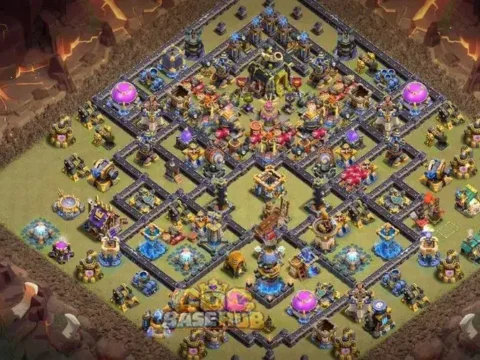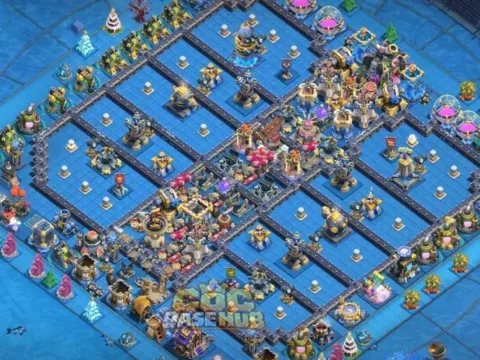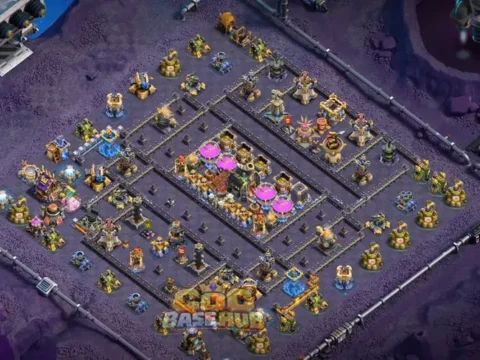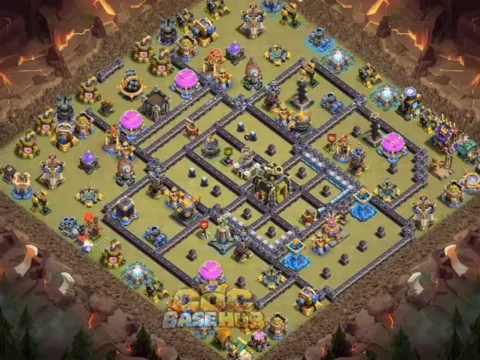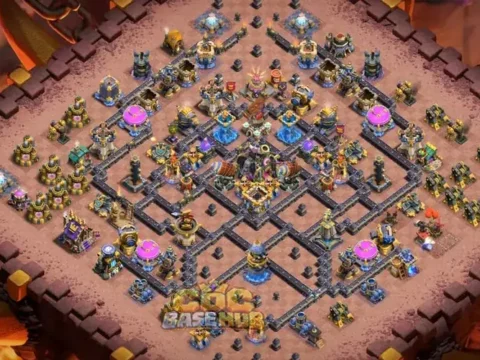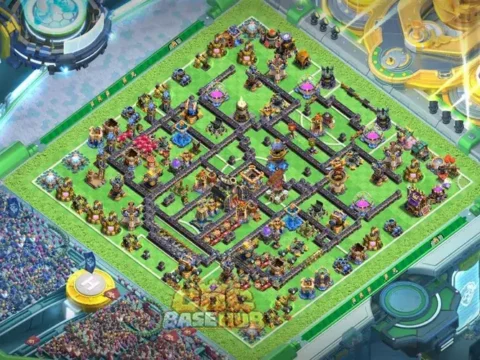
TH19 – Anti 3 Star War Base Built for Defensive Testing and Adaptation #9New
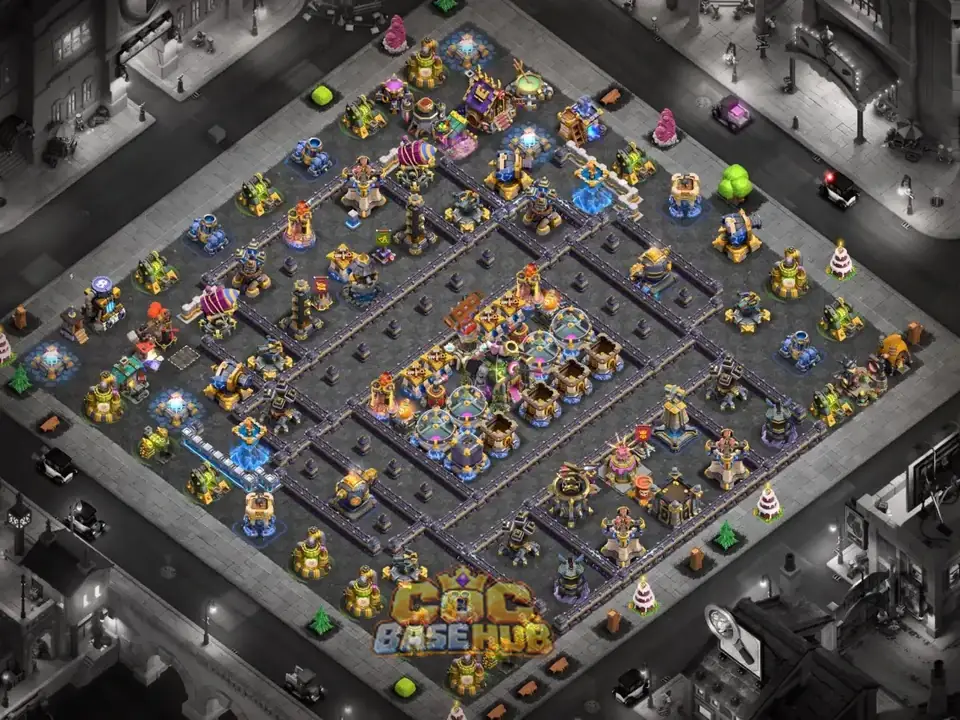
TH19 War Base #9: Anti 3 Star War Base Built for Defensive Testing and Adaptation
Town Hall 19 players searching for a war base copy link usually want a practical layout they can deploy quickly, not an unsupported promise of perfect defense. This TH19 war base #9 is presented as a anti-3-star option with a particular editorial focus on replay-driven defensive improvement. The supplied base link is the starting point: copy the design, inspect it inside Clash of Clans, and judge whether its actual building placement fits your opponents and your goals.
The most useful way to approach this layout is to use every war replay to distinguish genuine weaknesses from one-off execution errors. This article explains how to scout the imported base, what evidence to collect from replays, how to adapt your attack expectations, and when to keep or replace the design. It does not claim that a specific defense is placed in a specific tile, because the CSV alone does not show verified building coordinates.
If you are players who actively review clan war replays, use the recommendations below as a testing checklist. They are written for TH19 base sharing and practical decision-making, rather than as an assurance that a particular army can never earn two or three stars.
Why Replay-Driven Defensive Improvement Matters at TH19
For TH19 war base #9, the key question in this section is attack evidence. Start by asking how this relates to replay-driven defensive improvement, because a base should be judged against a clear objective. A useful first step is to decide what successful defense means before you count stars or loot. Doing so gives you a repeatable method rather than an opinion based on the first screenshot or the first result.
Imagine two players examining the same imported layout. One is focused on attack evidence, while the other pays attention to repeat patterns. They may make different choices even though neither has misread the base. That difference is why scouting should include the likely attack objective, the available routes, and the resources an opponent is prepared to spend. In this case, use every war replay to distinguish genuine weaknesses from one-off execution errors; the test is whether real attacks support that expectation.
To evaluate attack evidence, separate what the base visibly offers from what the attacker chooses to do. Record what happened, not what you hoped would happen. If the result seems unusually good or bad, look at the attacker’s execution, remaining time, and the troops or spells still available. A single result cannot establish that the layout is unbeatable, and a single failure does not prove the design has no value.
An especially useful comparison is between the first minute and the final phase. Early pressure may look dramatic but have little effect on the outcome, while a small decision late in the attack can determine whether the plan succeeds. For this base, focus your notes on trap hypotheses and iterative improvement. These two ideas help you distinguish a structural issue from a mistake that may not repeat.
An imported base is a working hypothesis, not a finished solution. The copy link saves setup time; the defensive log tells you whether the setup is useful. The value of TH19 base #9 depends on the evidence you collect after deployment.
How to Scout the Attack Evidence
For TH19 war base #9, the key question in this section is attack evidence. Start by asking how this relates to replay-driven defensive improvement, because a base should be judged against a clear objective. A useful first step is to look for likely approach options and the tradeoffs between them. Doing so gives you a repeatable method rather than an opinion based on the first screenshot or the first result.
Imagine two players examining the same imported layout. One is focused on attack evidence, while the other pays attention to repeat patterns. They may make different choices even though neither has misread the base. That difference is why scouting should include the likely attack objective, the available routes, and the resources an opponent is prepared to spend. In this case, use every war replay to distinguish genuine weaknesses from one-off execution errors; the test is whether real attacks support that expectation.
To evaluate attack evidence, write down two plausible attack plans rather than one favorite guess. Record what happened, not what you hoped would happen. If the result seems unusually good or bad, look at the attacker’s execution, remaining time, and the troops or spells still available. A single result cannot establish that the layout is unbeatable, and a single failure does not prove the design has no value.
An especially useful comparison is between the first minute and the final phase. Early pressure may look dramatic but have little effect on the outcome, while a small decision late in the attack can determine whether the plan succeeds. For this base, focus your notes on trap hypotheses and iterative improvement. These two ideas help you distinguish a structural issue from a mistake that may not repeat.
Your next test should answer one specific question about attack evidence. If the replay does not answer it, refine the question rather than adding unrelated changes. This approach keeps the improvement process disciplined.
Planning Around Repeat Patterns
For TH19 war base #9, the key question in this section is repeat patterns. Start by asking how this relates to replay-driven defensive improvement, because a base should be judged against a clear objective. A useful first step is to compare the first commitment with the choices available after it. Doing so gives you a repeatable method rather than an opinion based on the first screenshot or the first result.
Imagine two players examining the same imported layout. One is focused on attack evidence, while the other pays attention to repeat patterns. They may make different choices even though neither has misread the base. That difference is why scouting should include the likely attack objective, the available routes, and the resources an opponent is prepared to spend. In this case, use every war replay to distinguish genuine weaknesses from one-off execution errors; the test is whether real attacks support that expectation.
To evaluate repeat patterns, notice whether the next step is flexible or forced. Record what happened, not what you hoped would happen. If the result seems unusually good or bad, look at the attacker’s execution, remaining time, and the troops or spells still available. A single result cannot establish that the layout is unbeatable, and a single failure does not prove the design has no value.
An especially useful comparison is between the first minute and the final phase. Early pressure may look dramatic but have little effect on the outcome, while a small decision late in the attack can determine whether the plan succeeds. For this base, focus your notes on trap hypotheses and iterative improvement. These two ideas help you distinguish a structural issue from a mistake that may not repeat.
For players who actively review clan war replays, the best outcome is a clear decision: retain the layout, test it again against a different approach, or move on. That decision should follow from compare multiple attacks before moving anything, not from the design name alone.
Understanding Trap Hypotheses in a Replay
For TH19 war base #9, the key question in this section is trap hypotheses. Start by asking how this relates to replay-driven defensive improvement, because a base should be judged against a clear objective. A useful first step is to follow the battle chronologically rather than jumping to the final result. Doing so gives you a repeatable method rather than an opinion based on the first screenshot or the first result.
Imagine two players examining the same imported layout. One is focused on attack evidence, while the other pays attention to repeat patterns. They may make different choices even though neither has misread the base. That difference is why scouting should include the likely attack objective, the available routes, and the resources an opponent is prepared to spend. In this case, use every war replay to distinguish genuine weaknesses from one-off execution errors; the test is whether real attacks support that expectation.
To evaluate trap hypotheses, record the turning point and what caused it. Record what happened, not what you hoped would happen. If the result seems unusually good or bad, look at the attacker’s execution, remaining time, and the troops or spells still available. A single result cannot establish that the layout is unbeatable, and a single failure does not prove the design has no value.
An especially useful comparison is between the first minute and the final phase. Early pressure may look dramatic but have little effect on the outcome, while a small decision late in the attack can determine whether the plan succeeds. For this base, focus your notes on trap hypotheses and iterative improvement. These two ideas help you distinguish a structural issue from a mistake that may not repeat.
The scouting note for this design should be phrased as a prediction: “If the attacker prioritizes attack evidence, I expect the next decision to involve repeat patterns.” After the battle, compare that prediction with the replay. The goal is not to guess perfectly; it is to discover which assumptions are consistently wrong.
The Main Risk: Iterative Improvement
For TH19 war base #9, the key question in this section is iterative improvement. Start by asking how this relates to replay-driven defensive improvement, because a base should be judged against a clear objective. A useful first step is to identify the circumstance in which the defense becomes least convincing. Doing so gives you a repeatable method rather than an opinion based on the first screenshot or the first result.
Imagine two players examining the same imported layout. One is focused on attack evidence, while the other pays attention to repeat patterns. They may make different choices even though neither has misread the base. That difference is why scouting should include the likely attack objective, the available routes, and the resources an opponent is prepared to spend. In this case, use every war replay to distinguish genuine weaknesses from one-off execution errors; the test is whether real attacks support that expectation.
To evaluate iterative improvement, test that circumstance deliberately instead of waiting for a lucky attack. Record what happened, not what you hoped would happen. If the result seems unusually good or bad, look at the attacker’s execution, remaining time, and the troops or spells still available. A single result cannot establish that the layout is unbeatable, and a single failure does not prove the design has no value.
An especially useful comparison is between the first minute and the final phase. Early pressure may look dramatic but have little effect on the outcome, while a small decision late in the attack can determine whether the plan succeeds. For this base, focus your notes on trap hypotheses and iterative improvement. These two ideas help you distinguish a structural issue from a mistake that may not repeat.
Use a simple three-column log: expected choice, observed choice, and consequence. The most valuable entries are the ones that explain a change in direction, timing, or resource expenditure. This makes the next evaluation of TH19 base #9 more specific than a generic star-rating discussion.
What to Watch in Clan War or Defense Logs
For TH19 war base #9, the key question in this section is replay evidence. Start by asking how this relates to replay-driven defensive improvement, because a base should be judged against a clear objective. A useful first step is to track the relevant metric alongside the outcome. Doing so gives you a repeatable method rather than an opinion based on the first screenshot or the first result.
Imagine two players examining the same imported layout. One is focused on attack evidence, while the other pays attention to repeat patterns. They may make different choices even though neither has misread the base. That difference is why scouting should include the likely attack objective, the available routes, and the resources an opponent is prepared to spend. In this case, use every war replay to distinguish genuine weaknesses from one-off execution errors; the test is whether real attacks support that expectation.
To evaluate replay evidence, compare timing and resource expenditure, not just the final stars. Record what happened, not what you hoped would happen. If the result seems unusually good or bad, look at the attacker’s execution, remaining time, and the troops or spells still available. A single result cannot establish that the layout is unbeatable, and a single failure does not prove the design has no value.
An especially useful comparison is between the first minute and the final phase. Early pressure may look dramatic but have little effect on the outcome, while a small decision late in the attack can determine whether the plan succeeds. For this base, focus your notes on trap hypotheses and iterative improvement. These two ideas help you distinguish a structural issue from a mistake that may not repeat.
Do not confuse the popularity of an army composition with evidence that it is the best test for this layout. A strong test challenges the weakness you are investigating. For replay-driven defensive improvement, the most informative replay may come from an ordinary attack that exposes a repeatable decision point.
How to Make Better Adjustments
For TH19 war base #9, the key question in this section is small adjustments. Start by asking how this relates to replay-driven defensive improvement, because a base should be judged against a clear objective. A useful first step is to use replays to identify a specific failure mechanism. Doing so gives you a repeatable method rather than an opinion based on the first screenshot or the first result.
Imagine two players examining the same imported layout. One is focused on attack evidence, while the other pays attention to repeat patterns. They may make different choices even though neither has misread the base. That difference is why scouting should include the likely attack objective, the available routes, and the resources an opponent is prepared to spend. In this case, use every war replay to distinguish genuine weaknesses from one-off execution errors; the test is whether real attacks support that expectation.
To evaluate small adjustments, avoid editing a layout merely because one attacker was unusually skilled. Record what happened, not what you hoped would happen. If the result seems unusually good or bad, look at the attacker’s execution, remaining time, and the troops or spells still available. A single result cannot establish that the layout is unbeatable, and a single failure does not prove the design has no value.
An especially useful comparison is between the first minute and the final phase. Early pressure may look dramatic but have little effect on the outcome, while a small decision late in the attack can determine whether the plan succeeds. For this base, focus your notes on trap hypotheses and iterative improvement. These two ideas help you distinguish a structural issue from a mistake that may not repeat.
If you make an adjustment after a replay, preserve the original version or a screenshot so that you can compare outcomes. Without a baseline, it is easy to credit a small edit for an improvement caused by the attacker using a different approach.
How to Copy This TH19 Base Layout
Use the Clash of Clans copy link supplied with TH19 base #9. Open it on a device with the game installed, confirm the destination village, and review the layout before saving. A copy link can transfer a layout, but it does not verify that the design matches your current defensive upgrades or that it will perform identically against every attacker.
For more Clash of Clans layouts, browse the COC Base Hub homepage. If you also play at a different Town Hall level, compare the tactical principles with a previously shared TH18 war base. Internal links below lead to pages already used on COC Base Hub; they are not substitutes for this TH19 layout’s own copy link.
Explore more layouts at COC Base Hub or compare with this TH18 war base layout.
TH19 Base FAQ
Is this base guaranteed to stop a three-star attack?
No. Defensive results depend on actual placement, opponent strength, attack planning and execution. The copy link offers a layout to test, not a guarantee.
Can I use this layout immediately?
Open the provided copy link in Clash of Clans and verify the village and building availability. Review the imported arrangement before using it in an important war or farming session.
How should I decide whether to keep the base?
Use several defenses and focus on compare multiple attacks before moving anything. Keep the layout if it performs well against the attacks you encounter, and reconsider it when the same weakness appears repeatedly.
Why is this article different from another TH19 base guide?
This guide focuses on replay-driven defensive improvement and the practical problem of use every war replay to distinguish genuine weaknesses from one-off execution errors. Other layouts in the collection are discussed through different testing priorities.
Final takeaway for TH19 war base #9: A measured adjustment beats a complete rebuild without evidence. Copy the layout, check it in game, and let repeatable results—not a dramatic headline—guide your next decision.