TH19 Trophy Base #9 – Practical Defense Guide for Trophy Pushing and Target PrioritizationNew
TH19 Trophy Base #9: overview and copy link
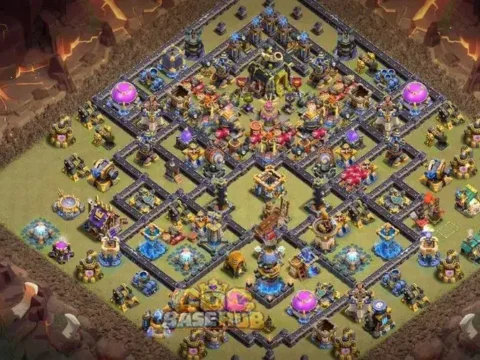
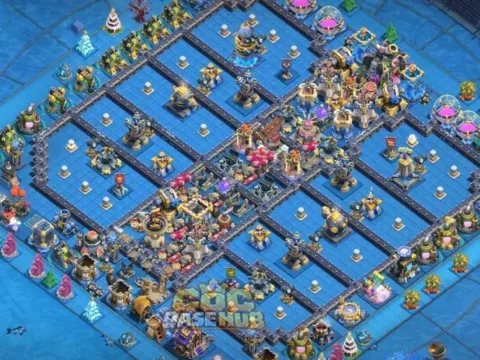
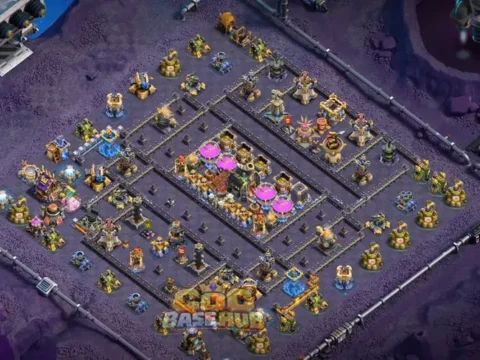
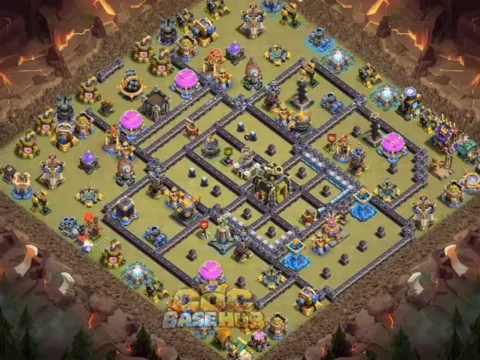
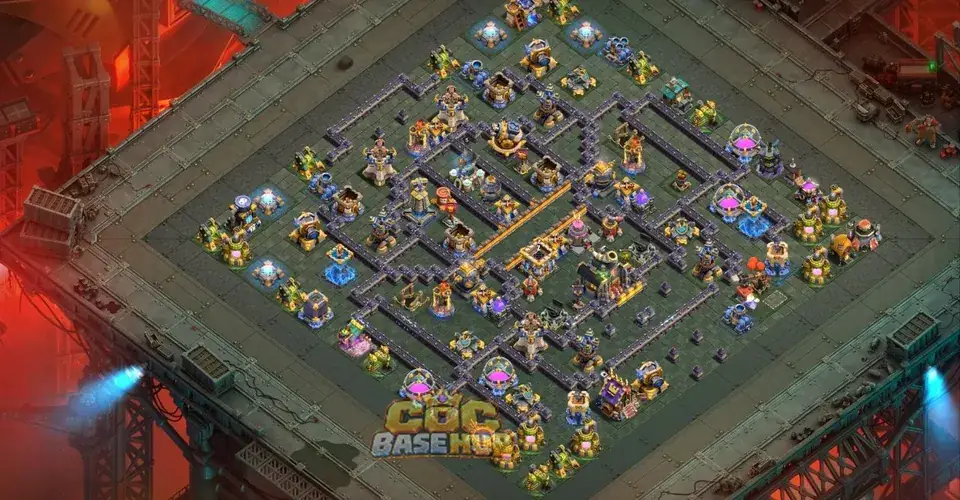
This Clash of Clans Town Hall 19 trophy base is listed as layout #9 in the COC Base Hub collection. Its intended use is trophy pushing, with an emphasis on protecting trophies and a practical review of target prioritization. You can open the provided in-game copy link to inspect the arrangement directly. Because individual defense results depend on building levels and the opponent, this guide offers a structured way to assess the base rather than claiming a guaranteed result. Choose the layout because it fits your goals and performs in testing, not simply because its thumbnail looks impressive.
Why target prioritization matters for this TH19 layout
The distinctive evaluation angle for base #9 is target prioritization. Start by deciding how that topic influences your defensive goal: protecting trophies. When you watch a replay, isolate the decisions related to this angle and write down what the attacker gained or sacrificed. For trophy pushing, useful evidence comes from multiple attempts with different army compositions. A single defense cannot establish that the layout is universally strong, but repeated patterns can show whether it deserves a place in your rotation.
Learning from failed defenses
A failed defense is useful evidence, not necessarily a reason to discard a layout immediately. Identify the first turning point: an early funnel, an unexpectedly valuable hero ability, or a successful late cleanup. Then ask whether the result depends on a highly specialized army or exposes an easy, repeatable path. Keep a short record of the sequence. This creates actionable feedback rather than an emotional reaction to the final percentage shown in the replay. For this specific entry, base #9, connect that observation to target prioritization and your objective of protecting trophies. A helpful question is whether the opponent had to adapt their plan or could execute the same approach without making a meaningful choice. Keep notes from defense replays, then compare this design with another trophy base before drawing conclusions.
Trophy defense involves managing risk. A layout that frequently prevents complete clears may still concede enough stars to slow progress, while another design may create more variable outcomes. Decide which pattern suits your push and use replays to identify whether attackers repeatedly find a straightforward route to their objectives.
Adapting to changing attack trends
Clash of Clans evolves through balance changes, new tactics, and shifting player habits. A layout that performs well today may need reassessment when your opponents change their army composition. Keep the original copy link available and note the date of your most recent tests in your own records. Rather than attaching a calendar year to the page title, evaluate the base against the attacks you actually encounter. That approach keeps the guide useful over time. For this specific entry, base #9, connect that observation to target prioritization and your objective of protecting trophies. A helpful question is whether the opponent had to adapt their plan or could execute the same approach without making a meaningful choice. Keep notes from defense replays, then compare this design with another trophy base before drawing conclusions.
A trophy-pushing base should support steady progress across many defenses. Consider stars, destruction, and the strength of opponents encountered rather than judging by the trophy count of one battle. When you change layouts, compare results over a meaningful sample and account for variations in your matchmaking environment.
What to inspect in the screenshot
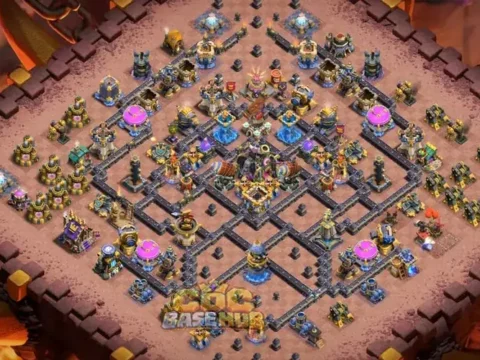
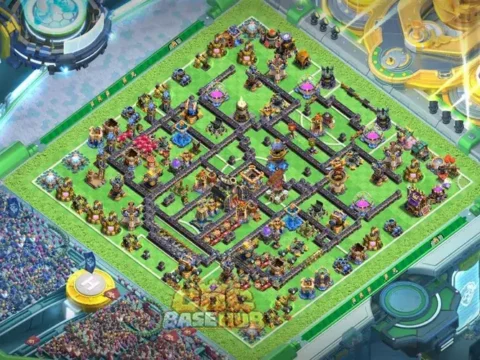
Use the screenshot to examine the visible arrangement before pressing the copy link. Check whether major defenses appear concentrated or distributed, whether compartments create meaningful choices, and whether the route to key objectives looks straightforward. These are questions to verify, not claims about unseen details. Zoom in when needed and compare the picture with the layout loaded inside the game. An image is a starting point for analysis, not a substitute for actual replay data. For this specific entry, base #9, connect that observation to target prioritization and your objective of protecting trophies. A helpful question is whether the opponent had to adapt their plan or could execute the same approach without making a meaningful choice. Keep notes from defense replays, then compare this design with another trophy base before drawing conclusions.
Trophy defense involves managing risk. A layout that frequently prevents complete clears may still concede enough stars to slow progress, while another design may create more variable outcomes. Decide which pattern suits your push and use replays to identify whether attackers repeatedly find a straightforward route to their objectives.
Using the layout alongside upgrades
Your defensive levels influence the result of every test. If your village has unfinished upgrades, avoid interpreting a loss as proof that the arrangement itself is poor. Record whether the attacker exploited a level gap, a placement weakness, or both. As upgrades finish, repeat a few of the same tests. This separates the effect of stronger defenses from the effect of a different layout and makes your decision more informed. For this specific entry, base #9, connect that observation to target prioritization and your objective of protecting trophies. A helpful question is whether the opponent had to adapt their plan or could execute the same approach without making a meaningful choice. Keep notes from defense replays, then compare this design with another trophy base before drawing conclusions.
Trophy defense involves managing risk. A layout that frequently prevents complete clears may still concede enough stars to slow progress, while another design may create more variable outcomes. Decide which pattern suits your push and use replays to identify whether attackers repeatedly find a straightforward route to their objectives.
Spell efficiency as a diagnostic
An effective review asks not only whether a spell was used but what value it delivered. Observe where Rage, Freeze, Invisibility, or other relevant support changes the attack. The details vary by army composition and current game balance, so focus on the principle: attackers should have to make choices about timing and resources. A defense that repeatedly allows multiple objectives to fall under one inexpensive commitment deserves closer examination. For this specific entry, base #9, connect that observation to target prioritization and your objective of protecting trophies. A helpful question is whether the opponent had to adapt their plan or could execute the same approach without making a meaningful choice. Keep notes from defense replays, then compare this design with another trophy base before drawing conclusions.
Trophy defense involves managing risk. A layout that frequently prevents complete clears may still concede enough stars to slow progress, while another design may create more variable outcomes. Decide which pattern suits your push and use replays to identify whether attackers repeatedly find a straightforward route to their objectives.
Building a repeatable review habit
Choose a small set of representative attacks and revisit them after major changes. Keep the conditions as comparable as possible and document what changed. One session might focus on hero entry, another on air pathing, and another on late cleanup. By separating questions, you can learn more from each replay without drowning in detail. Over time, this habit makes it easier to identify layouts that suit your clan, league, and personal goals. For this specific entry, base #9, connect that observation to target prioritization and your objective of protecting trophies. A helpful question is whether the opponent had to adapt their plan or could execute the same approach without making a meaningful choice. Keep notes from defense replays, then compare this design with another trophy base before drawing conclusions.
A trophy-pushing base should support steady progress across many defenses. Consider stars, destruction, and the strength of opponents encountered rather than judging by the trophy count of one battle. When you change layouts, compare results over a meaningful sample and account for variations in your matchmaking environment.
Making a simple defense scorecard
A small scorecard turns subjective impressions into comparisons. Track the opponent army, result, destruction percentage, and one or two observations about the attack route. If you are focused on resources, record the storage losses; if you are focused on competitive stars, record those instead. After several tests, look for the most common failure pattern. This method also helps you explain why one layout is worth keeping while another should be replaced. For this specific entry, base #9, connect that observation to target prioritization and your objective of protecting trophies. A helpful question is whether the opponent had to adapt their plan or could execute the same approach without making a meaningful choice. Keep notes from defense replays, then compare this design with another trophy base before drawing conclusions.
A trophy-pushing base should support steady progress across many defenses. Consider stars, destruction, and the strength of opponents encountered rather than judging by the trophy count of one battle. When you change layouts, compare results over a meaningful sample and account for variations in your matchmaking environment.
Testing air-based approaches
Air armies create a different set of questions because walls do not determine their movement. Watch the sequence of targeted defenses, the timing of spell support, and the point at which the attacker loses control of the attack. Evaluate whether an attacker can take a predictable route or must react to unexpected pressure. A layout can perform differently against air and ground attacks, so do not treat success against one style as proof of universal protection. For this specific entry, base #9, connect that observation to target prioritization and your objective of protecting trophies. A helpful question is whether the opponent had to adapt their plan or could execute the same approach without making a meaningful choice. Keep notes from defense replays, then compare this design with another trophy base before drawing conclusions.
Trophy defense involves managing risk. A layout that frequently prevents complete clears may still concede enough stars to slow progress, while another design may create more variable outcomes. Decide which pattern suits your push and use replays to identify whether attackers repeatedly find a straightforward route to their objectives.
Understanding star outcomes
A two-star defense and a three-star defense are not the same outcome, and the distinction matters when selecting a layout. Review whether the attacker secured the Town Hall, achieved enough destruction for the second star, or cleared the village entirely. For some competitive goals, avoiding a complete clear is the main priority; in others, reducing average destruction matters as well. Match the evaluation to the scoring environment instead of using a single vague claim that a base is unbeatable. For this specific entry, base #9, connect that observation to target prioritization and your objective of protecting trophies. A helpful question is whether the opponent had to adapt their plan or could execute the same approach without making a meaningful choice. Keep notes from defense replays, then compare this design with another trophy base before drawing conclusions.
A trophy-pushing base should support steady progress across many defenses. Consider stars, destruction, and the strength of opponents encountered rather than judging by the trophy count of one battle. When you change layouts, compare results over a meaningful sample and account for variations in your matchmaking environment.
Balancing visual complexity and performance
An intricate-looking village is not necessarily harder to attack. Some complex layouts expose predictable paths, while simpler arrangements can create meaningful choices. Evaluate the actual movement of troops and the amount of attacker commitment required to reach objectives. Do not let symmetry, decorative patterns, or dramatic screenshots determine your selection. Performance against representative attacks matters more than visual complexity alone. For this specific entry, base #9, connect that observation to target prioritization and your objective of protecting trophies. A helpful question is whether the opponent had to adapt their plan or could execute the same approach without making a meaningful choice. Keep notes from defense replays, then compare this design with another trophy base before drawing conclusions.
A trophy-pushing base should support steady progress across many defenses. Consider stars, destruction, and the strength of opponents encountered rather than judging by the trophy count of one battle. When you change layouts, compare results over a meaningful sample and account for variations in your matchmaking environment.
How to copy the TH19 base layout
Use the copy link supplied with this listing to open Clash of Clans and preview the layout in the game. Make sure you are working with a compatible Town Hall 19 village and review the preview before applying it. If the game does not open, check that it is installed and that the link has not been altered. After copying, compare the in-game layout with the screenshot and run friendly challenges before relying on it in trophy league progression. The link is provided separately in the listing so you can access the original game action without copying an invented URL from the article.
TH19 base selection checklist
- Confirm that the layout opens correctly in Clash of Clans.
- Match the base type to your current game mode and goals.
- Review both air and ground attack replays.
- Track stars, destruction and any relevant resource losses.
- Keep a backup layout before changing your active village.
Frequently asked questions
Is this TH19 trophy base guaranteed to stop three-star attacks? No. Results vary with attacker skill, troop choices, upgrades, and execution. Should you use it without testing? It is better to try friendly challenges and review several replays first. Can you switch back later? Keep a saved layout so you can compare performance and restore a previous design when needed. Is this page a substitute for a game replay? No: the screenshot and copy link help you inspect the base, while real defensive results tell you how it behaves.
Explore more Clash of Clans base layouts
Browse COC Base Hub for additional Town Hall layouts and copy links. You can also compare your TH19 choices with a TH18 War Base example to understand how defensive priorities differ between Town Hall levels. Choose the layout that matches your current village and test it in-game.